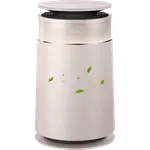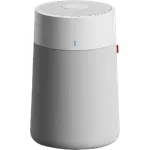




Blueair Blue Pure 511i Max Review: The Bedroom Purifier People Buy Because They Cannot Hear It
The Blue Pure 511i Max is Blueair's small smart purifier, and it wins on the thing that actually decides whether a bedroom purifier stays plugged in: noise. It runs near silently at low speed while its particle sensors drive an auto mode that ramps up only when the air needs it, and the Blueair app adds monitoring, scheduling and filter reminders. The trade-offs are scope rather than quality. It is sized for a bedroom or small office rather than an open-plan floor, it connects over 2.4GHz Wi-Fi only, and its smart home reach stops at Alexa and Google Home. If you want clean air in a room you sleep in, it is a very easy recommendation.
- Bedrooms and nurseries
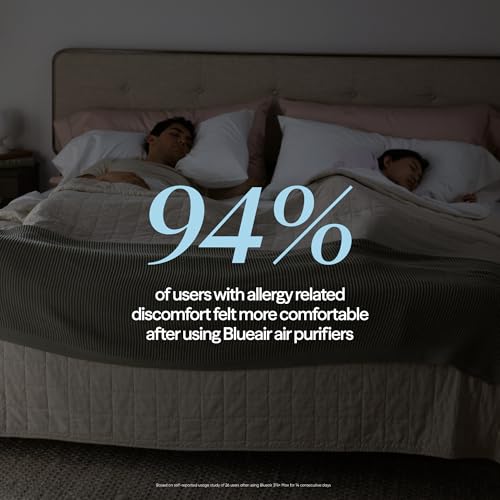
- Allergy and pet dander relief
- Small rooms and apartments
- Light sleepers
Pros
- Near silent at low speed, which is what makes it usable in a bedroom
- HEPASilent dual filtration with an activated carbon layer for odours
- Particle sensors across PM1, PM2.5 and PM10 driving a genuinely useful auto mode
- Blueair app adds air quality monitoring, scheduling and filter reminders
- Works with Alexa and Google Home for voice control
- Only 17 W, so it is cheap to leave running continuously
- Washable fabric pre-filter and swappable coloured sleeves
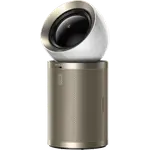
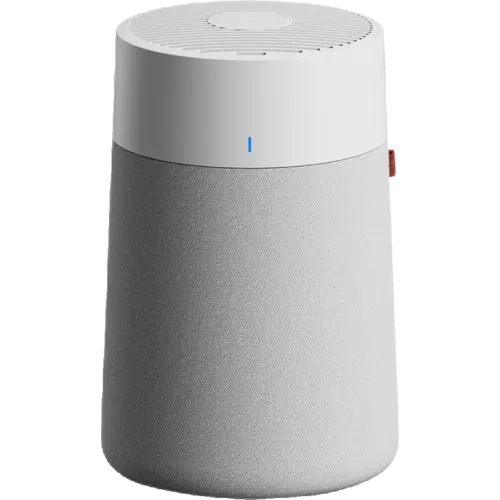
- Compact enough for a nightstand at 236 x 236 x 368 mm and 1.9kg
Cons
- Recommended room size of 237 ft² makes it a small-room purifier only
- Clearly audible at the top of its range, up to 48 dB
- 2.4GHz Wi-Fi only, with no 5GHz support
- No Apple Home, SmartThings or Matter support
- No on-device screen, just an air quality indicator light
- Base warranty is one year unless you register the product
- No physical remote control
Who is the Blue Pure 511i Max for?
This is a small-room machine, and it is honest about it. Blueair rates it for a recommended room size of 237 ft², reaching much larger spaces only if you are willing to wait an hour rather than minutes, so the natural homes for it are bedrooms, nurseries, home offices, dorm rooms and apartments. It is compact enough that owners routinely put it on a nightstand or in a tight corner. The audience that gets the most from it is anyone dealing with dust, pollen, pet dander or drifting smoke in one specific room, especially where a noisy purifier would be unacceptable.
What buyers love
Quietness dominates the feedback, and it is close to unanimous. Owners describe it as extremely quiet or inaudible at low speed, which is exactly what makes it usable overnight, and several bought it specifically because they wanted something they could sleep next to. The second recurring theme is that the effect is noticeable rather than theoretical: less dust settling, fewer allergy flares, and smoke odours drifting in from neighbours or wildfires dealt with effectively. The app also earns its place, with owners monitoring real-time air quality, adjusting speed or switching to auto from another room, and setting bedtime schedules. Setup gets described as painless, often just plugging it in and leaving it on automatic, and the washable outer fabric sleeve and the swappable coloured skirts come up as small pleasures.
What to know before you buy
It is quiet at low speed, not at every speed. Blueair rates it from 19 dB up to 48 dB, and owners confirm that turning it up makes it clearly audible, though most report needing only the lowest setting once the air is clean. Size is the other honest limit: this is the small model in the range, so buying it for a large open living area is the wrong choice, and one owner who tried a bigger sibling first had a poor experience that the smaller unit then fixed. On the smart home side, the reach is narrow. Voice control is limited to Alexa and Google Home, there is no Apple Home, SmartThings or Matter support, and it joins 2.4GHz Wi-Fi only, which is worth knowing if your router hides that band. The stated warranty is one year, though Blueair extends it to three if you register the product, which is worth doing on day one. Filters are consumables, with a life of around nine months tracked by the app.
Is the Blue Pure 511i Max worth it?
For a bedroom, yes, and comfortably so. You are getting HEPASilent filtration, real particle sensing across PM1, PM2.5 and PM10, a genuinely useful auto mode and app control in a body that costs little to run at 17 W. Nothing about it feels like a compromise except its coverage area, which is a deliberate design choice rather than a flaw. Look elsewhere if you need one purifier to handle a whole floor, if you want an on-device display, or if your home runs on Apple Home or Matter and you want the purifier in that ecosystem. Judged as what it is, a quiet, sensing, app-connected purifier for the room you actually sleep in, it is one of the easiest picks in its class.
Frequently asked questions
Is the Blueair Blue Pure 511i Max quiet enough for a bedroom?
Yes, and it is the single most praised thing about it. Blueair rates it from 19 dB at its lowest setting, and owners repeatedly describe it as inaudible or near silent on low, which is why many buy it specifically for sleeping. It does become clearly audible at higher fan speeds, rising to 48 dB, but most owners find the lowest setting sufficient once the room is clean.
What room size does the Blue Pure 511i Max cover?
Blueair gives a recommended room size of 237 ft², which is the figure to plan around because it reflects cleaning the air roughly every 12.5 minutes. It can process the air in much larger spaces given a full hour, but for genuine performance treat it as a bedroom, nursery, home office or small apartment purifier.
Does the Blue Pure 511i Max work with Alexa and Google Home?
Yes. It connects over 2.4GHz Wi-Fi to the Blueair app and supports voice control through both Amazon Alexa and Google Home. It does not support Apple Home, Samsung SmartThings or Matter, so if your smart home is built around those platforms the purifier will live outside it.
How often do the filters need replacing?
The filter lasts around nine months. Blueair tracks the real remaining life based on fan speed, run time and measured pollution rather than a fixed timer, then turns the filter indicator red and sends an app alert when it is time. The outer fabric sleeve is separate and washable, so it is not a consumable.
Does the Blue Pure 511i Max measure air quality?
Yes. It has built-in particle sensors reporting PM1, PM2.5 and PM10 in the app, and it uses those readings to drive auto mode, raising and lowering fan speed on its own. There is an air quality indicator light on the unit, but no numeric display on the body itself, so live figures are read in the app. It does not measure VOCs, carbon dioxide, temperature or humidity.
Is there an ionizer in the Blue Pure 511i Max?
No. It cleans using HEPASilent dual filtration, which pairs mechanical filtration with electrostatic charging to reach high capture rates at low noise and low power, combined with an activated carbon layer for odours and gases. There is no separate ionizer mode and no UV-C lamp.