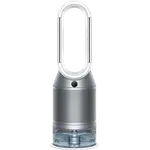


Dyson Purifier Cool PC1 Review: A Strong Purifier, a Modest Fan
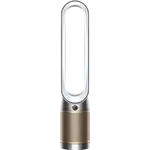
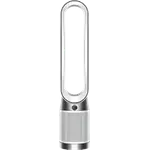
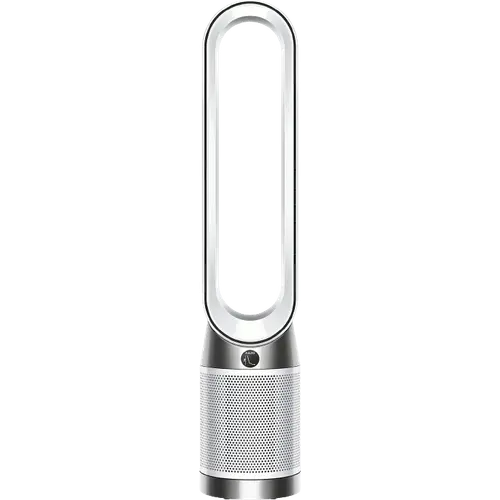
The Dyson Purifier Cool PC1 is a premium tower that combines HEPA H13 and activated carbon filtration with an oscillating, ten-speed fan, PM2.5 and VOC sensing, an LCD readout, a remote and app control with Alexa and Google Home. Owners like it most as a purifier: it helps with pollen and pet allergies, freshens the air and looks good in a room. As a fan it splits opinion, since several owners find the airflow modest and the top speeds loud, and it is priced well above purifiers that clean the air just as well.
- Allergy sufferers
- Pet owners
- Bedrooms and living rooms
- Design-led homes
Pros
- HEPA H13 plus activated carbon filtration
- Owners say it helps with pollen and pet allergies
- PM2.5 and VOC sensors with an LCD air quality readout
- Auto, sleep and timer modes, with history in the app
- Remote control plus app control with Alexa and Google Home
- Oscillates and is light enough to move between rooms
- Quiet at low and night settings
Cons
- Several owners find the airflow weak as a cooling fan
- Loud at the higher fan speeds
- Premium price for the airflow it delivers
- App pairing can need a remove and re-add
- 2.4 GHz Wi-Fi only, no Apple Home, SmartThings or Matter
- No published CADR, coverage area or filter life
Who is the Dyson Purifier Cool PC1 for?
It suits someone who wants one appliance to filter the air all year and move air on warm days, in a bedroom or a living room, and who values the look and the app. Owners buy it for hay fever and pet allergies, and some run one per room. It cools only: there is no heating element, which is what the Hot+Cool models add.
What owners like about the PC1
The purification is the part owners praise most consistently. Allergy sufferers say it helps noticeably during pollen season and with pet dander, and several say the air smells fresher. The remote and the app both get good marks, and the app shows the air quality the PM2.5 and VOC sensors read, which the on-board LCD also displays. Owners also like that it is light enough to move from room to room, that it is quiet at low and night settings, and the way it looks.
What to know before you buy
The fan is where opinions split. Several owners find the airflow weak for the price, say it does not really cool a room in a heatwave and only moves warm air around, and find the higher speeds, the only ones with real airflow, loud; one compares it unfavourably with an older Dyson fan. One owner reports a high-pitched motor noise after about seven months. App pairing can be fiddly, and one owner fixed it by deleting the device and adding it again. On paper, Wi-Fi is 2.4 GHz only, there is no Apple Home, SmartThings or Matter support, Dyson publishes no CADR or coverage area, it is not AHAM Verifide, the pre-filter is not washable and the filter life is not published.
Is the Dyson Purifier Cool PC1 worth it?
It is worth it if you want a good-looking purifier that also works as a gentle fan and you will use the app and the sensors. If cooling is the main job, owners point out that ordinary fans and cheaper purifier fans move more air for far less money, and buyers who only need clean air can find rated purifiers with a published CADR at a lower price.
Frequently asked questions
Does the Dyson Purifier Cool PC1 heat?
No. The PC1 purifies and cools only. The Hot+Cool models, such as the HP1, add a heating element.
Does the Dyson PC1 work with Alexa, Google Home or Apple Home?
It works with Alexa and Google Home and with Dyson's own app over 2.4 GHz Wi-Fi. It does not support Apple Home, SmartThings or Matter.
Is the Dyson PC1 good as a fan?
It is a ten-speed oscillating fan, but owners describe the airflow as modest and say the speeds that move the most air are loud. It is better thought of as a purifier that also circulates air than as a heatwave fan.
Which sensors does the Dyson PC1 have?
It senses PM2.5 particles and VOCs and shows the readings on its LCD and in the app. It has no PM1, PM10, CO2, formaldehyde, temperature or humidity sensor.
What is the Dyson PC1's CADR?
Dyson does not publish a CADR or a coverage area for this model, and it is not AHAM Verifide, so its cleaning rate cannot be compared directly with rated purifiers.