


Airthings Wave Enhance Review: A Bedroom and Office Air Monitor With Noise and Light Sensors
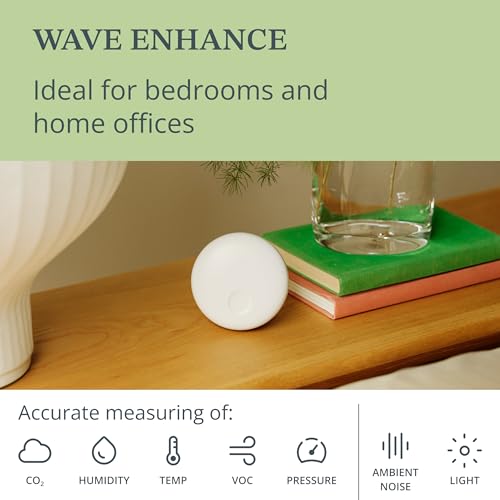
The Airthings Wave Enhance is a purpose-built air quality monitor for bedrooms and home offices, measuring CO2, VOCs, temperature, humidity and air pressure, and adding noise and light sensors that most monitors lack. The sensor mix is genuinely useful for sleep and concentration: owners are surprised how high CO2 climbs overnight behind a closed door even with ventilation running, and find the light sensor helps decide on blackout curtains. It has a clean app with graphs and long-term history, an easy initial setup and a lower price than the radon-and-particulate View Plus. The big drawbacks: it is Bluetooth-only with no Wi-Fi, so syncing is slow and needs an Airthings hub for real-time data, and a notable number of owners report app connection and syncing problems (units that will not pair, or that stop syncing after months), which drags down its rating. For a CO2-and-comfort monitor in one room, it is appealing if you accept the connectivity limits.
- Bedroom sleep monitoring
- Home office concentration
- CO2 and ventilation tracking
- Airthings hub owners
Pros
- Purpose-built sensor mix for bedrooms and offices
- Adds ambient noise and light sensors most monitors lack
- Accurate CO2 that reveals overnight buildup and prompts ventilation
- Clean app with graphs and long-term history; easy initial setup
- Cheaper and smaller than the View Plus for a single room
- Works with Google Home, Alexa, Home Assistant and IFTTT
Cons
- Bluetooth only, no Wi-Fi: slow sync and needs an Airthings hub for real-time data
- Notable app connection and syncing problems reported (some stop syncing after months)
- Battery powered with no plug-in option; app does not show remaining battery
- No programmable alarm; hard to tell identical units apart
- No radon or PM2.5 sensing
- No Apple HomeKit, SmartThings or Matter; some units arrived used
Who is the Airthings Wave Enhance for?
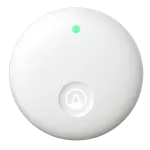
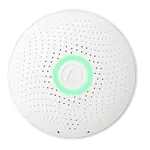
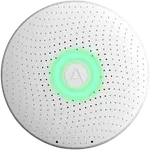
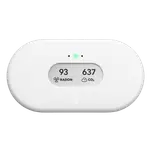
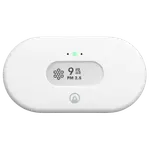
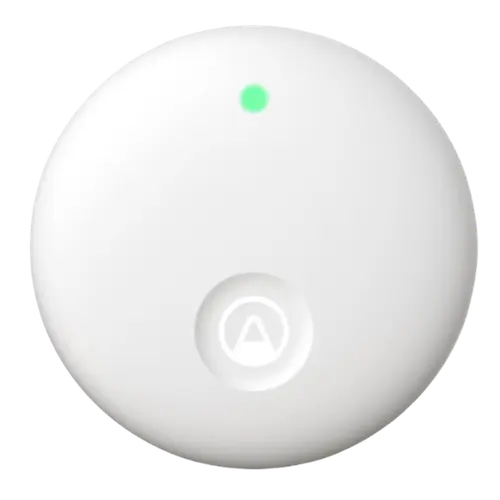
This is a room-focused air quality monitor aimed specifically at bedrooms and home offices, where sleep and concentration matter. It measures CO2, VOCs, temperature, humidity and atmospheric pressure, and uniquely adds ambient noise and ambient light sensors, so it can flag a stuffy, loud or too-bright room. It does not measure radon or PM2.5 (the View Plus does). It connects over Bluetooth only (no Wi-Fi), works with a colored ring indicator rather than a text display, and runs on batteries. It pairs with the Airthings app for graphs and long-term history, and works with Google Home, Amazon Alexa, Home Assistant and IFTTT (no Apple HomeKit, SmartThings or Matter). To get real-time, always-on data you need an Airthings hub. It best suits people optimizing a bedroom for sleep or an office for focus, anyone tracking CO2 and ventilation in one room, and existing Airthings owners who already have a hub.
What buyers love
Owners appreciate how well-targeted the sensor mix is. The CO2 sensor is the standout, accurate enough to reveal surprisingly high overnight levels behind a closed door even with an HRV running, prompting people to ventilate. The noise and light sensors turn out more useful than expected, with one owner using the light reading to decide whether to add blackout curtains, and several note it captures how a human or pet presence changes the air. The app, graphs and long-term data get praise, setup is called easy, and the look is clean. Compared with the View Plus it is cheaper and smaller, which buyers like for a single room where they do not need radon or particulates (a purifier can cover PM2.5). Airthings fans with multiple monitors generally welcome it as a focused addition to the family.
What to know before you buy
Two issues dominate the criticism. First, connectivity: it is Bluetooth-only with no Wi-Fi, so syncing is slow (around a minute) and does not happen in the background, and for real-time data you need an Airthings hub. Several owners report it did not work with a hub as advertised, or only synced over their phone's Bluetooth. Second, reliability: a meaningful number describe app connection and syncing failures, units that would not pair (sometimes flagged as not compatible with the new app), or devices that synced fine at first and then stopped after months, with support unhelpfully blaming Wi-Fi strength. It is battery powered with no plug-in option, the app does not show remaining battery (only the web dashboard does), there is no programmable alarm, and with identical-looking units it is hard to tell them apart. A few buyers also received used items, and VOC accuracy, as with most consumer monitors, is hard to verify. There is no radon or PM2.5 sensing, and no Apple HomeKit, SmartThings or Matter.
Is the Airthings Wave Enhance worth it?
For a focused bedroom or office monitor, it is appealing on paper: the CO2-plus-noise-and-light combination is genuinely useful for sleep and concentration, the app is good, and it is cheaper than the View Plus. But you have to accept the Bluetooth-only design (slow sync, hub needed for real-time data) and the risk of app and syncing problems that several owners hit. It makes the most sense if you already own an Airthings hub and want room-level CO2, light and noise data, or if you are happy to check it over Bluetooth. If you want reliable, always-on, Wi-Fi monitoring, or radon and particulate sensing, the View Plus is the safer choice; if its specific sensor mix fits your room and you can live with the connectivity limits, it can be a good fit.
Frequently asked questions
What does the Wave Enhance measure?
CO2, VOCs, temperature, humidity and air pressure, plus ambient noise and ambient light, a mix aimed at bedrooms and offices. It does not measure radon or PM2.5 particulates; the Airthings View Plus covers those.
Does it have Wi-Fi?
No. It is Bluetooth-only, so syncing is slow and happens when you open the app nearby. To get real-time, always-on data you need an Airthings hub, though some owners report trouble getting it to work with a hub as advertised.
Why won't it sync, or why did it stop syncing?
App connection and syncing problems are the most common complaint: some units will not pair (occasionally flagged as not compatible with the new app), and others synced fine at first then stopped after months. Support has not reliably resolved these, so it is a real risk to weigh.
How is it powered?
It runs on batteries with no plug-in option, and the app does not show remaining battery life (only the web dashboard does). Because it lacks Wi-Fi, battery drain is lower than a Wi-Fi monitor, but you will replace batteries over time.
Why does it have noise and light sensors?
They support its bedroom and office focus: the light sensor helps you judge whether a room is too bright for sleep (and whether to add blackout curtains), and the noise sensor flags a loud environment, alongside the CO2 reading that signals when to ventilate.