


Eve Room Review: A Slick HomeKit Air Sensor With Unreliable VOC Readings
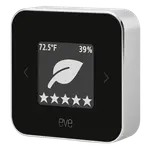
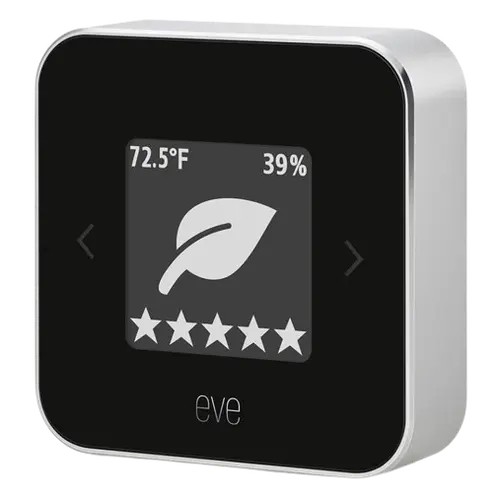
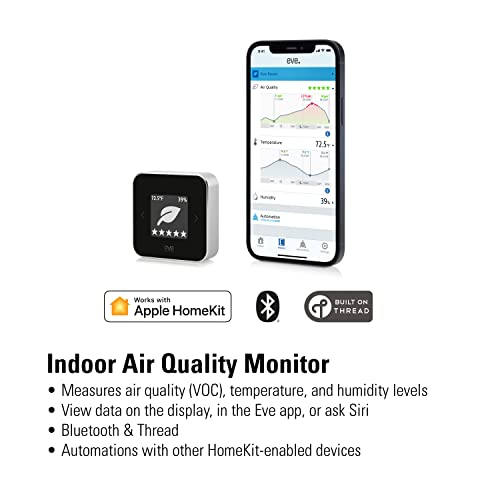
The Eve Room is a compact indoor air sensor built for Apple's ecosystem, measuring VOCs, temperature and humidity, with an e-ink display, Thread and Matter support, and a polished Eve app. Its strengths are clear: setup into Apple HomeKit is effortless, Thread gives it months of battery life on a charge, the app's graphs, history and threshold alerts are excellent, and the temperature and humidity readings are accurate, making it great for automating humidifiers, dehumidifiers or purifiers in HomeKit. The big weakness, and the reason for its mixed rating, is the VOC sensor: many owners find it erratic and unreliable, failing to react to gas cooking or cigarette smoke, sticking at absurd values, or taking days to calibrate, while others find it fine. It is also Apple-centric (Bluetooth-only outside HomeKit, no Alexa or Google), still uses micro-USB, and does not warn before the battery enters low-power mode. For HomeKit users wanting temperature and humidity with smart automations, it is appealing; for trustworthy VOC monitoring, it is a gamble.
- Apple HomeKit users
- Temperature and humidity automations
- Eve / Thread ecosystem owners
- Home Assistant users
Pros
- Effortless, stable Apple HomeKit integration with Thread and Matter
- Months of battery life on a rechargeable charge thanks to Thread
- Excellent Eve app: graphs, history, export and threshold alerts
- Accurate temperature and humidity readings for room-level tracking
- Compact, elegant design; good for automating humidifiers and purifiers
- Also works with Home Assistant; good Eve customer support
Cons
- VOC sensor is often erratic or stuck, and can take days to calibrate
- Apple-centric: Bluetooth only outside HomeKit, no Alexa or Google
- Still uses micro-USB rather than USB-C
- Battery enters low-power mode without a clear warning
- Dim on-device display that cannot be turned off; ~10-minute sampling
- Cheaper Eve Weather is a better buy if you only need temperature and humidity
Who is the Eve Room for?
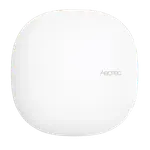
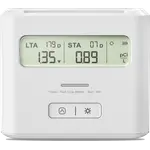
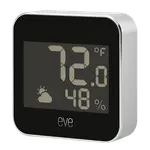
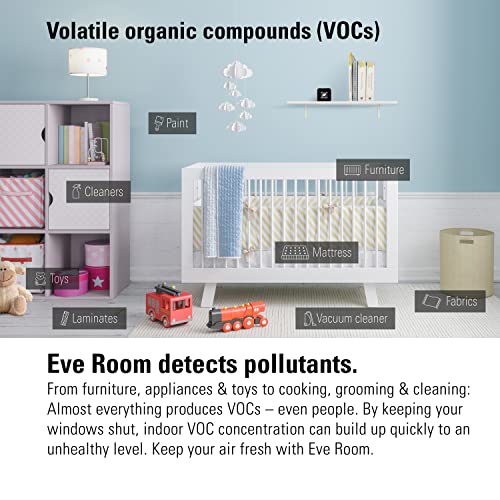
This is a small, design-led indoor air sensor for people in Apple's smart home. It measures VOCs (airborne chemicals), temperature and humidity, shows them on an e-ink display, and connects over Bluetooth and Thread with Matter support. It is built around Apple HomeKit (with Home Assistant also supported), but there is no Alexa or Google Home, and outside the Apple ecosystem it works over Bluetooth only. It runs on a rechargeable battery that lasts months thanks to Thread, and pairs with the Eve app for graphs, history, data export and threshold notifications. It best suits HomeKit households wanting room-level temperature, humidity and air data they can automate against (for example, switching a humidifier or purifier), Eve and Thread ecosystem owners, and Home Assistant users. If you want reliable VOC measurement specifically, read the caveats below first.
What buyers love
The Apple integration is the standout: setup into HomeKit is repeatedly called effortless and stable, and owners use it to automate humidifiers, dehumidifiers, purifiers or portable AC based on conditions. Thread delivers exceptional battery life, with owners reporting months on a charge and units still at 100 percent after weeks, and they prefer rechargeable to disposable batteries. The Eve app earns strong praise for its clean graphs, historical data, export and threshold alerts, and for being more detailed than Apple's Home app while pulling in other devices. Temperature and humidity readings are accurate, matching thermostats and other sensors, which makes it genuinely useful for tracking individual rooms (kitchens, basements, garages, near houseplants). The compact, elegant design blends into any room, and Eve's customer support gets good marks. Several owners run multiple Eve devices and stick with the brand for their home automation.
What to know before you buy
The VOC sensor is the recurring problem and the main reason the rating is mixed. A number of owners report it as wildly inaccurate: not reacting to gas-stove cooking or heavy cigarette smoke, reading clean air as poor or polluted air as excellent, or getting stuck at absurd values (thousands or tens of thousands of micrograms) that calibration would not fix, with some concluding it is unfit for purpose. Others find it accurate and matching a Dyson, so results are inconsistent, and it can take several days to settle after setup. Beyond VOCs: it is Apple-centric, working over Bluetooth only outside HomeKit with no Matter-over-Thread for non-Apple platforms and no Alexa or Google; it still uses micro-USB rather than USB-C; the battery enters a slower low-power sampling mode without a clear app warning, so set-and-forget users should check it periodically; the on-device display is dim and cannot be turned off; and the sampling interval is about 10 minutes, which is slow for fast automations. Several owners note the cheaper Eve Weather is a better buy if you only need temperature and humidity.
Is the Eve Room worth it?
For HomeKit users who mainly want accurate temperature and humidity with smart automations and excellent battery life, it is a nice, well-designed device, and the Eve app and Thread support are genuine strengths. But if your main reason for buying is VOC monitoring, temper your expectations: enough owners report the VOC reading being erratic or stuck that you cannot count on it, and it can take days to calibrate. It is also locked to Apple's ecosystem for full functionality and still uses micro-USB. Buy it if you are in HomeKit, value the design and battery life, and treat VOCs as a rough indicator rather than a precise measurement; if you need reliable VOC data, or you are not on Apple, look elsewhere, and consider the cheaper Eve Weather if temperature and humidity are all you need.
Frequently asked questions
Is the Eve Room's VOC reading accurate?
It is inconsistent. Some owners find it accurate and matching other monitors, but many report it as unreliable, not reacting to obvious sources like gas cooking or smoke, or sticking at absurd values that calibration will not fix. It can also take several days to settle, so do not rely on it for precise VOC measurement.
Does it work without Apple HomeKit?
Only partially. It is built for Apple's ecosystem: full functionality is via HomeKit, and outside Apple it works over Bluetooth only, with no Matter-over-Thread for other platforms and no Alexa or Google Home. Home Assistant is supported.
How long does the battery last?
Months on a single charge, helped by Thread and the e-ink display, and the battery is rechargeable rather than disposable. The catch is that it slips into a slower low-power sampling mode without a clear app warning, so check the battery occasionally if you set it and forget it.
What does it measure, and how often?
VOCs, temperature and humidity, viewable in the Eve app with history and alerts. It samples roughly every 10 minutes, which is fine for monitoring but slow for fast automations. Temperature and humidity are accurate; the VOC reading is the unreliable part.
Should I get the Eve Room or the Eve Weather?
If you only need temperature and humidity, several owners suggest the cheaper Eve Weather instead, since the Eve Room's main differentiator is the VOC sensor, which is the least reliable part. Choose the Eve Room only if you specifically want VOC data and accept its inconsistency.