

Third Reality Smart Air Quality Sensor Review: Sensirion CO2 and VOC Readings for a Local Zigbee Home
This is an air quality sensor for a home that already runs a Zigbee coordinator. It reports CO2 from 400 to 5000 ppm, a 0 to 500 VOC Index, temperature to a stated ±0.1°C and humidity to ±1% RH, and it does nothing with those numbers on its own: there is no screen, no buzzer and no app of its own, so the thresholds and the reactions live in Home Assistant, SmartThings, Hubitat, Homey or an Echo with a built-in Zigbee radio. That is the point of it, since the whole loop stays local and the price sits at the budget end of the category. The trade-offs are a mandatory hub, no particulate or carbon monoxide sensing, and an Apple Home or Google Home path that runs through the separately sold Smart Bridge MZ1.
- Home Assistant and Zigbee homes
- CO2 driven ventilation automations
- Bedrooms, offices and nurseries
- Budget buyers
Pros
- Sensirion sensing for CO2, VOC Index, temperature and humidity in one unit
- CO2 range of 400 to 5000 ppm and a 0 to 500 VOC Index
- Stated accuracy of ±0.1°C for temperature and ±1% RH for humidity
- Zigbee 3.0, so automations run locally in the hub with no cloud routing
- Works with Home Assistant through ZHA and Zigbee2MQTT, which ships a converter for this model
- Pairs directly with SmartThings, Hubitat, Homey and Echo devices that have a built-in Zigbee hub
- Adapter powered for continuous monitoring, with reporting intervals from 30 to 300 seconds
- Compact enough to sit beside an outlet at 67 x 36 x 86.5 mm
Cons
- A Zigbee hub or coordinator is mandatory, the sensor cannot work alone
- Apple Home, Google Home and Matter need the Smart Bridge MZ1, sold separately
- No display and no buzzer: readings and alerts live in the hub app
- No particulate sensing, so PM2.5 and PM10 are not covered
- No carbon monoxide, radon or NOx measurement
- Mains powered only, with no battery option
- No warranty period published for the product
Who is the Third Reality Smart Air Quality Sensor for?
It suits a home that already has a Zigbee coordinator and wants air data inside its own automations rather than in another vendor app. As a Zigbee 3.0 end device it pairs with Home Assistant through ZHA or Zigbee2MQTT, with SmartThings 2015 and 2018 hubs and the Aeotec Smart Home Hub, with Hubitat C7 and C8, with Homey Bridge and Homey Pro, with the Third Reality Hub Gen2 Plus, and with Echo devices that carry a built-in Zigbee hub. Once it is joined, four readings arrive on a reporting interval you can set between 30 and 300 seconds, which is what makes it usable as an automation trigger instead of a dashboard curiosity.
What the sensor offers
The measuring side is the strong part. Sensirion parts handle all four values: carbon dioxide across a 400 to 5000 ppm range, a VOC Index on the standard 0 to 500 scale, temperature with a stated accuracy of ±0.1°C and humidity with a stated accuracy of ±1% RH. Because it runs from the included USB power adapter rather than a battery, it measures continuously and there is nothing to recharge. Third Reality calls the automation side Automatic Air Rules: thresholds set in the hub, such as starting an exhaust fan when CO2 passes 1000 ppm, ramping a purifier when the VOC Index spikes, or running a dehumidifier when humidity drifts high. None of that touches a cloud service, and history is kept by whichever hub app you pair it with.
What to know before you buy
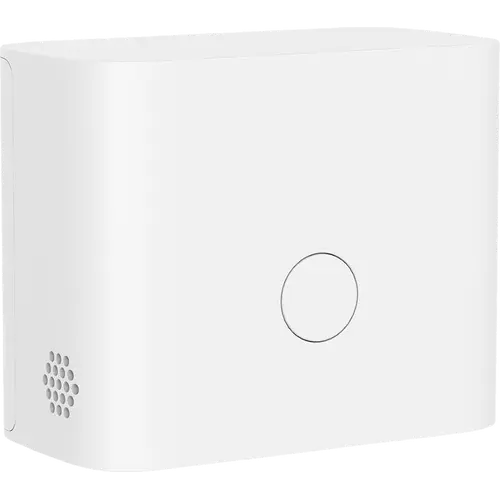
The sensor is a component, not an appliance. It has no display, so a glance at the box tells you nothing and every reading is read in the hub app, and it has no buzzer, so an alert is whatever notification your hub sends. A Zigbee coordinator is mandatory: there is no Wi-Fi, no Bluetooth and no Thread radio inside it. Apple Home and Google Home have no Zigbee radio either, so those two platforms, and Matter in general, arrive through Third Reality's own Smart Bridge MZ1, which is sold separately. On the sensing side it covers gases and comfort but not particulates: there is no PM2.5, PM10 or carbon monoxide measurement, so smoke, dust and cooking particles are outside what it can see. It also needs to stay plugged in, and Third Reality publishes no warranty term for it.
Is the Third Reality Smart Air Quality Sensor worth it?
At the budget end of this category it delivers the two readings that actually drive ventilation automations, CO2 and VOC, with named Sensirion sensing behind them and a local Zigbee path to the hub. Against pricier monitors it gives up the screen, the particulate sensors and the standalone app, and against a Matter native monitor it gives up direct Apple Home and Google Home support unless the Smart Bridge MZ1 is added. If the hub is already there and the goal is for the house to react to stale air by itself, that is a sensible set of things to give up.
Frequently asked questions
Does the Third Reality Smart Air Quality Sensor need a hub?
Yes. It is a Zigbee 3.0 end device, so it needs a Zigbee coordinator: Home Assistant with ZHA or Zigbee2MQTT, a SmartThings 2015 or 2018 hub, the Aeotec Smart Home Hub, Hubitat C7 or C8, Homey Bridge or Pro, the Third Reality Hub Gen2 Plus, or an Echo device with a built-in Zigbee radio.
Does it work with Home Assistant?
Yes, directly. It pairs through both ZHA and Zigbee2MQTT, and Zigbee2MQTT ships a converter for this exact model that exposes temperature, humidity, CO2 and the VOC Index as separate entities.
Does it work with Apple Home or Google Home?
Only through Third Reality's Smart Bridge MZ1, which is sold separately. Neither platform has a Zigbee radio, so the bridge is what republishes the sensor over Matter to Apple Home and Google Home. Alexa, SmartThings and Home Assistant reach it directly over Zigbee.
Does it measure PM2.5 or particulates?
No. It measures carbon dioxide, VOC Index, temperature and humidity. Dust, smoke and other particulate matter are outside what this sensor reports, and so is carbon monoxide.
Does it have a screen?
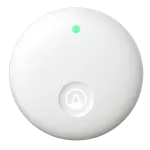
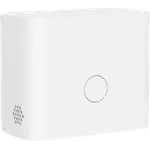
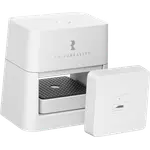
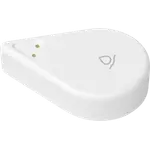
No. The body carries a pairing button and the sensor intake grille, nothing else. Every reading is shown in the app of whichever hub it is paired with, which is also where history and alert thresholds live.
Does it have to stay plugged in?
Yes. It runs from the included USB power adapter and has no battery, which is what allows continuous monitoring with reporting intervals configurable between 30 and 300 seconds.