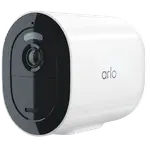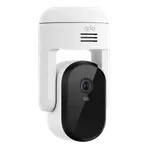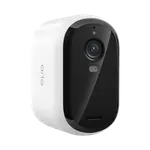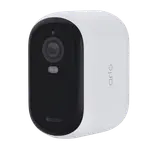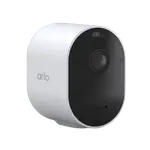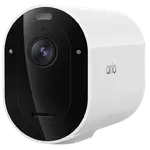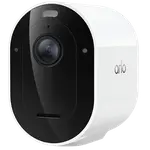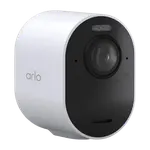
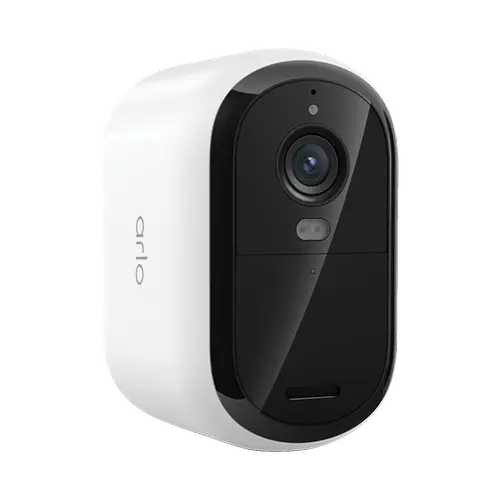

Arlo Essential XL 2K (3rd Gen) Review: The Long-Battery Wire-Free Camera That Leans on a Subscription
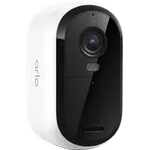
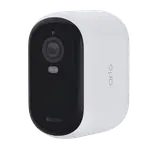
The Arlo Essential XL 2K (3rd Gen) is a wire-free outdoor camera built around its extra-large integrated battery, rated for 16 to 24 months of typical use, paired with 2K video, color night vision, a spotlight, a siren and dual-band Wi-Fi. Owners consistently praise the picture, the night vision and how rarely it needs a charge. The trade-off is that the camera has no microSD slot, so saved video history and the AI person, vehicle, package and animal alerts require a subscription. It suits homeowners who want a long-lasting camera in a hard-to-reach spot and are happy to pay for Arlo cloud storage.
- Hard-to-reach outdoor spots
- Existing Arlo households
- Pet owners
- Garages and driveways
Pros
- Extra-large integrated battery rated for 16 to 24 months of typical use
- Sharp 2K video with a 130° diagonal field of view
- Color night vision helped by a built-in spotlight
- Dual-band Wi-Fi (2.4 GHz and 5 GHz) with no hub required
- Siren and two-way audio built in
- Works with Alexa, Google Home, SmartThings and Home Assistant
Cons
- No microSD slot: recordings and AI alerts need a subscription
- Mount offers very little tilt adjustment
- Live view can be slow to connect on weak Wi-Fi
- Apple Home only through an Arlo SmartHub, no Matter or RTSP
- Sealed battery takes a long time to recharge over USB-C
Who is the Arlo Essential XL 2K (3rd Gen) for?
It is aimed at anyone who wants an outdoor camera without running a cable. The battery is sealed inside the body and rated by Arlo for 16 to 24 months between charges with typical use, so it fits places where climbing a ladder every few weeks would be a chore: a garage, a side gate, a driveway or the back of the yard. Owners describe watching dogs and other pets, a motorcycle in a garage and the front of the house. It connects straight to a 2.4 GHz or 5 GHz Wi-Fi network, so no hub is needed, and it slots into an existing Arlo account alongside older Arlo cameras.
What buyers love
Battery life is the headline: several owners report weeks of use with only a few percent drained, and one noted the charge barely moved after three weeks of light motion. Image quality comes up just as often, with the 2K sensor and the 130° diagonal view described as sharp in daylight and the color night vision singled out for showing real detail after dark, helped by the built-in spotlight. Setup through the Arlo app is called quick and easy, the build feels solid and weatherproof, and the siren and two-way audio give a way to react from the phone.
What to know before you buy
This is a cloud camera. There is no microSD slot and no internal storage, so without a subscription you get live view and basic motion alerts, while recorded video history, AI detection of people, vehicles, packages and animals, familiar faces and activity zones all sit behind a paid plan; local recording is only possible through an optional Arlo SmartHub. That dependence is the most common complaint, especially from buyers outfitting several cameras. Owners also mention a mount with very little tilt range, live view that can be slow to connect on a weak Wi-Fi signal, and a long USB-C recharge once the large battery does run down. A couple of reports describe a unit failing early or a battery that stopped holding its charge, which Arlo replaced. Apple Home works only through an Arlo SmartHub, and there is no Matter or RTSP support.
Is the Arlo Essential XL 2K (3rd Gen) worth it?
If battery life and image quality are what matter most, it is one of the easier wire-free cameras to live with: the hardware draws consistent praise and the dual-band Wi-Fi is a real step up for the Essential line. The value call depends on the subscription. Budget for a plan to get recordings and smart alerts, or pick a camera with onboard storage if you want to avoid a recurring cost.
Frequently asked questions
Does the Arlo Essential XL 2K (3rd Gen) need a subscription?
Not to run. Live view and motion alerts work without one, but saved video history, AI detection of people, vehicles, packages and animals, familiar face alerts and activity zones require a paid Arlo plan. The camera has no microSD slot; local recording is only possible through an optional Arlo SmartHub.
How long does the battery last?
Arlo rates the integrated extra-large battery at 16 to 24 months with typical use, roughly four times the standard Essential (3rd Gen). The battery cannot be removed; it recharges over the included USB-C cable, and an Arlo solar panel or outdoor charging cable can be bought separately to keep it topped up.
Does it work with Alexa, Google Home and Apple Home?
It works with Amazon Alexa, Google Home and Samsung SmartThings, and Home Assistant can reach it through the hass-aarlo integration. Apple Home requires pairing the camera to an Arlo SmartHub. It does not support Matter.
Does it support 5 GHz Wi-Fi?
Yes. Dual-band Wi-Fi is the main change from the 2nd Gen: the 3rd Gen connects to 2.4 GHz or 5 GHz networks directly, without an Arlo SmartHub.
What is the difference between the Essential XL and the regular Essential (3rd Gen)?
Both record 2K video with the same 130° view, spotlight, siren and two-way audio. The XL carries a much larger integrated battery, rated for 16 to 24 months versus four to six months, which also makes it a larger and heavier camera.