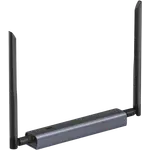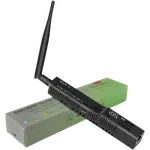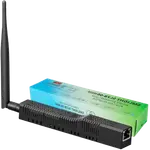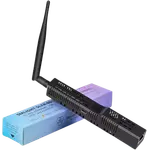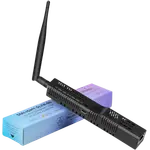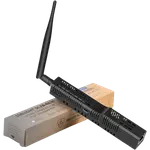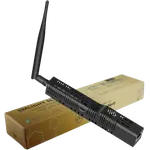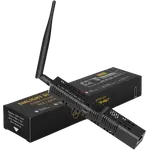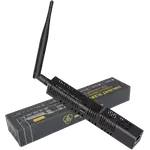



SMLIGHT SLZB-MR4 Review: The Newest Silicon Labs and TI Radios in One PoE Gateway
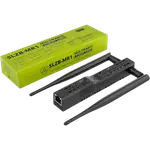
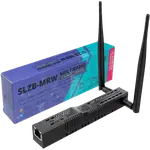
The SLZB-MR4 sits at the top of SMLIGHT's multi-radio line, combining Silicon Labs' EFR32MG26 with Texas Instruments' CC2674P10. Both are the newest parts from their respective families, and having two of them means Zigbee and Thread run at the same time, on dedicated silicon, with the largest device headroom the range offers. It connects over Ethernet with PoE, USB or Wi-Fi, works as a Zigbee coordinator and router, and acts as a Thread border router for Matter accessories. It is a specialist device: worth it if you genuinely run two protocols, overkill if you do not.
- Large mixed Zigbee and Thread networks
- Matter-heavy setups
- Splitting ZHA and Zigbee2MQTT
- PoE installations
Pros
- Newest radios in the range: EFR32MG26 and CC2674P10
- Zigbee and Thread run simultaneously on dedicated chips
- Largest device headroom of the family
- Ethernet with PoE, plus USB and Wi-Fi
- Thread border router and Zigbee router capability
- Home Assistant and Zigbee2MQTT support
Cons
- Most expensive model in the range
- Newest hardware, so the least community documentation
- No Z-Wave radio and no Matter bridging
- 2.4 GHz Wi-Fi only
- Limited regional availability
- One year warranty
Who is the SLZB-MR4 for?
It is aimed at the most demanding self-hosted setup: a large Zigbee network that is also accumulating Thread and Matter accessories. Two current-generation radios mean neither protocol is being time-shared or compromised, and the newest chips carry the most headroom for device counts. As with the rest of the multi-radio models, you can also split integrations, running ZHA on one radio and Zigbee2MQTT on the other, which otherwise takes two separate coordinators.
What it offers
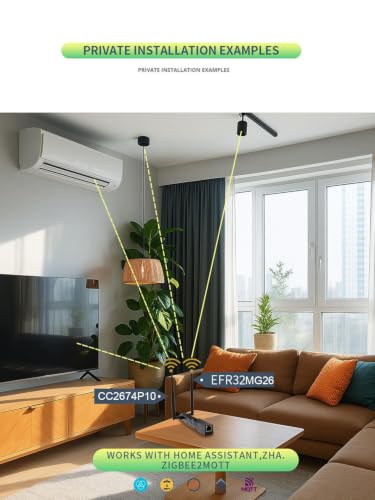
The EFR32MG26 is the newest Silicon Labs Zigbee and Thread part, and the CC2674P10 is Texas Instruments' current multiprotocol chip, so both firmware ecosystems get native support. Dual network mode is supported. Connectivity spans Ethernet with PoE, USB and 2.4 GHz Wi-Fi, so the gateway can be mounted centrally on a single cable, which is what actually determines Zigbee reliability. It also works as a Zigbee router and a Thread border router, and both Home Assistant and Zigbee2MQTT are supported.
What to know before you buy
This is the newest model in the family, which means the least community documentation and the fewest published troubleshooting threads, something to weigh if you would rather follow a well-trodden path. There is no Z-Wave radio and no Matter bridging of existing Zigbee devices. Wi-Fi is 2.4 GHz only. Availability is thin, with a single regional listing rather than broad distribution. Warranty is one year.
Is the SLZB-MR4 worth it?
It is the most expensive way to coordinate a Zigbee network, and that only makes sense at the top end: a big mesh, both protocols in use, and a preference for the newest silicon. For a Zigbee-only home, or a modest number of devices, the single-radio SLZB-06 or SLZB-07 models deliver the same day-to-day result for a fraction of the price, and the earlier MR models cover dual protocols for less.
Frequently asked questions
How is the MR4 different from the MR3?
The Silicon Labs radio. The MR4 uses the newer EFR32MG26 where the MR3 uses the EFR32MG24. Both pair it with a Texas Instruments CC2674P10.
Can it run Zigbee and Thread together?
Yes. Dual network mode is supported, with a dedicated radio for each protocol.
Do I need this over a single-radio coordinator?
Only if you run both protocols, or want to split ZHA and Zigbee2MQTT across two radios. For Zigbee alone, the cheaper models are equivalent in daily use.
How does it connect?
Ethernet with PoE, USB, or 2.4 GHz Wi-Fi.
Does it support Z-Wave?
No. Zigbee and Thread only, with no Matter bridging of existing Zigbee devices.