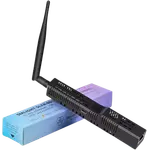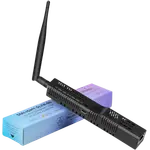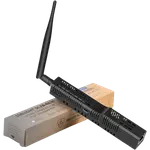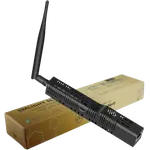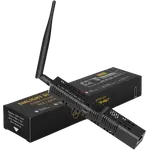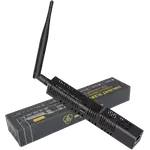

SMLIGHT SLZB-MRW10 Review: Zigbee, Thread and Z-Wave From One PoE Gateway
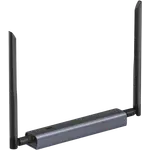
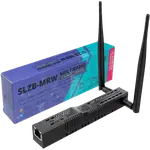
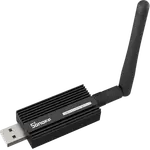
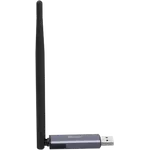
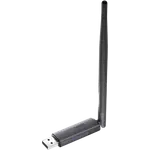
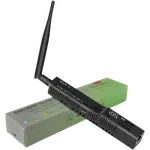
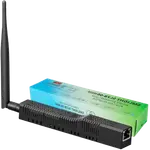
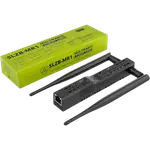
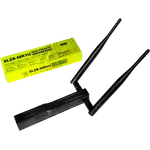
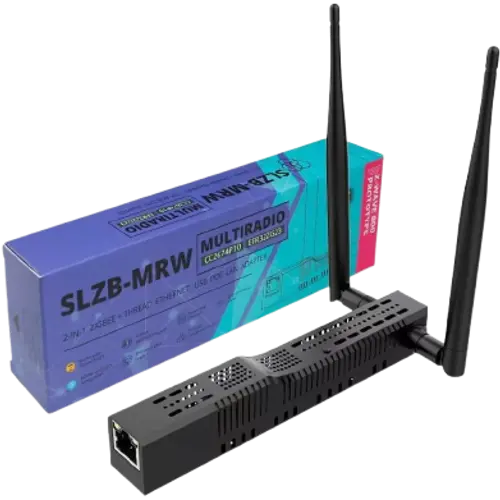
The SLZB-MRW10 is the model that removes the last reason to keep a second dongle: alongside Zigbee (Texas Instruments CC2652P10) and Thread, it carries a genuine Z-Wave Series 800 controller on a Silicon Labs EF32ZG23, and it acts as a Bluetooth proxy too. That means one PoE-powered box on the network can serve every low-power protocol a Home Assistant setup normally needs. It connects over Ethernet with PoE, USB or Wi-Fi, has two external antennas, and supports dual network operation so Zigbee and Thread run at the same time.
- Home Assistant setups using Zigbee and Z-Wave
- Replacing multiple dongles with one device
- PoE installations
- Thread and Matter accessories
Pros
- Zigbee, Thread and Z-Wave in one device
- Z-Wave Series 800 controller, the current generation
- Bluetooth proxy extends BLE coverage to Home Assistant
- Dual network mode: Zigbee and Thread at the same time
- Two external antennas with +5 dB gain and +20 dBm of transmit power
- Ethernet with PoE, plus USB and Wi-Fi
- Home Assistant and Zigbee2MQTT support
Cons
- Z-Wave is frequency region-locked, so the model must match your country
- No Matter bridging of Zigbee or Z-Wave devices
- 2.4 GHz Wi-Fi only
- Expensive if you only need Zigbee
- Dimensions are not documented
- One year warranty
Who is the SLZB-MRW10 for?
Anyone whose server currently has a Zigbee stick in one port and a Z-Wave stick in another, plus a Bluetooth adapter that barely reaches the next room. This gateway consolidates all of that into a single unit on the network, which is both tidier and better positioned, since it can be mounted centrally over PoE while the server stays wherever it lives. For Home Assistant users running mixed protocol homes, that consolidation is the entire pitch.
What it offers
Zigbee 3.0 on a CC2652P10 with coordinator and router roles, Thread border router capability, and Z-Wave via a Series 800 controller, which is the current generation with better range and battery behaviour than earlier Z-Wave chips. Dual network mode lets Zigbee and Thread run simultaneously. The Bluetooth proxy relays BLE sensor signals to Home Assistant over the network, effectively extending Bluetooth coverage to wherever the gateway sits. Two external antennas with +5 dB gain and +20 dBm of transmit power handle the radio side, and connection is by Ethernet with PoE, USB or 2.4 GHz Wi-Fi.
What to know before you buy
Z-Wave is region-locked by frequency, so the unit has to match your country's Z-Wave band; check that before ordering, since a mismatched device will not talk to your existing Z-Wave locks or sensors. It does not bridge Zigbee or Z-Wave devices to Matter controllers, so it extends what you can run rather than translating between ecosystems. Wi-Fi is 2.4 GHz only. Physical dimensions are not documented. Warranty is one year.
Is the SLZB-MRW10 worth it?
Priced against a single-protocol coordinator it looks expensive, but the right comparison is against a Zigbee stick plus a Z-Wave stick plus a Bluetooth solution, which together cost more, occupy three ports and sit in the worst possible radio position. If your home genuinely uses Zigbee and Z-Wave, this is the cleanest consolidation available. If you only run Zigbee, the Z-Wave radio is money spent on a feature you will never enable.
Frequently asked questions
Does the SLZB-MRW10 really do Z-Wave?
Yes. It includes a Z-Wave Series 800 controller on a Silicon Labs chip, alongside its Zigbee radio and Thread border router capability.
Can it replace my separate Zigbee and Z-Wave dongles?
That is the design intent. One PoE gateway covers Zigbee, Thread and Z-Wave, and also proxies Bluetooth to Home Assistant.
Does the Z-Wave part work in any country?
No. Z-Wave uses different frequencies per region, so you need the version matching your country, or it will not communicate with your existing Z-Wave devices.
Can Zigbee and Thread run together?
Yes, dual network mode is supported.
How does it connect to my network?
Ethernet with PoE, USB, or 2.4 GHz Wi-Fi.