

Philips Hue Secure Wired Video Doorbell Review: The Doorbell That Rings Your Lights
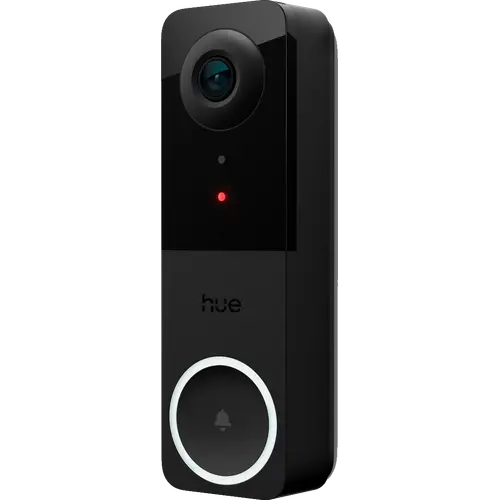
The Philips Hue Secure Wired Video Doorbell is built for a house that already runs on Hue. Its square 1:1 sensor shoots 2K over a 180 degree view, so a caller and the parcel at their feet stay in the same frame, and a press or a detected person can blink, colour or switch the lights you already own, which is the one thing no other doorbell does natively. It is wired only, needs a 12-24V AC transformer that is not in the box, and the chime is a separate purchase, so the install is the expensive part. Buy it for the Hue automations and the free 24 hour history; look elsewhere if your home runs on Apple.
- Philips Hue households
- Light-based door alerts
- Homes with existing bell wiring
- Subscription-free basics
Pros
- Square 1:1 2K video (1984 x 1984) with a 180 degree view that keeps parcels on the step in frame
- Colour night vision and infrared night vision, on a Starlight sensor tuned for low light
- A press or a detected person can switch, colour or blink your Hue lights, across up to 10 configurable timeslots
- Live view, 24 hours of video history, blackout zones and end-to-end encryption at no cost
- Live view on Alexa, Google Home and SmartThings screens
- Home Assistant picks up the doorbell and motion events through the official Philips Hue integration
- Mains wired with no battery to recharge, and IP54 weatherproofing for permanent outdoor use
- Two year warranty and a minimum five year support commitment from the manufacturer
Cons
- No Apple Home and no Matter, so an Apple household has no route in
- Activity zones and the AI person, animal, vehicle and package detection need a Secure plan, around 40 dollars a year per camera
- The chime is a separate purchase at around 60 dollars, and the doorbell cannot drive an existing mechanical chime
- Wired only, and the 12-24V AC transformer of at least 10VA is not in the box
- No card slot and no local storage, so an internet outage leaves nothing recorded
- No battery backup, so a power cut stops it recording
- Owners report the top security screw spinning in place and very little room behind the unit for the wiring
- No round-the-clock recording, only clips around detected activity
Who is the Philips Hue Secure Wired Video Doorbell for?
This is a doorbell for people who already have Hue bulbs and a Hue Bridge, and who have low voltage bell wiring at the front door. It takes 12-24V AC from an existing doorbell transformer of at least 10VA and carries no battery at all, so a door with no wiring is out of scope unless you add a transformer or an indoor plug-in adapter. In return you get a camera that never needs charging and a body rated IP54 for permanent outdoor use, down to -4 F. The camera is the unusual part: a 1:1 square sensor at 1984 x 1984 with a fisheye lens quoted at 180 degrees, framed so that a visitor's face and the box on the doorstep are both in shot rather than trading one for the other. Night footage runs on a Starlight sensor with both infrared and colour night vision, switchable in the app. The natural buyer is a Hue household, because a press or a motion event can drive the lights themselves, and because the Bridge is what unlocks motion notifications, several chimes per doorbell and the MultiChime light patterns.
What buyers love
The Hue integration is the compliment that comes up in every region. Owners describe the doorbell dropping into an existing Hue setup in minutes, then wiring the porch lights to a detected person after dark, or setting the living room lamps to blink when the button is pressed so nobody has to hear a chime at all. The picture is the second theme: the 2K resolution is repeatedly called sharp and detailed, and the width of the view wins people over, with one owner moving up from a 155 degree camera and singling out how much more of the porch is visible. Notifications are described as fast and dependable rather than after the fact. Build quality gets consistent praise from German owners, who call the housing solid and well finished in a way they expect from the brand. And several buyers came from a subscription doorbell and stayed for the free tier, valuing the live view and the video history that cost nothing.
What to know before you buy
Two limits shape who should buy this. The first is Apple: there is no Apple Home support and no Matter, and this is the single most repeated complaint from owners whose lights and sensors all sit in the Home app already, several of whom returned the doorbell over it. The second is the plan. Live view, 24 hours of video history, blackout zones, snapshots and end-to-end encryption are free, but activity zones, back-to-back clip recording and the AI person, animal, vehicle and package detection sit behind a Secure plan at around 40 dollars a year per camera, or around 100 dollars a year for a household of up to ten cameras. Then there is the install, which owners find harder than the marketing suggests. The doorbell cannot drive an existing mechanical chime, so the Hue Secure smart chime is effectively a second purchase at around 60 dollars, and buyers without a modern bell circuit report paying an electrician or assembling a transformer, fuses and a long masonry bit before they could mount anything. Two independent owners hit the same hardware fault, a top security screw that spins in place instead of releasing, and more than one found almost no room behind the unit for the wiring without the supplied spacers. Storage is cloud only: there is no card slot, so an internet outage or a power cut leaves nothing recorded. A few owners also report a darker, more underexposed picture than the camera they replaced, and the app draws occasional complaints for buggy security settings and for a plain push notification rather than a ringing call.
Is the Philips Hue Secure Wired Video Doorbell worth it?
Inside the Hue ecosystem, yes, and mostly because of what happens after the button is pressed. Turning a doorbell event into light is genuinely useful in a house where a chime would wake somebody, and no competing doorbell does it without glue in between. The camera earns its keep too: the square frame is the right answer to the parcel problem, and colour night vision plus infrared covers both ends of a dark porch. It is a premium purchase that gets more premium once you add the chime and, for many homes, the wiring work, so the value call rests on how much Hue you already own. If the answer is a lot, the free tier alone makes it a reasonable long-term buy. If your home is an Apple home, or if there is no bell wiring at the door, the trade-offs land harder than the price does.
Frequently asked questions
Does the Philips Hue Secure Wired Video Doorbell need a subscription?
Not for the basics. Live streaming, instant notifications, blackout zones, video snapshots, auto arm and disarm, end-to-end encryption and 24 hours of video history are all free. A Secure plan is what adds activity zones, back-to-back clip recording, AI person, animal, vehicle and package detection and a longer history: the Basic tier costs around 40 dollars a year per camera for 30 days of history, and the Plus tier around 100 dollars a year covering up to ten cameras for 60 days. Every new doorbell comes with a 30 day trial of the Basic plan.
Does it work with Apple Home or HomeKit Secure Video?
No. Philips Hue states plainly that Apple Home and HomeKit Secure Video are not supported on this doorbell, and Signify has said it has no current plans to put its Secure cameras on Matter either, which is the other way a camera can reach the Home app. It is the most common complaint from owners whose Hue lights are already in the Home app. The platforms that do work are Alexa, Google Home and SmartThings, all of which can show the live view on a screen device.
Is a chime included in the box?
No. The doorbell ships on its own, and it is not compatible with an existing mechanical chime, so the wires from the old bell are bypassed during installation. To hear a sound indoors you add the Hue Secure smart chime, sold separately at around 60 dollars, which plugs into a socket and offers selectable ringtones and volumes across up to ten timeslots. The alternative, and the reason many people buy this doorbell, is to skip sound entirely and have Hue lights blink instead.
Can it run on battery or plug into a wall socket?
There is no battery. The doorbell is designed to be permanently powered by a low voltage doorbell circuit, 12 to 24V AC from a transformer rated at 10VA or more, and connecting it to mains voltage will destroy it. If you have no bell circuit you can run it from an indoor plug-in AC adapter of the same rating, which Philips documents as a supported option. Because there is no battery, a power cut stops the camera recording.
Do you need a Philips Hue Bridge?
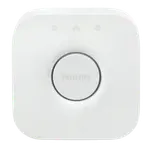
You can set the doorbell up and use it without one, but the Bridge is what makes it a Hue product. Motion notifications, the light and sound alarms, running more than one chime from a single doorbell and the MultiChime light patterns all depend on a Bridge, and a Bridge Pro raises the chime limit further. Without one you still get the doorbell call or push notification and the live view.
How wide is the camera view and how good is the night vision?
Philips quotes more than 180 degrees, captured on a square 1:1 sensor at 1984 x 1984, which is why the frame shows a caller head to toe and the doorstep below them at the same time rather than a letterbox strip. At night the Starlight sensor supports both infrared night vision and colour night vision; colour mode is enabled by turning the infrared night mode off in the app.