

TP-Link Tapo D225 Review: The Battery Doorbell That Records Without a Subscription
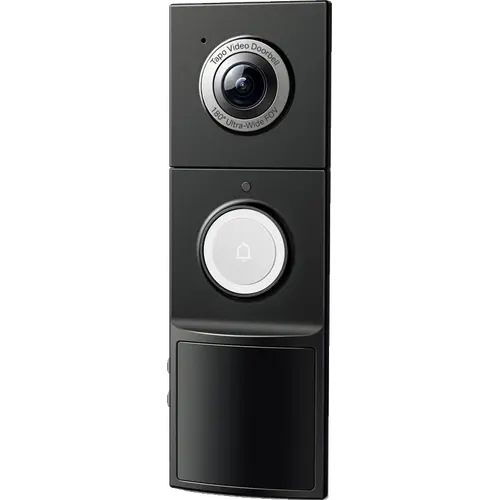
The Tapo D225 is a strong pick for anyone who wants a capable video doorbell without a recurring fee. It records 2K video with a head-to-toe 180 degree view, runs on a large rechargeable battery or existing doorbell wiring, and keeps footage on a microSD card instead of forcing cloud storage. The indoor chime is included and the AI person, pet, vehicle and package detection runs on the device. The main trade-offs are 2.4 GHz-only Wi-Fi, no Apple HomeKit or Matter, and an app that can feel limiting for a second household user.
- No-subscription seekers
- Renters and homes without doorbell wiring
- Package and porch monitoring
- Alexa and Google Home households
Pros
- 2K 4MP video with a 180 degree head-to-toe field of view
- Colour night vision from built-in spotlights plus infrared to 10 m
- Local recording to microSD up to 512 GB with no subscription required
- Battery or hardwired power, with 24/7 recording and pre-roll when wired
- Chime included in the box
- On-device detection for people, pets, vehicles and packages
- Works with Alexa, Google Home, SmartThings and Home Assistant
- IP66 weather resistance and up to 8 months of battery life
Cons
- 2.4 GHz Wi-Fi only, with no 5 GHz or Ethernet option
- No Apple HomeKit and no Matter support
- No RTSP stream
- Alerts can arrive late and miss the first seconds of an event
- Battery life drops sharply with every detection type enabled
- The app limits simultaneous full access for a second household user
- Cloud video history needs a subscription
Who is the Tapo D225 for?
The D225 suits anyone who wants the core doorbell experience without a monthly plan. Because it runs on a built-in rechargeable battery, it can go on a door that never had wiring, and when wiring is available it can be hardwired for continuous power. That flexibility makes it a natural fit for renters, second homes and doors where running new cable is impractical. The included chime covers the indoor alert, so there is no separate accessory to buy, and local recording to a microSD card keeps the whole setup subscription-free for buyers who do not want cloud history.
What buyers love
The recurring theme is value without giving up the essentials. Owners repeatedly single out the easy installation and the choice between battery and wired power, and several describe moving from a subscription-based doorbell specifically to stop paying monthly. Picture quality draws consistent praise, with the 2K feed and colour night vision described as clear enough to recognise faces and packages, and the wide head-to-toe view is credited with catching the whole approach rather than a narrow slice of it. Local recording to a microSD card, the included chime and the Ring Call feature, which phones the owner instead of relying on a push notification, all come up as practical wins. Battery life is another bright spot, with one owner reporting roughly seven months of use and still a large share of charge left.
What to know before you buy
There are real caveats. Alert timing is the most common complaint: some owners report delayed notifications and say the first few seconds of an event can be missed, and the same customers note that raising sensitivity trades missed alerts for false ones. Battery life depends heavily on how many detection types are enabled, with one owner reporting only about a month under heavy use, and a minority report connection drops on a battery-only install. The Tapo app limits how two people in one household can share full access to recordings at the same time, which matters for multi-user homes. On the hardware side, the doorbell connects only on 2.4 GHz Wi-Fi, there is no RTSP stream, and neither Apple HomeKit nor Matter is supported, so this is not the pick for an Apple-first or local-only smart home. In Europe, the included chime ships with a US-style plug, so a cheap adapter may be needed.
Is the Tapo D225 worth it?
For most front doors, especially where wiring is missing or a subscription is unwanted, the D225 is an easy recommendation. You get 2K video, a 180 degree head-to-toe view, colour night vision, on-device detection for people, pets, vehicles and packages, IP66 weather sealing, a chime in the box, local recording up to 512 GB and months of battery life, all without a mandatory plan. Hardwiring it unlocks 24/7 continuous recording and pre-roll, which turns it into a much more complete camera than its battery-only mode suggests. What you give up is Apple HomeKit, Matter, 5 GHz Wi-Fi and the deepest integration list, so buyers who need those should look elsewhere.
Frequently asked questions
Does the Tapo D225 need a subscription?
No. It records to a microSD card of up to 512 GB, which is sold separately, and the AI person, pet, vehicle and package detection runs on the device. A subscription only adds cloud storage and is entirely optional.
Can the Tapo D225 run on battery or does it need wiring?
It can do either. A built-in 10000 mAh rechargeable battery is rated for up to 8 months per charge in wireless use, and connecting it to existing doorbell wiring keeps it powered and enables 24/7 continuous recording.
Does the Tapo D225 work with Alexa, Google Home, HomeKit or Matter?
It works with Alexa and Google Home, and it also connects to SmartThings and Home Assistant through the official TP-Link Smart Home integration. It does not support Apple HomeKit or Matter.
Is a chime included with the Tapo D225?
Yes. A Tapo Chime is included in the box, along with the mounting bracket, wedges, screws and the charging cable. The chime plugs into a wall outlet and its ringtones are selectable in the app.
What video quality and field of view does the Tapo D225 have?
It records 2K 4MP QHD video at 15 or 20 frames per second through a lens with a 180 degree diagonal field of view, 170.6 degrees horizontal and 140.1 degrees vertical, which is wide enough to show a visitor from head to toe and a package on the ground.
Does the Tapo D225 record continuously?
Yes, when it is hardwired. Wired power enables 24/7 continuous recording and up to four seconds of pre-roll before a motion event, stored on the microSD card. On battery power it records motion events to save energy.