NodOn 3CT Zigbee Energy Meter Review: Three-Phase Metering That Stays Local
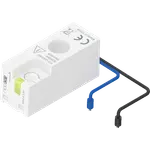
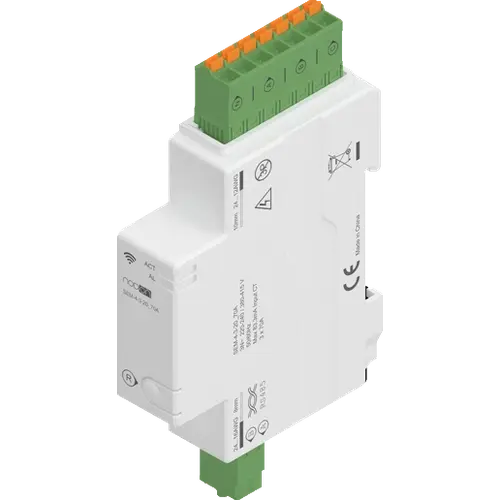
The NodOn 3CT is a DIN-rail meter for the European board: it measures a 3P+N three-phase supply or three separate single-phase circuits through three split-core clamps, at 1% accuracy, and reports per-phase voltage, current, power, power factor, frequency and bidirectional energy. It is a Zigbee 3.0 end device, so it needs a coordinator or gateway, and the readings then live in your own platform, with Home Assistant supported through Zigbee2MQTT and a documented Modbus RTU interface on RS-485 as well. The trade-offs are the European voltage range, the 70 A or 120 A clamp ceiling and the absence of any relay, app or on-device history.
- Home Assistant and Zigbee2MQTT users
- Three-phase European boards
- Solar self-consumption tracking
- DIN rail installs
- Local, cloud-free setups
Pros
- Three-phase 3P+N metering, or three independent single-phase circuits, in one 18 mm DIN module
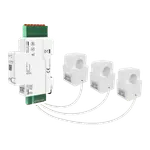
- Three split-core CT clamps included, rated 70 A or 120 A depending on the variant
- Class 1.0 accuracy to IEC 61557-12 with a 1% tolerance
- Bidirectional metering separates consumption from production for solar and batteries
- Per-phase voltage, current, active, reactive and apparent power, power factor and frequency
- Zigbee 3.0 with a documented local Modbus RTU interface over RS-485
- Works with Home Assistant through Zigbee2MQTT
- Readings stay in your own platform, with no cloud account required
Cons
- A Zigbee coordinator or gateway is mandatory, since there is no Wi-Fi, Ethernet or Bluetooth
- Rated 220-240 V single-phase and 380-415 V three-phase, so not for 120/240 V split-phase services
- Clamp ceiling of 70 A or 120 A per phase depending on the variant
- No relay and no switching output, so it cannot shed a load on its own
- No app, no web interface and no on-device history on its own
- 2 year warranty, shorter than some rivals
Who is the NodOn 3CT Zigbee Energy Meter for?
It suits a home or small commercial board that runs on 220-240 V single-phase or 380-415 V three-phase and wants whole-installation or multi-circuit metering without a cloud account. The three channels cover either the three phases of one supply or three independent single-phase circuits, so the same module can meter a three-phase house, a single-phase property with three circuits worth watching, or different tenants and services in a shared building. Because it is a Zigbee end device with a documented local interface, the natural buyer already runs a Zigbee network, most often Zigbee2MQTT on Home Assistant, and wants the numbers inside that system rather than in a vendor app.
What the NodOn 3CT offers
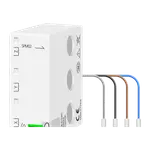
Measurement is per phase and complete for a device in this class. It reports voltage, current, active, reactive and apparent power, power factor and frequency, plus separate counters for energy consumed and energy produced, which is what makes solar and battery flows readable instead of a single net figure. Accuracy is specified as Class 1.0 to IEC 61557-12, a 1% tolerance, over a range of 50 mA to 70 A or 120 A per phase depending on the clamp variant in the box. The three split-core transformers snap around the phase conductors, so nothing has to be rewired through the meter, and the module itself takes a single 18 mm DIN slot rated 2 VA maximum. On the connectivity side it is Zigbee 3.0 certified at 2.4 GHz, with over-the-air updates, and it also exposes a Modbus RTU interface over RS-485 for wired, industrial-style integration. The operating range of -25 to 70 degrees Celsius and the IP20 rating fit a closed enclosure.
What to know before you buy
A Zigbee coordinator is not optional: the meter has no Wi-Fi, no Ethernet and no Bluetooth, so it joins an existing Zigbee network and needs a compatible gateway or dongle. It is built for the European grid, rated 220-240 V single-phase and 380-415 V three-phase, so it is not a fit for the 120/240 V split-phase service common in North America. The clamps top out at 70 A or 120 A per phase depending on which variant you order, so a heavier service is out of scope. There is no relay and no switching output, so the meter cannot shed a load by itself, and there is no app, no web interface and no on-device history: the readings are only as durable as the gateway or Home Assistant install receiving them. The warranty is 2 years, shorter than some rivals in this category.
Is the NodOn 3CT Zigbee Energy Meter worth it?
For a European board already running Zigbee, it is a tidy, standards-based way to meter three phases or three circuits without adding another Wi-Fi client inside a metal enclosure. You get certified 1% class accuracy, bidirectional energy, per-phase detail, a local Modbus path and a single-module footprint, and you give up Wi-Fi convenience, a relay, on-device logging and a vendor app. If your installation is on 120/240 V, if you need the meter to switch something, or if you would rather not run a Zigbee coordinator, look at the Wi-Fi and relay-equipped meters in this comparison instead.
Frequently asked questions
Does the NodOn 3CT Zigbee Energy Meter need a hub?
Yes. It is a Zigbee 3.0 end device with no Wi-Fi, so it joins an existing Zigbee network and needs a compatible coordinator or gateway. NodOn lists Home Assistant, Jeedom, Zigbee2MQTT and Edalso as compatible gateways for this model, and it can also be read over its Modbus RTU interface on RS-485.
How many circuits can it measure?
Three, using the three split-core clamps in the box. They can cover the three phases of one 3P+N supply, or three independent single-phase circuits metered side by side.
Does it work with Home Assistant?
Yes, through Zigbee2MQTT, which supports this exact model and exposes per-phase voltage, current, active, reactive and apparent power, power factor, AC frequency, and both consumed and produced energy.
Can it measure solar production?
Yes. Measurement is bidirectional, so energy drawn from the grid and energy fed back are counted separately, per phase as well as in total, which is what solar and battery dashboards need.
Can it switch a load?
No. There is no relay and no switching output, so the meter only measures. Load shedding and PV surplus diversion are handled by the gateway or home automation system reacting to its readings, not by the meter itself.
What is the maximum current and voltage?
The clamps are rated 70 A per phase on the SEM-4-3-20_70A variant or 120 A on the SEM-4-3-20_120A variant, and the voltage input is rated 220-240 V single-phase and 380-415 V three-phase. A 120/240 V split-phase service is not supported.