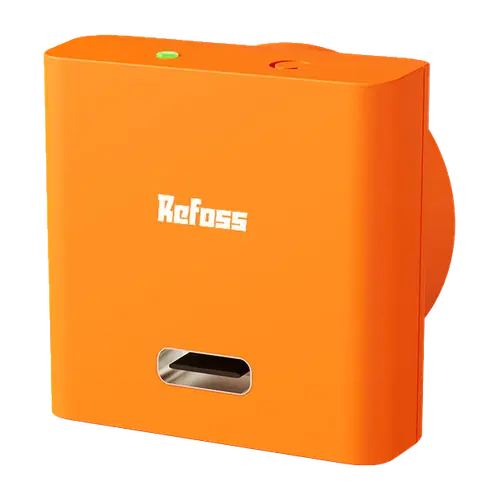

Refoss EM01P Review: Read Your Utility Meter Without Touching the Panel
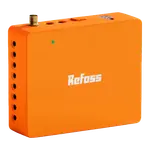
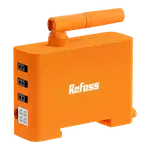
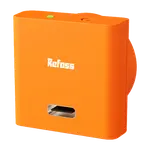
The EM01P takes a different approach from a clamp monitor: instead of measuring current itself, it sticks magnetically to the face of an SML or IEC 62056 smart meter and reads the meter's own optical interface. That means no wiring, no panel work and numbers that come straight from the meter, including the feed-in register for solar. Everything runs locally through a built-in web interface, an open JSON-RPC API and MQTT, with plug-and-play Home Assistant support. The trade-off is inherent to the method: you see the house total, never per-circuit detail.
- SML and IEC 62056 meters
- Renters and no-panel installs
- Home Assistant users
- Meter-accurate totals
Pros
- Reads the utility meter directly, so totals come straight from the meter
- Magnetic mount, no wiring and no panel work
- Local web UI, Open API (JSON-RPC 2.0) and MQTT
- Plug-and-play Home Assistant support, no custom plugin
- Local plus free cloud storage, with daily data kept for up to 5 years
- Reports feed-in as well as consumption, useful with solar
- Built-in energy cost tracking and daily, weekly and monthly reports
Cons
- House total only, no per-circuit or per-appliance detail
- Only for SML and IEC 62056 meters, and 2.4 GHz Wi-Fi only
- Some meters need a PIN from the utility to unlock full data
- No relay and no load management
- Works with Home Assistant but not with Alexa, Google Home, Apple Home, SmartThings or Matter
Who is the Refoss EM01P for?
Anyone with an SML or IEC 62056 smart meter who wants their real consumption in Home Assistant without opening an electrical panel. It suits installations where the meter cabinet is not yours to modify, and anyone who wants figures that come from the meter itself rather than an approximation from clamps. It also pairs well with a clamp monitor: the EM01P gives the meter total, the clamps give the per-circuit breakdown.
What the EM01P offers
Installation is the headline: magnetic mounting on the meter, no disassembly, no modification, powered over USB. From there it exposes minute-level power data, stored both locally and in a free cloud, with daily history kept for up to five years and reports covering consumption and feed-in. The local stack is a built-in web UI for configuration and live readings, the Refoss Open API over JSON-RPC 2.0, which works with the cloud switched off, and MQTT, so Home Assistant works out of the box with no custom plugin. It connects over 2.4 GHz Wi-Fi only.
What to know before you buy
This is a reader for SML and IEC 62056 smart meters only, so it is no use on a meter that does not speak those protocols. Some meters need a PIN from the electricity provider before they release the full data set, which is a call to your utility rather than a setting. And by definition it cannot break the total down: no per-circuit numbers, no per-appliance detail, no power factor, and nothing to switch, since there is no relay. It works with Home Assistant but not with Alexa, Google Home, Apple Home, SmartThings or Matter.
Is the Refoss EM01P worth it?
If your meter speaks SML or IEC 62056, it is a quick and non-invasive way to get trustworthy energy data into a local system, with no electrician needed. It is not a replacement for circuit-level monitoring: pair it with a clamp-based monitor if you also want to know which appliance is responsible for the total.
Frequently asked questions
How does the Refoss EM01P measure energy?
It does not measure current at all. It attaches magnetically over the optical interface of a smart meter and reads the meter's own data, so the figures are the meter's own.
Which meters does it work with?
Meters using the SML or IEC 62056 protocols. Some meters require a PIN code from your electricity provider to release the full data set.
Can it show which appliance is using power?
No. It reports whatever the utility meter reports, which is the whole-house total plus the feed-in register. For per-circuit detail you need a clamp-based monitor.
Does it need the Refoss cloud?
No. All core monitoring runs locally, with a built-in web interface, the Open API and MQTT. The free cloud adds storage for long-term history.
How is it powered?
Over USB, so there is no mains wiring and no electrician involved.
Does it track solar export?
Yes. It reads the feed-in register as well as consumption, and it provides daily, weekly and monthly reports for both.