


Sonoff MINI PM Review: The Matter Power Meter That Hides Behind a Socket
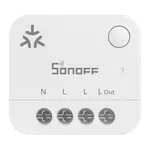
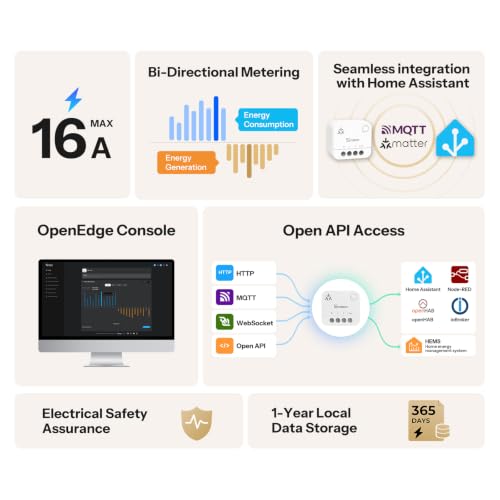
The Sonoff MINI PM is a pure measuring device: a small module that wires in line with one circuit behind a socket or inside a junction box and reports voltage, current, power and accumulated energy without ever switching the load. It suits people who run their own automation platform, because it offers a local web console, MQTT and an open JSON-RPC API, and it joins Home Assistant over Matter or MQTT discovery with the energy readings intact. Bi-directional metering lets it handle a balcony solar circuit too. The limits are scope and reach: one circuit, no relay, no power factor reading and a Matter energy meter device type that most controllers do not accept yet.
- Home Assistant users
- Balcony solar owners
- Single-appliance metering
- Local-control setups
Pros
- Bi-directional metering separates consumption from solar production on the same circuit
- Local web console runs on the device itself, with no app and no account
- Open JSON-RPC 2.0 API over HTTP and WebSocket, plus MQTT
- Home Assistant gets the readings over Matter or MQTT discovery
- Cost tracking with fixed or time-of-use rates, up to a year of data and export
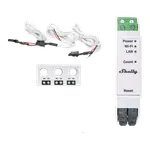
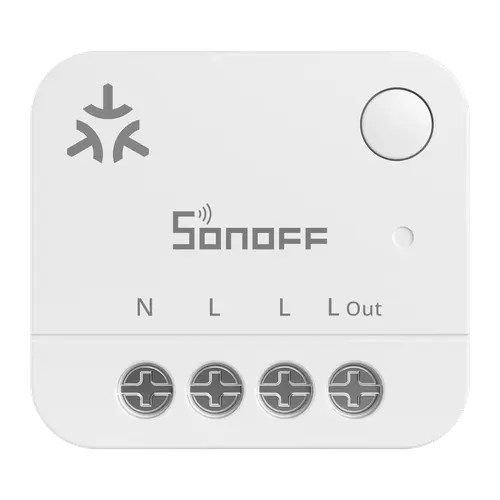
- Small enough for a standard back box at 32 x 29 x 15.9 mm and 14g
- Threshold alerts, a run completion alert and a maintenance reminder
- Two-year warranty
Cons
- No relay, so it measures the circuit but cannot switch it or shed the load
- One circuit per module
- Single-phase only, with no split-phase or three-phase support
- No power factor reading
- Apple Home cannot add it yet, because the Matter energy meter device type is not accepted there
- No measurement accuracy figure listed
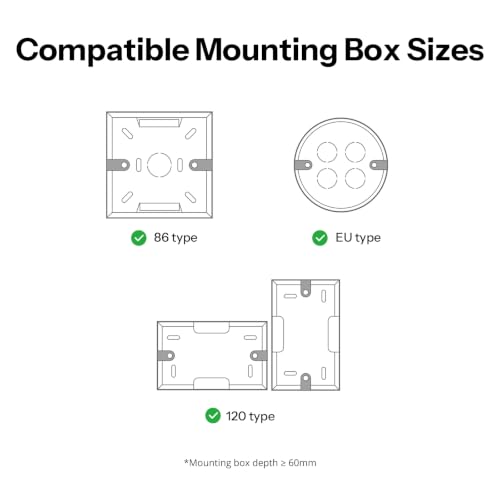
- 2.4 GHz Wi-Fi only, and it needs a neutral wire and a wall box about 60 mm deep
Who is the Sonoff MINI PM for?
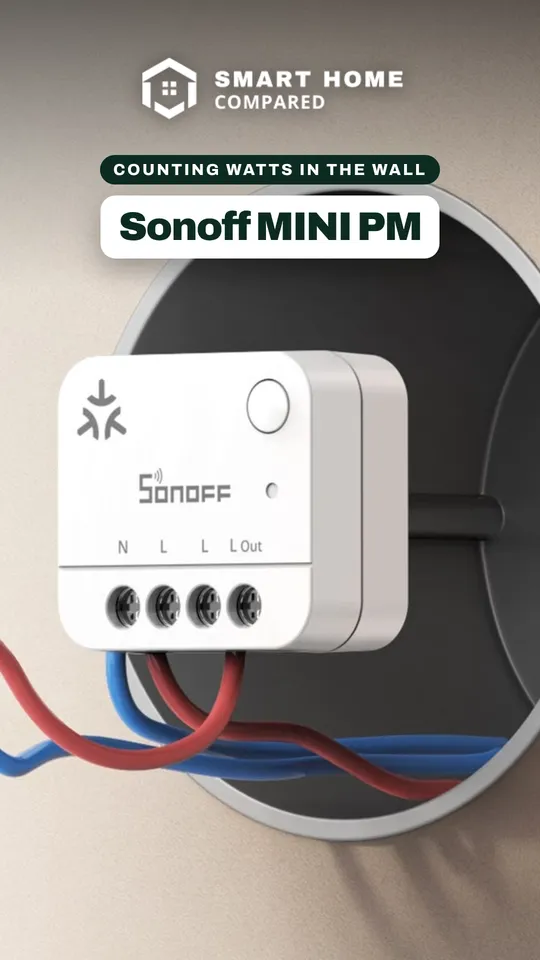
This is not a whole-home monitor. It measures one circuit, the one whose line passes through its L and L Out terminals, so the natural job is a single appliance or a balcony solar circuit. That makes it a companion to a panel-wide meter rather than a replacement for one: the buyer already knows the household total and now wants to see which load is responsible. The second audience is the local-control crowd. A local web console, MQTT and a documented JSON-RPC API mean the readings can be pulled straight off the module on your own network, which suits a Home Assistant energy dashboard.
What the Sonoff MINI PM offers
Metering is bi-directional, so the energy a load consumes is separated from what a balcony solar array produces, which the app can record as a negative value. The eWeLink app adds electricity cost tracking with a custom currency and rate, fixed or time-of-use pricing, up to a year of energy data that keeps recording while the device is offline, and export of the energy data and the bill to a spreadsheet. Alerts go beyond overload: thresholds for overcurrent, overpower, overvoltage and undervoltage, a run completion alert, and a maintenance reminder based on accumulated runtime. The module is Matter over Wi-Fi and pairs by scanning its Matter code, Home Assistant reads it over Matter or MQTT, and Alexa, Google Home and SmartThings are reached by adding it to eWeLink and linking the account. At 32 x 29 x 15.9 mm and 14g it fits in a back box.
What to know before you buy
The name says non-switch and Sonoff means it: there is no relay, so the module cannot cut the load it measures or shed it when a threshold is crossed. It can raise the alert, and that is where its job ends. It is single-phase, rated 100-240V on one line, with no split-phase or three-phase mode and no power factor reading. It wires into live and neutral, and Sonoff recommends a wall box at least 60 mm deep. No measurement accuracy figure is listed in the spec sheet, which is worth weighing if you plan to rely on the numbers. On the ecosystem side the Matter energy meter device type is new, and Home Assistant is the controller that accepts it today, so Apple Home cannot add the module yet even though nothing on the device side is missing. It is Wi-Fi 2.4 GHz only.
Is the Sonoff MINI PM worth it?
For its narrow job it is a neat tool: a flush-mounted module behind the socket that hands data to your own system through a local API instead of a vendor cloud. Compared with a metering plug it needs no outlet to sit in, and compared with a clamp monitor in the panel it needs no panel access, but it covers only one circuit. The reason to look elsewhere is scope, since a whole-panel picture needs one module per circuit or a multi-channel clamp monitor, and a device that must also switch the load needs a version with a relay.
Frequently asked questions
Can the Sonoff MINI PM switch the appliance it measures?
No. Sonoff sells it as a non-switch product: there is no relay inside and the module cannot control the load. The line simply passes through it so the current can be measured.
Does the Sonoff MINI PM work with Home Assistant?
Yes, by two routes. It can be commissioned as a Matter over Wi-Fi device, or picked up through MQTT discovery, and Sonoff's platform table shows both routes carrying the voltage, current, power and energy readings.
Can the Sonoff MINI PM measure what solar panels produce?
Yes. Metering is bi-directional, so consumption is separated from what a balcony solar array produces, and the app can record the generation side as a negative value.
Does the Sonoff MINI PM need a neutral wire?
Yes. It wires into live and neutral behind a socket or inside a junction box, and Sonoff recommends a wall box at least 60 mm deep. It is rated 100-240V, 50/60Hz on a single line.
Can it be used without the cloud?
Yes. A web console runs on the module and is reached from a browser on the same network, with no app and no account, and MQTT keeps the readings flowing to a local automation platform. Energy data also keeps being recorded while the module is offline.
How many circuits can one module monitor?
One. The module measures the single line that runs through it, so it is normally fitted per appliance or per solar circuit rather than at the panel.