

SONOFF POWCT Review: A One-Circuit Meter With a Screen and a Relay, for Pocket Money
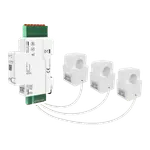
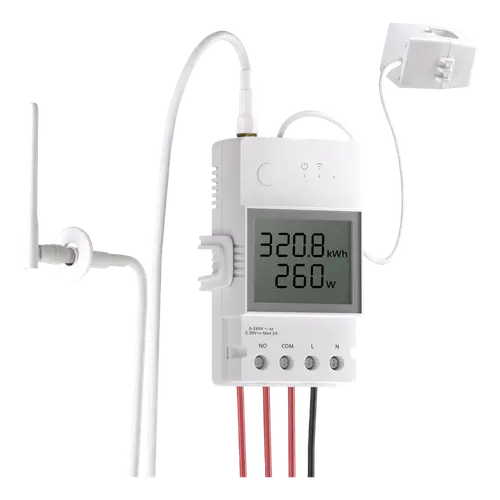
The POWCT is the cheapest way into this category: one split-core 100 A clamp, an LCD showing live watts and accumulated kWh, six months of hourly history stored on the device, and a 2 A dry contact for driving a contactor. It measures in both directions, so solar owners use it to watch production, and it works with Alexa, Google Home, SmartThings, IFTTT and Home Assistant through eWeLink. The catch is scope: one channel, one voltage input, so it meters a circuit or a single-phase supply, and North American split-phase panels are out of its reach.
- Single circuits and solar
- Budget buyers
- eWeLink households
- DIN rail installs
Pros
- Very low price for a clamp meter with a relay
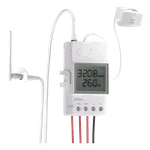
- LCD shows live power and accumulated energy at the panel
- 6 months of hourly history stored on the device
- Bi-directional metering, tracks exported energy for solar
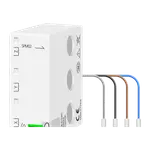
- Dry contact relay for contactor control
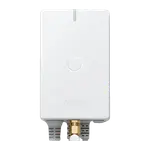
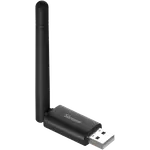
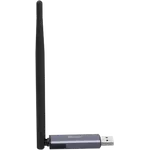
- DIN rail mounting and external Wi-Fi antenna
- Works with Alexa, Google Home, SmartThings, IFTTT and Home Assistant
Cons
- One channel only, and one clamp rated 100 A
- Not suitable for North American split-phase panels
- No documented local API, MQTT or web interface
- No power factor reading and no published accuracy figure
- Matter only through a separate software bridge
Who is the SONOFF POWCT for?
Buyers who want to instrument one thing cheaply. Owners describe installing several of them to meter different zones of a house and cross-check the utility bill, or clamping one on the solar feed to watch production against the inverter's own display. The LCD is a real differentiator at this price: live power and accumulated energy are readable at the panel without opening an app. It is a single-phase, single-channel device, so it complements a whole-panel monitor rather than replacing one.
What buyers love
Accuracy and price are the recurring themes. One owner comparing it against a solar inverter's own readout calls it accurate, another with several units uses them to verify billing across zones, and a German reviewer confirms the measurements check out and that the unit fits comfortably in a consumer unit. The eWeLink app gets credit for its historical bar charts, and the external Wi-Fi antenna on a lead is what keeps it connected from inside a metal enclosure. Owners also like that the relay is there: the same device that measures a load can switch it through a contactor.
What to know before you buy
The most useful warning comes from a US buyer: this is not a whole-home monitor in North America. A 120/240 V split-phase service has two hot legs, the POWCT has one clamp and one voltage input, and the supplied clamp will not close around a heavy service conductor. In Europe or on a single circuit it is a different story. Some listings quote 120 V while the official spec is 100 to 240 V, which caused confusion for at least one buyer. The antenna lead ships pre-attached in a sleeve, which one owner found awkward to route, no mains cable is included (fine for a panel install), and there is no documented local API, no MQTT and no web interface: everything goes through eWeLink, which does keep working over LAN when the internet is down. Matter only works through a separate software bridge.
Is the SONOFF POWCT worth it?
At this price it is close to an impulse buy, and it does more than the price suggests: measurement in both directions, six months of history that survives outages, an on-device display and a contactor output. Buy two or three and you have metered the loads that matter for less than one mid-range monitor. Buy something else if you need per-breaker coverage of a whole panel, a split-phase service, or a documented local API to build on.
Frequently asked questions
Can the SONOFF POWCT monitor a whole house?
In a single-phase installation it can meter the incoming supply, up to 100 A. In North America it cannot: a 120/240 V split-phase service has two hot legs and this device has one clamp and one voltage input, so owners there use it per circuit instead.
Does it work with solar?
Yes. It measures in both directions and keeps a separate counter for exported energy, and owners use it specifically to watch solar production and compare it against their inverter.
Can it switch a load?
Through a dry contact rated 2 A, wired to an external contactor. That is also how its overload protection cuts power when consumption passes the threshold you set.
Does it need the internet?
Not for control: eWeLink keeps working over the local network when the internet is down, and the device stores six months of hourly data on board. There is no documented local API, MQTT or web interface, so integrations go through eWeLink.
What voltage does it support?
100 to 240 V at 50/60 Hz, according to SONOFF's own documentation, even though some retail listings quote 120 V only.
Does it have a display?
Yes, an LCD on the front showing live power in watts and accumulated energy in kWh, with large values shown in scientific notation. It is unusual at this price and handy when the panel is not near a phone.