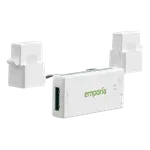
Zemismart SDM01 Review: Three-Phase Metering Over Zigbee, No Wi-Fi Involved
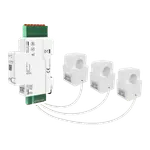
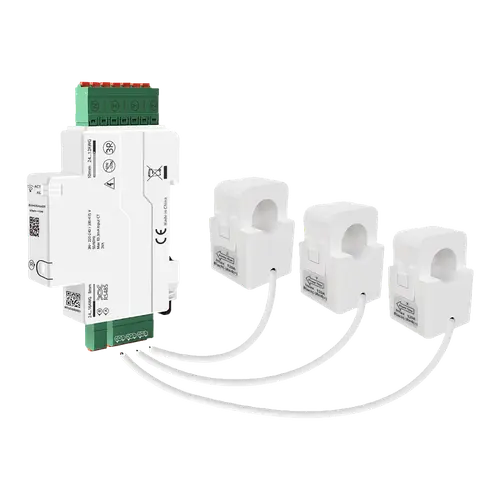
The SDM01 is the Zigbee answer to the Wi-Fi meters that dominate this category: one 18 mm DIN module, three 120 A split-core clamps, and per-phase voltage, current, power, power factor and bi-directional energy pushed to a Zigbee coordinator roughly every five seconds. That makes it a natural fit for a Home Assistant setup running Zigbee2MQTT, where it also acts as a mains-powered router that strengthens the mesh. The trade-off is that it does nothing on its own: no Wi-Fi, no web interface, no local API, no relay, and a hub is mandatory.
- Zigbee and Zigbee2MQTT homes
- Three-phase distribution boards
- Solar production monitoring
- DIN rail installs
Pros
- Three-phase metering over Zigbee 3.0, no Wi-Fi needed in the panel
- Three 120 A split-core clamps included
- Per-phase voltage, current, power, power factor and bi-directional energy
- Readings roughly every 5 seconds
- Acts as a mains-powered Zigbee router
- Single 18 mm DIN module
- Supported by Zigbee2MQTT for Home Assistant
Cons
- A Zigbee hub or Zigbee2MQTT dongle is mandatory
- No local API, MQTT or web interface of its own
- No relay output and no load management
- No on-device data logging
- Zigbee2MQTT only, ZHA is not covered
- Warranty terms are not published
Who is the Zemismart SDM01 for?
It suits a household that already runs a Zigbee network and would rather not add another Wi-Fi client inside a metal distribution board, which is exactly where Wi-Fi meters struggle. Three channels of up to 120 A cover a three-phase supply or three separate single-phase circuits, and the split-core clamps mean nothing has to be rewired through the meter body. Because it is mains powered it joins the mesh as a router rather than an end device, so it extends Zigbee coverage into the panel instead of depending on it.
What the SDM01 offers
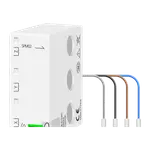
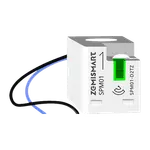
Measurement is per phase and complete for a device at this price: voltage, current, active power, power factor and frequency, plus separate counters for energy consumed and energy produced, which is what makes solar monitoring work. Accuracy is specified at 1%. Readings arrive on a roughly five second cadence, fast enough to see an appliance switch on in a dashboard. The module takes a single 18 mm slot on the DIN rail, runs on anything from 120 V to 240 V, and includes an alarm function that pushes a message when a load is abnormal or the phases are unbalanced. For Home Assistant users the practical detail is the Zigbee2MQTT support, where it appears as a Tuya TS0601 device with per-phase entities and no cloud account in the path.
What to know before you buy
A Zigbee coordinator is not optional: with the stock firmware you need either a Tuya Zigbee hub for the Smart Life app or a Zigbee2MQTT dongle for Home Assistant. There is no Wi-Fi, no Ethernet, no embedded web interface and no local HTTP API, so everything you see comes through the hub. It also has no relay and no load-management logic, so it measures but never acts, and it stores nothing itself: history lives wherever your hub keeps it. Support is narrower than the mainstream brands too, with Zigbee2MQTT covering it while ZHA does not, and warranty terms are not published on the product page.
Is the Zemismart SDM01 worth it?
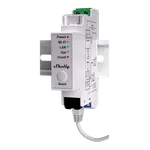
For a Zigbee-first house with a three-phase board, it is the cheapest credible way to meter all three phases, especially when it is on offer. What you give up against a Shelly Pro 3EM is the wired network port, the on-device data logging, the documented local API and the certified accuracy class; what you gain is a device that works entirely inside your existing Zigbee mesh. If you do not run Zigbee2MQTT, or you want the meter to switch something, look elsewhere.
Frequently asked questions
Does the Zemismart SDM01 need a hub?
Yes. It is a Zigbee 3.0 device with no Wi-Fi, so it needs either a Tuya Zigbee hub for the Tuya or Smart Life app, or a Zigbee coordinator running Zigbee2MQTT if you use Home Assistant.
Does it work with Home Assistant?
Through Zigbee2MQTT, where it is recognised as a Tuya TS0601 device and exposes per-phase entities for voltage, current, power, power factor, frequency and energy. ZHA support is not covered.
How many circuits can it measure?
Three, using the three 120 A split-core clamps in the box. They can cover the three phases of one supply or three independent single-phase circuits.
Can it measure solar production?
Yes. Measurement is bi-directional and it reports consumed and produced energy separately per phase, which is what solar and battery dashboards need.
Can it switch a load?
No. There is no relay and no contactor output, so it only measures. Any switching has to be done by another device driven from your hub.
How is it installed?
On a DIN rail, taking a single 18 mm module, with the split-core clamps closed around each phase conductor. It runs on 120 V to 240 V and the clamps avoid routing the full load through the meter.