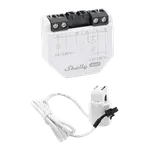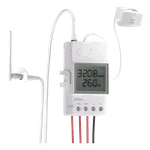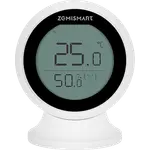
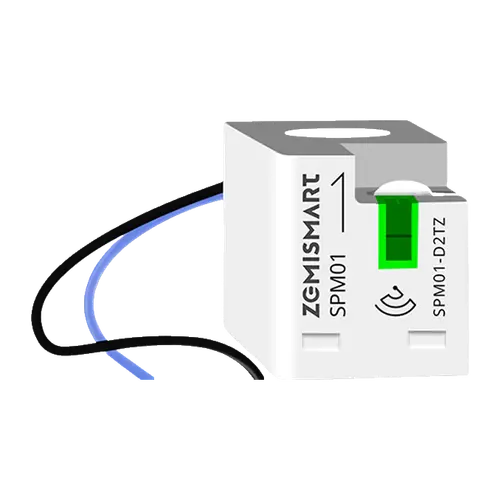
Zemismart SPM01 Review: Class 1 Single-Phase Metering Over Zigbee for the Price of a Smart Plug
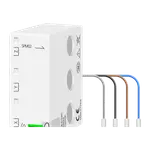
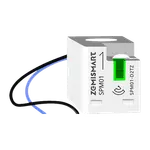
The SPM01 is the single-phase counterpart to Zemismart's three-phase meters: a slim inline module rated to 63 A that measures voltage, current, power, power factor and energy in both directions, and reports it over Zigbee 3.0 to whatever coordinator you already run. It is Class 1 accurate per IEC 61557-12, needs no Tuya gateway, and at 18 mm wide it slots into a distribution box without claiming a DIN module. What it does not do is act: there is no relay, no local IP API and no history of its own.
- Zigbee and Zigbee2MQTT homes
- Single-circuit metering
- Solar production tracking
- Tight distribution boxes
Pros
- Class 1 accuracy per IEC 61557-12 at a very low price
- Bi-directional, with separate forward and reverse energy totals
- Reports voltage, current, power, power factor and energy
- Standard Zigbee 3.0, no Tuya gateway required
- Reporting interval configurable down to 1 second
- 18 mm wide, fits without taking a DIN module
Cons
- Requires a Zigbee hub, does nothing standalone
- No relay output and no load management
- No local IP API, MQTT or web interface
- Single circuit, single phase, inline up to 63 A
- No on-device history, and no published warranty
Who is the Zemismart SPM01 for?
A Home Assistant or SmartThings household that wants a mains-grade meter on one circuit without adding another Wi-Fi client to a metal enclosure. Because it measures inline up to 63 A, it suits an incoming single-phase supply, a sub-panel feed or a heavy appliance circuit, and because it is bi-directional it works equally well on a solar feed where production has to be told apart from consumption. The 18 mm body is the practical advantage: it fits above or below the breakers in boxes that have no spare rail space.
What the SPM01 offers
Metering covers voltage, current, power, power factor and energy, with separate forward and reverse totals, plus accumulated, hourly, daily and monthly statistics. Accuracy is specified as Class 1 under IEC 61557-12, and independent testing against reference meters put the offset under about one percent. On the network side it is a standard Zigbee 3.0 device built on a Tuya ZS2S module, so it pairs with Home Assistant through Zigbee2MQTT or ZHA, with SmartThings, or with any certified Zigbee 3.0 hub, explicitly without needing a Tuya gateway. Reporting intervals are configurable per value, defaulting to 30 seconds and adjustable down to one second, which is unusually flexible for a device at this price.
What to know before you buy
A Zigbee coordinator is mandatory, and everything downstream, history, cost tracking, alerts, lives in that system rather than in the device. There is no relay, so it cannot switch what it measures, and no local IP API, MQTT or web interface: the data path is Zigbee only. It is single-phase and single-circuit, so a whole-panel picture takes several units or a different product, and the inline design means the conductor has to pass through the module, which is more involved than clipping a clamp. Zemismart does not publish a warranty period for it.
Is the Zemismart SPM01 worth it?
For a Zigbee-first setup it is one of the cheapest ways to get genuinely accurate metering on a circuit, and the configurable reporting interval makes it more useful for automations than most budget meters. If you need three phases, the SPM02 and SDM01 from the same brand cover that. If you want the meter to switch a load, keep the data on an IP API, or store history on board, a Shelly EM is the better fit.
Frequently asked questions
Does the Zemismart SPM01 need a Tuya gateway?
No. It is a standard Zigbee 3.0 device, so it pairs directly with Home Assistant through Zigbee2MQTT or ZHA, with a SmartThings hub, or with any other certified Zigbee 3.0 coordinator.
Does it use a clamp?
No, it measures inline: the conductor is threaded through the module, which is rated up to 63 A. That keeps it accurate and compact but makes installation more involved than clipping on a CT.
Can it measure solar production?
Yes. It is bi-directional and keeps separate forward and reverse energy totals, so grid consumption and energy sent back are reported independently.
How often does it report?
By default every 30 seconds, and the interval is configurable per value down to one second, which is fast enough to drive automations on live power.
Can it switch a load?
No. There is no relay and no contactor output, so any switching has to be done by another device driven from your hub.
Where does it mount?
Inside the distribution box, above or below the circuit breakers. At 18 mm wide it does not occupy a DIN module, which is the point of the design.