Zemismart SPM02 Review: Three-Phase Metering Without Clamps or a DIN Slot
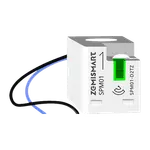
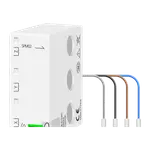
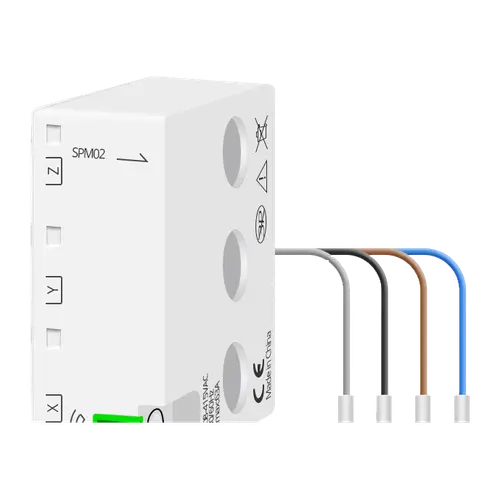
The SPM02 is the inline sibling of Zemismart's clamp-based SDM01: three independent channels rated 63 A each, measured by threading the conductors through the body rather than clipping transformers around them, with accuracy inside 1%. It speaks Zigbee 3.0, so it reports to Tuya, Zigbee2MQTT or Home Assistant with no Wi-Fi in the panel, and it is bi-directional for solar. Like the rest of the range it is a sensor and nothing more: no relay, no local IP API, no history of its own.
- Three-phase distribution boards
- Zigbee and Zigbee2MQTT homes
- Panels with no DIN space
- Solar monitoring
Pros
- Three-phase metering over Zigbee 3.0, no Wi-Fi needed in the panel
- Three independent channels up to 63 A each
- Accuracy within 1%
- Bi-directional metering for solar
- Fits without occupying DIN rail space, apertures take 16 mm² cable
- Alarm messaging on abnormal consumption
Cons
- Requires a Zigbee hub or coordinator
- Inline measurement means disconnecting conductors to install
- No relay output and no load management
- No local IP API, MQTT or web interface
- Dimensions and warranty are not published
Who is the Zemismart SPM02 for?
Someone metering a 3P+N supply, or three separate single-phase circuits, in a distribution board that has no spare rail. The large apertures take cables up to 16 mm², which covers a domestic three-phase service, and the body mounts above or below the protection devices instead of claiming a DIN module. Since it is Zigbee, it fits households that already run a coordinator and would rather not put another Wi-Fi client inside a metal enclosure.
What the SPM02 offers
Three independent channels measure voltage, current and power in real time with a stated tolerance within 1%, and the meter is bi-directional, so consumption and generation are reported separately for solar setups. Alarm messaging flags abnormal consumption, and the app adds chart analysis and scene setting. On the integration side it is a standard Zigbee 3.0 device compatible with Tuya, Zigbee2MQTT and Home Assistant, which is where this family of meters belongs, and where the per-phase entities become useful for dashboards and automations.
What to know before you buy
A Zigbee hub or coordinator is required; on its own the device shows nothing. Installation is more involved than a clamp meter because each conductor has to pass through the module, which means disconnecting them during fitting. There is no relay, so it never switches a load, and no local IP API, MQTT or web interface, so everything arrives through Zigbee. Zemismart does not publish dimensions, weight or a warranty period for this model, and unlike the clamp-based SDM01 it has no independent review to lean on.
Is the Zemismart SPM02 worth it?
It is one of the cheapest ways to meter three phases at all, and the inline design is the neatest option when there is no room for clamps or a DIN module. Choose the SDM01 instead if you would rather clip transformers around existing conductors without rewiring, or a Shelly Pro 3EM if you want Class B accuracy, on-device logging and a documented local API.
Frequently asked questions
How many circuits can the Zemismart SPM02 measure?
Three, each rated up to 63 A. They can follow the three phases of one supply or three independent single-phase circuits.
Does it use clamps?
No. It measures inline, with the conductors threaded through apertures that take cable up to 16 mm². If you prefer clip-on transformers, the SDM01 from the same brand is the clamp-based three-phase model.
Does it need a hub?
Yes. It is a Zigbee 3.0 device, so it needs a Tuya gateway, a Zigbee2MQTT coordinator or another compatible hub. All history, cost tracking and automation live there.
Does it work with Home Assistant?
Yes, through Zigbee2MQTT, which is how the per-phase measurements reach the Energy dashboard and automations.
Can it measure solar production?
Yes, it is bi-directional, so energy drawn from the grid and energy exported to it are tracked separately.
Can it switch a load?
No. There is no relay or contactor output, so it only measures.