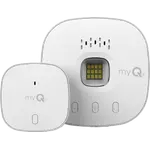
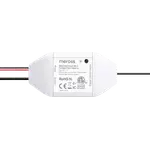
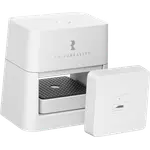
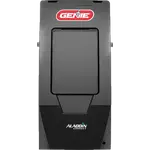
A smart garage door opener turns the largest and most frequently forgotten door in the house into something you can check from anywhere. It is also the one smart home category where two completely different products share a name at very different prices, so the first decision is not which brand to buy but which kind of device you need. The garage is a security boundary in the way a front door is, which is why this category sits alongside Door Locks, Cameras and Doorbells in a connected home.
Controller or Complete Opener
The Device Type field is the fork in the road.
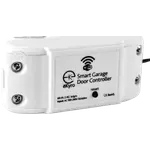
A controller is a small retrofit box that wires into the opener you already own and adds Wi-Fi to it. It costs $30 to $80 and installs in under an hour. If your current opener still lifts the door quietly, this is almost always the right purchase.
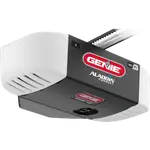
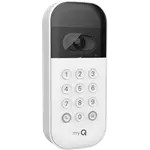
A complete opener replaces the whole machine: motor, rail, remotes, safety sensors and radio, for $200 to $550 plus installation. Buy one when the existing unit is failing, is loud enough to wake the house, or predates 1993 and therefore lacks the infrared safety sensors that modern law requires. A keypad is the third product here, opening the door with a code rather than a phone.
Drive Type and Motor Power
For complete openers, Drive Type decides how much noise ends up in the room above the garage.
- Belt drive uses a steel-reinforced rubber belt and is the quietest option. Buy this if there is a bedroom over the garage.
- Chain drive is the cheapest and toughest, but it rattles, and that rattle carries through the house.
- Screw drive uses a threaded steel rod, with noise between the other two.
- Direct drive is a wall-mounted motor that turns the torsion bar itself, with no overhead rail.
Motor Power is quoted in horsepower, or horsepower-comparable units (HPc) for DC motors. Half a horsepower handles a standard single door. Go to 3/4 HP or 1.25 HPc for heavy insulated, wooden or oversized doors, where an undersized motor strains and wears out early. Check Max Door Height too: most ship with a 7 ft rail and need an extension kit for 8 ft or 10 ft. Wall Mount models bolt beside the door instead of hanging from the ceiling, freeing the overhead space for storage racks and removing almost all vibration, at a higher price and requiring a torsion-bar door.
Will It Work With Your Opener
This question generates the most returns in the category, and it comes down to two fields.
Dry Contact Wiring is the universal method. The controller briefly shorts the two low-voltage terminals your wall button uses, which is electrically identical to someone pressing that button. Practically any opener with accessible terminals responds, regardless of brand or age.
Security+ 2.0 Compatible covers the exception. Chamberlain, LiftMaster and Craftsman openers built since roughly 2011 use a rolling-code radio, identifiable by a yellow learn button. Many ignore a plain dry-contact short, so the controller must speak that protocol natively or use an adapter accessory. Check your learn button colour first, because this detail decides whether a controller works at all.
Doors Supported tells you whether one unit covers two or three doors, and Gate Support whether it can also drive a driveway gate operator.
Knowing the Door Is Actually Closed
An app that can only guess the door's state is worse than no app: a false "closed" reading sends you to bed with the garage open. The Door Position Sensor field describes how the system knows.
- Wireless tilt sensors stick to the top panel and report their angle over a battery radio link. Easiest to fit, but they need a yearly battery change and can drift out of alignment.
- Wired magnetic sensors are reed switches on the floor track. They need a cable run, but never need a battery and rarely report a wrong state.
- Built-in applies to complete openers, which track motor position themselves.
Safety Photo Eyes are the infrared beams near the floor that reverse the door if a child or pet crosses the opening. Complete openers include them; retrofit controllers rely on the ones already on your opener, which is why a controller must never be fitted to a pre-1993 unit that has none.
Ecosystems, Local Control and Subscriptions
The Integrations block is where this category diverges most sharply from the rest of the smart home. Apple HomeKit is the single most searched requirement, and it is genuinely absent from some of the best-selling hardware rather than merely awkward. Matter changed the picture by adding a garage door device type, letting a compliant controller appear in Apple Home, Google Home and Alexa at once. Voice control through Alexa always requires a spoken PIN, since an accidental open is a different risk from an accidental light switch.
Local Control means the door responds from inside your own network, through a documented local API, a native Matter or HomeKit connection, or an official local integration. It still works during an internet outage and cannot be disabled by a vendor changing its mind. Anyone running Home Assistant should treat this as the deciding feature, because this category has a long history of cloud platforms blocking unofficial integrations and firmware updates breaking community workarounds.
No Subscription Required captures the other recurring cost. Some ecosystems place video history, extra devices or the integrations themselves behind a plan costing more per year than the hardware did, while most independent controllers charge nothing.
Getting In Without Your Phone
Remotes Included tells you how many visor remotes come in the box: complete openers ship with two or three, controllers ship with none because they reuse yours. A Wireless Keypad outside the door opens it with a numeric code and keeps working when the Wi-Fi does not, while Guest Access is the app equivalent, ideally with an expiry so a contractor gets in on Tuesday morning only. Geofencing goes furthest, using your phone's location to open the door as you arrive, and is the feature whose reliability varies most between brands.
Alerts, Automation and the Premium Tier
Open / Close Alerts and Left Open Alert are what turn an opener into a security device. A notification when the door moves at three in the morning is useful whether or not you are looking at the app, and a warning after thirty minutes open catches the most common way a house is left unlocked overnight. Pair it with Auto Close, which shuts the door after a delay, or Scheduled Close, which shuts it at a fixed time each evening. History Records keeps the log, and retention is often what a paid plan extends.
Several features justify the top of the range. Battery Backup keeps the door working through a power cut and is legally required on every residential opener sold in California. Automatic Lock drives a deadbolt into the track on every close, defeating the break-in where a wire hooked over the door pulls the emergency release cord. A Built-in Camera with Two-Way Audio lets you see and speak to whoever is at the door, and enables In-Garage Delivery for couriers. Bright LED Lighting matters daily. Finally, tying the door to Motion Sensors or indoor Cameras through Automations is what makes the system feel deliberate rather than a collection of apps.