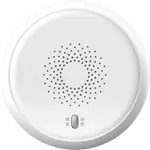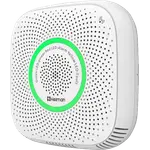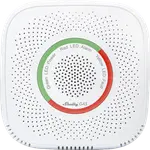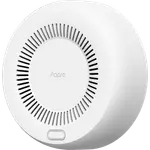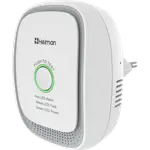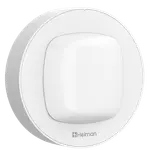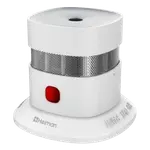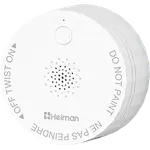
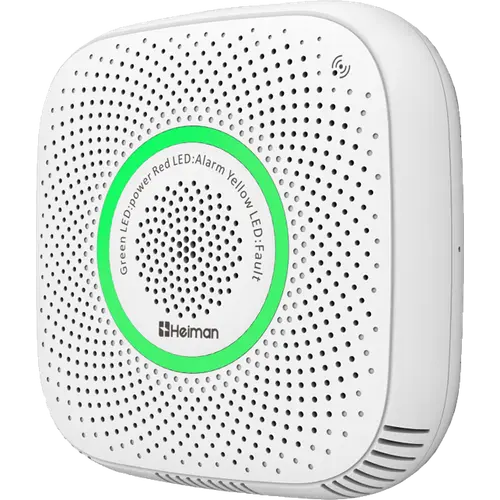
Heiman WS2CG Review: A Talking WiFi Gas Alarm With a Valve Output
The Heiman WS2CG is a mains-powered WiFi gas detector that joins the Tuya Smart Life app without a hub, which makes it one of the simpler ways to get a connected gas alarm into a kitchen. It covers both natural gas and LPG, and two features stand out: spoken voice prompts instead of anonymous beeping, so an alarm is distinguishable from a fault at three in the morning, and a valve manipulator output that closes the gas supply. The catch is thin published documentation, with no dimensions, warranty, sensor lifespan or launch date on the record.
- Kitchens
- Tuya Smart Life households
- Bottled and piped gas homes
- Automatic shut-off seekers
Pros
- Detects both natural gas and LPG
- Spoken voice prompts for alarms and faults
- Drives a valve manipulator that closes the gas supply
- Connects straight to WiFi, no hub required
- Works with Home Assistant through the official Tuya integration
- Push-to-test button and a dedicated fault LED
- Alarms at 6% LEL
Cons
- No published dimensions, weight, warranty or sensor lifespan
- No Alexa or Google Home support, since neither platform has a combustible gas device type
- Mains powered with no battery backup
- 70 dB sounder is quieter than the 85 dB units in the category
- Semiconductor sensor is more prone to nuisance alarms near a hob
- No display, and sold through regional distributors rather than the big storefronts
Who is the Heiman WS2CG for?
It suits a household that wants a connected gas alarm without adding a hub. The detector connects straight to WiFi and reports into the Tuya Smart Life app, the same app that already runs many people's plugs and sensors. Unlike the methane-only units in this category, Heiman lists both natural gas and LPG as detected gases, which makes it usable in a kitchen on a pipeline and in a home cooking on bottles. It runs on 100V-240V mains, so it goes near the appliance, at the height the gas in question calls for.
What stands out on paper
The voice prompt is the differentiator. Instead of a pattern of beeps, the unit announces what is happening, and it does the same for faults, where a flashing yellow LED is paired with a spoken warning. That solves a real problem: on most detectors, a fault and a low-level alarm sound nearly identical. It also drives a valve manipulator accessory, so a leak can close the gas valve rather than just announce itself. The sensor is a solid-state type, the alarm threshold sits at 6% LEL with a three-minute warm-up, and the sounder is rated at 70 dB at one metre. There is a push-to-test button on the front.
What to know before you buy
Heiman publishes very little about this series. There are no dimensions, no weight, no warranty period and no sensor lifespan on the official page, and the ecosystem support is thin: the alarm reaches Home Assistant through the official Tuya integration, but neither Alexa nor Google Home defines a combustible gas device type, so it cannot be exposed to a voice assistant at all. It is mains powered with no battery backup. The semiconductor sensing element is the cheaper and more sensitive technology, which also means it can react to aerosols, alcohol and heavy cooking fumes if mounted too close to the hob. It is not stocked on the major Amazon storefronts or on AliExpress, so it usually arrives through a regional distributor.
Is the Heiman WS2CG worth it?
The appeal is the combination of no hub, both gases covered, spoken alerts and a valve output, which is more than most detectors at this level offer. What you give up is documentation and certainty: without published specs or a confirmed ecosystem list, you are buying on the strength of the feature list rather than on a full sheet. For a kitchen where the priority is a loud, clear warning and an automatic shut-off, it does the job; for a system builder who wants local control and a documented API, the WiFi alternatives in this category are a safer bet.
Frequently asked questions
Does the Heiman WS2CG need a hub?
No. It connects directly to a 2.4 GHz WiFi network and reports into the Tuya Smart Life app, so there is nothing else to buy to get notifications.
Which gases does it detect?
Heiman lists natural gas and LPG, so it covers both a pipeline supply and bottled propane or butane. Mount it high for natural gas and low for LPG, since the two collect at opposite ends of the room.
Can it close the gas valve automatically?
Yes. It drives a valve manipulator accessory, so when the alarm triggers the gas valve is closed rather than the leak simply being announced.
What are the voice prompts for?
The unit speaks instead of only beeping, both when it alarms and when it faults, where the spoken warning accompanies a flashing yellow LED. That makes a real leak easy to tell apart from a device problem.
Why does it beep for three minutes when first plugged in?
That is the warm-up. The sensing element has to reach its operating temperature before it can measure reliably, which takes about three minutes from power on.
Does it work during a power cut?
No. It runs on 100V-240V mains with no battery backup, so it stops sensing until power is restored.
Does it work with Home Assistant?
Yes. It is a Tuya device, and the official Home Assistant Tuya integration covers the gas alarm category, so the alarm state appears as a gas binary sensor. Alexa and Google Home are a different story: neither defines a combustible gas device type, so the detector cannot be exposed to either voice assistant.