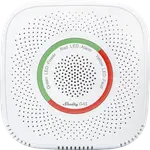
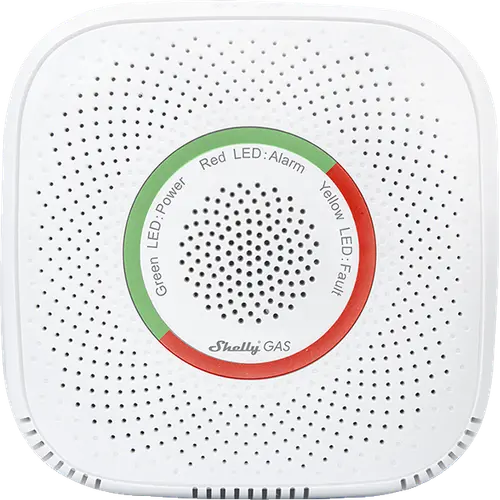
Shelly GAS (LPG) Review: A Propane Alarm Built for Automation, Not Just Noise
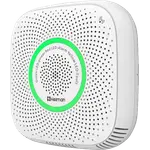
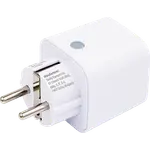
The Shelly GAS (LPG) is the propane and butane version of Shelly's plug-in gas sensor, aimed at kitchens, caravans and any home running on bottled gas. It joins WiFi without a hub and exposes the measured concentration, the alarm state, a self-test and a mute control over HTTP, MQTT and CoAP, which is what makes it a natural fit for Home Assistant. With the separate add-on manipulator it also closes the gas valve on alarm, wired rather than cloud-driven. The limits are the ones the spec sheet is honest about: mains power with no battery backup, a 70 dB sounder and no display.
- Bottled gas homes
- Home Assistant users
- Local-control fans
- Automatic shut-off seekers
Pros
- Calibrated for propane, butane and bottled LPG
- Local HTTP, MQTT and CoAP APIs, no cloud account required
- Reports the measured concentration in ppm
- Closes the gas valve with the add-on actuator
- Remote self-test and mute
- Works with Alexa, Google Home, SmartThings and Home Assistant
- Flame-resistant housing
Cons
- Mains powered with no battery backup
- 70 dB sounder is quieter than the 85 dB units in the category
- No display on the device itself
- The valve manipulator is sold separately
- No Apple HomeKit support and no Matter certification
Who is the Shelly GAS (LPG) for?
This model is calibrated for liquefied petroleum gas: propane, butane and the bottled mixtures used for cooking and heating. Because LPG is heavier than air and pools at floor level, it is mounted low, roughly 30 cm above the ground, which is the opposite of where the CNG version goes. It suits anyone cooking or heating on bottles rather than a pipeline, and anyone who wants the alarm wired into a wider system: it works with Alexa, Google Home, SmartThings and Home Assistant, and speaks HTTP, MQTT and CoAP locally so it does not depend on a manufacturer cloud to be useful.
What stands out on paper
Three specs separate it from a generic bottled-gas alarm. It reports the measured concentration in ppm through the app and the local API instead of switching between normal and alarm, which lets you automate on a rising level rather than on the threshold. It exposes a real self-test and a remote mute, so a detector in a caravan or an outbuilding can be checked and silenced without walking to it. And its 11-13V 500mA jack output drives the Shelly Gas Add-on manipulator, so a leak closes the gas supply rather than just announcing itself. The housing is flame resistant and the alarm threshold sits at 6% LEL, well below the concentration at which LPG becomes flammable.
What to know before you buy
It plugs into a socket and has no battery backup, so a power cut leaves the room unmonitored, which matters more in a caravan or a workshop than in a kitchen. The sounder is 70 dB at one metre, audible in the same room but quieter than the 85 dB units in this category. There is no display on the device, so readings live in the app or in your automation platform. The valve manipulator is an accessory bought separately. It also has no HomeKit support and no Matter certification, so an Apple-centric home has to bridge it through Home Assistant or another platform.
Is the Shelly GAS (LPG) worth it?
Against the cheap bottled-gas alarms it competes with, the case rests on what happens after the beep. A concentration reading you can trend, a local API that works without an account, a documented self-test and a wired path to closing the valve are the things you cannot retrofit onto a dumb alarm. If all you need is a sounder near the cooker, this is more detector than the job requires. If the leak should also shut the gas off and tell your system about it, this is one of the few consumer units that does both.
Frequently asked questions
Does the Shelly GAS (LPG) detect natural gas?
No. This version is calibrated for liquefied petroleum gas. Shelly sells a separate CNG model for pipeline natural gas, and the two are not interchangeable: they are tuned for different gases and mounted at opposite heights.
Where should an LPG detector be installed?
Low, roughly 30 cm above the floor, because propane and butane are heavier than air and pool at ground level. Keep it near the appliance or the bottle but away from draughts, steam and the burner itself.
Can it close the gas supply automatically?
Yes, with the Shelly Gas Add-on valve manipulator, which is sold separately. The detector drives the actuator from an 11-13V 500mA jack output, and the connection is wired, so it does not depend on WiFi or the cloud.
Does it need a hub?
No. It connects directly to a 2.4 GHz WiFi network and runs an embedded web server, so it works through the Shelly app or through any platform that can reach its local API.
Does it work with Apple Home?
Not natively. There is no HomeKit support and no Matter certification, so an Apple household needs a bridge such as Home Assistant to surface it in the Home app.
What is the alarm threshold?
It alarms at 6% of the Lower Explosive Limit, a small fraction of the concentration at which LPG becomes flammable, which leaves time to ventilate the room and close the supply.