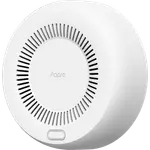
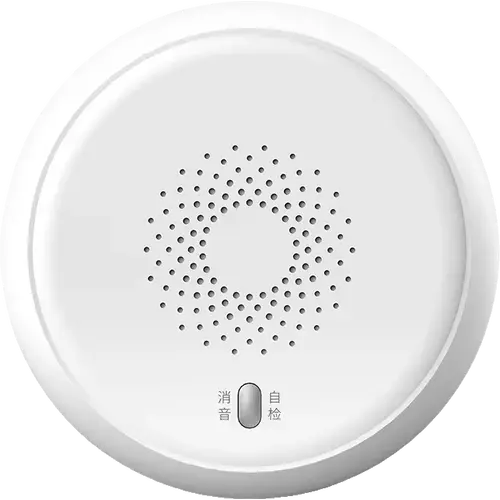
Zemismart ZM-GA100 Review: A Compact Zigbee Methane Alarm for Tuya Homes
The Zemismart ZM-GA100 is a small Zigbee gas detector for kitchens and utility rooms on a piped natural gas supply. It joins a Tuya Zigbee hub, pushes alarms to Tuya Smart or Smart Life, and reports a 0 to 100% LEL range instead of a plain alarm contact. It is the only battery-powered unit in this comparison, which makes placement free but adds a battery to keep an eye on, and the app shows a low battery reminder for exactly that reason. It is methane only, it is not a Zigbee repeater, and Zemismart publishes neither its alarm threshold nor its sensor lifespan.
- Tuya households
- Kitchens on piped gas
- Budget buyers
- Zigbee mesh owners
Pros
- Battery powered, so it mounts where the gas collects rather than where the socket is
- Reports a 0 to 100% LEL measuring range
- 70 dB voice alarm rather than an anonymous beep
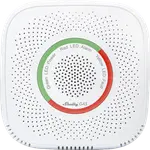
- Mute and self-check buttons on the face of the unit
- Low battery reminder in the app
- Works with Home Assistant through the official Tuya integration
- The cheapest detector in this comparison
Cons
- Requires a Tuya Zigbee hub
- Battery type and expected battery life are not published
- Not a Zigbee repeater, so it does not extend the mesh
- Methane only, not for bottled LPG
- Alarm threshold, sensor type, sensor lifespan and certification are not published
- No Alexa or Google Home support, since neither platform has a combustible gas device type
Who is the Zemismart ZM-GA100 for?
It is aimed at a home with pipeline natural gas and an existing Tuya Zigbee hub. The detector is specified for methane and Zemismart is explicit that it should not be used as a bottled LPG alarm, so it belongs near a gas cooker, a boiler or the meter, mounted high where methane collects. It is the cheapest unit in this comparison, which makes it a reasonable way to add a second detector to a room that currently has none.
What stands out on paper
For its price it reports more than expected: a measuring range of 0 to 100% LEL, so the app shows a level rather than an on/off state, and a low battery reminder so the unit does not go quiet without warning. Running on batteries is unusual in this category, where nearly every detector needs a socket, and it means the unit can go exactly where the gas collects rather than where the wiring allows. The alarm is a 70 dB voice alarm, which is easier to interpret than a pattern of beeps, and mute and self-check buttons are built into the face for the two things owners actually need to do. The alarm state can be used in Tuya smart scenes, and Home Assistant picks it up through the official Tuya integration.
What to know before you buy
It needs a Tuya Zigbee hub, and Zemismart states clearly that this sensor is not a repeater, so it will not extend your mesh the way mains-powered detectors usually do. The alarm threshold, the sensor type, the sensor lifespan, the battery type and its expected life, the dimensions and the certification standard are all absent from the product page, which is a real gap for a life safety device: a battery-powered detector with no stated runtime is one you have to check on. Methane only means a separate detector for any bottled gas. There is no Alexa or Google Home support, because neither platform defines a combustible gas device type, and there is no display on the unit.
Is the Zemismart ZM-GA100 worth it?
As a low-cost addition to a Tuya system it covers the basics competently and adds a concentration reading and a voice alarm that cheaper units skip. What it does not offer is the documentation you would want on a safety product: no stated threshold, no sensor lifespan, no certification. If those matter to you, the better-documented detectors in this category are worth the extra. If you need a second alarm in a room that has none, this is an inexpensive way to get one that still reports into your system.
Frequently asked questions
Can the Zemismart ZM-GA100 detect bottled LPG?
No. Zemismart specifies it for pipeline natural gas methane detection and states it should not be used as an LPG bottled gas detector. Bottled gas needs a detector calibrated for LPG and mounted near the floor.
Does it need a Tuya hub?
Yes. It is a Zigbee sensor, so it must be added through a compatible Tuya Zigbee hub before it can send app notifications.
Is it a Zigbee repeater?
No. Zemismart states that this sensor does not provide Zigbee mesh extension, unlike some mains-powered detectors that also act as routers.
Does the app show the gas level?
Yes. The detector has a measuring range of 0 to 100% LEL, so the reading appears as a level rather than only as an alarm state, and the app also shows a low battery reminder.
Where should it be installed?
Near the potential leak source on a pipeline natural gas supply, mounted high because methane rises, and away from heavy steam, strong airflow or blocked ventilation that would delay detection.
How do I check that it still works?
There is a self-check button on the face of the unit, next to the mute button. Running it periodically is the practical way to confirm the sensor and sounder are alive, since a gas detector cannot be tested like a smoke alarm.
How is the ZM-GA100 powered?
On batteries, which is unusual for a gas detector: the sensing element normally draws enough current to need a socket. Zemismart does not publish the battery type or how long it lasts, but the app shows a low battery reminder so the detector warns you before it goes quiet.
Does it work with Alexa, Google Home or Home Assistant?
Home Assistant yes, through the official Tuya integration, which covers the gas alarm category. Alexa and Google Home no: neither platform defines a device type for combustible gas detectors, so a gas alarm cannot be exposed to either voice assistant.