

Fibaro Home Center Lite Review: Fast and Pretty When It Works, but Bugs and Nonexistent Support Sink It
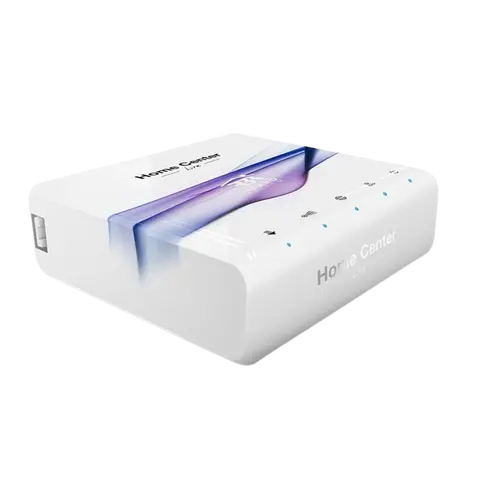
The Fibaro Home Center Lite (FGHCL) is a Z-Wave smart hub that can impress on first setup, owners describe it as fast, with an attractive, sensible interface, good integration, and it 'meets expectations' when everything works. But its low average rating reflects serious, recurring problems that go beyond the hardware. Customer support is the biggest complaint: there's effectively none, no working support phone (calls redirect you to email-only), emails that go unanswered, forums that just point back to the manual, and a 'help' button that returns a 404 error. Documentation is poor and assumes plug-and-play when it isn't, so non-technical buyers struggle, and units bought used are a hassle to unlock from a previous account. Owners also report bugs: it loses the time and date on a power cut (a possibly failing onboard battery), unreliable internet time syncing, no detailed logs, and communication issues even with Fibaro's own plugs. The Android and iOS apps are weak and limited (owners fall back to the web interface), geofencing doesn't work, Alexa responses lag (around 10 seconds versus instant on SmartThings), and rules/scenes feel limited. It's also pricey, and critically, it's region-locked by Z-Wave frequency (the US model is 908MHz and won't work with 868MHz European/Middle-East devices), which the listing doesn't make clear. For most buyers, a better-supported hub is the safer choice.
- Existing Fibaro Z-Wave device owners
- Users who want a fast, slick interface
- Tinkerers comfortable without support
- Region-matched (US-frequency) Z-Wave setups
Pros
- Fast, responsive hub with an attractive, sensible interface
- Good integration and Z-Wave control when working
- Capable web interface
Cons
- Essentially no customer support (no working phone, unanswered emails, 404 help)
- Poor documentation; buggy (loses time on power loss, unreliable syncing, no detailed logs)
- Weak Android/iOS apps; limited automations, geofencing failures, laggy Alexa responses
- Pricey for what it offers
- Region-locked by Z-Wave frequency (US 908MHz won't work with EU/ME 868MHz devices)
Who is the Fibaro Home Center Lite for?
This is a Z-Wave smart home hub (controller) with a web and app interface for automations and scenes. It's aimed at Z-Wave users, and pairs best with Fibaro's own devices. Crucially, it's region-locked by Z-Wave radio frequency, the US model runs at 908MHz and won't work with the 868MHz devices sold in Europe and the Middle East, and the listing doesn't make this clear. It realistically suits existing Fibaro/Z-Wave owners who want a fast interface and are comfortable troubleshooting without vendor support, in a region matching the hub's frequency. Given the reliability and support issues, most buyers, especially newcomers, will be better served by a better-supported hub.
What buyers love
When it works, the Home Center Lite makes a good first impression. Owners repeatedly describe it as fast, with a well-thought-out layout and attractive, 'pretty' interfaces, and setup is often easy. Those coming from other controllers note it's snappier than some rivals, and several report good integration and that it 'meets expectations,' with one calling the integration excellent. The web interface in particular is capable, and for owners who get past the initial hurdles, the core Z-Wave control does its job. In short, the hardware speed and interface design are the genuine bright spots, the problems lie mostly around support, apps, and reliability rather than raw capability.
What to know before you buy
The dominant complaint is customer support, which is effectively nonexistent: there's no working support phone (you're told to email only), emails often go unanswered, community forums just refer you back to the manual, and the in-app 'help' button returns a 404 error, even on the web app. Documentation is poor and assumes plug-and-play when the device isn't, so non-technical buyers struggle, and units purchased used are a headache to unlock from a previous owner's account (you must go through support). Owners also report bugs: it loses the time and date after a power outage (pointing to a possibly failing onboard battery), internet time syncing is unreliable, there are no detailed logs to diagnose issues, and some hit communication problems even with Fibaro's own plugs. The Android and iOS apps are weak and limited, so many owners use the web interface instead. Automations disappoint too: geofencing didn't work for some, Alexa responses lag around 10 seconds (versus instant on SmartThings), and rules/scenes feel limited. It's pricey for what it offers, and, most importantly, it's frequency-locked by region, the US 908MHz model won't work with 868MHz European/Middle-East Z-Wave devices, which buyers in those regions discover only after purchase.
Is the Fibaro Home Center Lite worth it?
For most buyers, no. The Fibaro Home Center Lite has real strengths, a fast, attractive interface and capable Z-Wave control, but they're undermined by essentially nonexistent customer support, poor documentation, assorted bugs (lost time on power loss, unreliable syncing, no detailed logs), weak mobile apps, limited automations with laggy Alexa responses, and a high price. On top of that, it's region-locked by Z-Wave frequency, so buying the wrong version (908MHz vs 868MHz) makes it useless with your local devices. Consider it only if you're an existing Fibaro user in a matching frequency region who values the interface and can live without vendor support; otherwise, a better-supported, more actively maintained hub is the safer, less frustrating choice.
Frequently asked questions
Will it work with my Z-Wave devices in Europe or the Middle East?
Only if the frequency matches. The hub is region-locked by Z-Wave radio frequency, the US model runs at 908MHz and won't work with the 868MHz devices sold in Europe and the Middle East. The listing doesn't clearly state this, and buyers in those regions have found the unit useless with their local devices. Confirm the frequency before buying.
How is the customer support?
Poor, essentially nonexistent. Owners report no working support phone (you're directed to email only), emails that go unanswered, forums that just refer you back to the manual, and an in-app 'help' button that returns a 404 error. If you need vendor help to resolve issues, this is a major risk.
Are there reliability or bug issues?
Yes, several. Owners report the hub losing the time and date after a power outage (possibly a failing onboard battery), unreliable internet time syncing, no detailed logs for troubleshooting, and communication problems even with Fibaro's own plugs. Combined with weak support, these can be hard to resolve.
How are the apps and automations?
The Android and iOS apps are weak and limited, so many owners use the web interface instead. Automations also disappoint for some: geofencing failed, Alexa responses lagged around 10 seconds (versus instant on SmartThings), and rules/scenes felt limited compared with rivals.
Should I buy it used to save money?
It's best avoided used. Units bought secondhand are a hassle to unlock from the previous owner's account, requiring you to go through Fibaro support, which is unreliable. Owners specifically recommend buying new to avoid this headache, though even new the broader support and reliability concerns remain.