Winner

Full Smart Hubs comparison in 2026
We follow prices across the catalog and email you the best deals we find.
No spam. Unsubscribe in one click.
| Feature | Philips Hue Bridge Pro | TP-Link Tapo H100 | Winner |
|---|---|---|---|
| Price | $139.99 | $22.99 | TP-Link Tapo H100 |
| Rating | 4.5 | 4.4 | Philips Hue Bridge Pro |
| Warranty | 2 years | 1 year | Philips Hue Bridge Pro |
| Connectivity | 2.4 GHz WiFi, Ethernet | 2.4 GHz WiFi | Philips Hue Bridge Pro |
| Protocols | Bluetooth, Zigbee Coordinator, Matter Bridge, Third-Party Devices | Matter Bridge | Philips Hue Bridge Pro |
| Integrations | Google Home, Alexa, Apple HomeKit, Samsung SmartThings, Home Assistant | Google Home, Alexa, Apple HomeKit, Samsung SmartThings, Home Assistant | Tie |
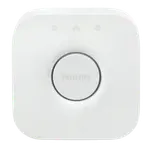
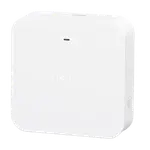
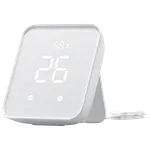
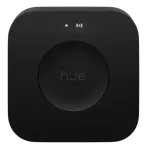
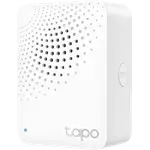
The Philips Hue Bridge Pro coordinates a Hue Zigbee mesh for 150 or more lights and 50 or more accessories, and it adds MotionAware so bulbs can act as motion triggers. The TP-Link Tapo H100 hosts up to 64 Tapo sensors, buttons and switches on a Sub-1G radio. It does not control Hue bulbs, and it does not adopt Tapo cameras.
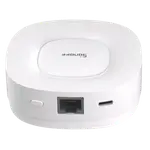
The Philips Hue Bridge Pro has Ethernet and 2.4 GHz Wi-Fi, with Bluetooth only for setup, which is the connectivity win. It has no 5 GHz radio. The TP-Link Tapo H100 is 2.4 GHz Wi-Fi only, with no Ethernet, and it plugs into a wall socket instead of sitting next to the router.
Both are Matter bridges into Apple Home, Alexa, Google Home, SmartThings and Home Assistant. The Philips Hue Bridge Pro is also a Zigbee coordinator, with third-party devices marked partial. The TP-Link Tapo H100 has no Zigbee, Thread, Z-Wave or Bluetooth, and third-party devices are not supported. That is why the Hue bridge wins protocols.
The TP-Link Tapo H100 has a 90 dB speaker and 19 ringtones. The Philips Hue Bridge Pro has no speaker and no microphone. Its processor is a 1.7 GHz quad-core with 8 GB of memory. Warranty is 2 years on the Hue bridge and 1 year on the Tapo in the US. Storage on the Hue bridge is not documented.
The Philips Hue Bridge Pro is rated for 150 or more lights and is the one owners use to fold several older bridges into a single Zigbee mesh.
The TP-Link Tapo H100 pairs up to 64 Tapo accessories and uses a 90 dB speaker as an alarm or a doorbell chime, with no lighting system required.
The TP-Link Tapo H100 uses 2.4 GHz Wi-Fi from a wall socket. The Philips Hue Bridge Pro can use Wi-Fi too, but Ethernet is the connection owners are told to prefer.
The Philips Hue Bridge Pro is both a Zigbee coordinator and a Matter bridge. The TP-Link Tapo H100 bridges Matter and has no Zigbee radio.
Owners of both hubs say setup is the easy part, then they measure the box against a much bigger system. Philips Hue Bridge Pro owners coming from the older bridge describe lights answering on the first press and two or three bridges collapsing into one, and they like MotionAware, which uses existing bulbs instead of extra sensors. A minority report a migration that dropped scenes, lights going unreachable, or an update that put every device into update mode. TP-Link Tapo H100 owners single out a five-minute pair in the Tapo app and sensors that keep reporting far from the router. They warn that a hub and sensors from different regions will not pair, and that cameras are out of scope.
Every price change of both, in the same store, so the gap between the two lines is what one costs more than the other.
Loading price history...
The Philips Hue Bridge Pro, for a Hue lighting system. It wins on connectivity, protocols and a 2 year warranty, and it holds 150 or more lights. The TP-Link Tapo H100 wins as a small sensor hub with a siren, not as a lighting bridge.
The Philips Hue Bridge Pro runs a Hue Zigbee network and can use Ethernet. The TP-Link Tapo H100 is a 2.4 GHz plug-in hub for up to 64 Tapo sensors. Both bridge Matter. Only the Hue bridge coordinates Zigbee.
No. The TP-Link Tapo H100 does not list a Zigbee coordinator and does not support third-party devices. Hue bulbs belong on the Philips Hue Bridge Pro, or another Hue bridge.
Yes. The Philips Hue Bridge Pro and the TP-Link Tapo H100 both list Apple Home, Alexa, Google Home, SmartThings and Home Assistant. The Tapo path for sensors is its Matter bridge and the Tapo app. The Hue path is the Hue system.
Homes with a large or growing Hue system who want faster response, 150 or more lights, MotionAware and the option to retire extra bridges. Small setups that already work on the classic bridge gain less.
Anyone whose accessories are Tapo sensors and buttons, who wants a 90 dB chime and Matter without running a lighting mesh. Match the hub's region to the sensors, and do not expect it to record cameras.
You are looking at two of them. The full table lines up all Hubs in the catalog with the same specs, so you can filter by what you need and sort by price or rating.