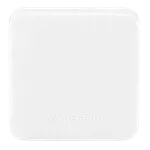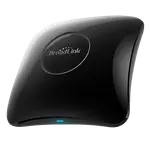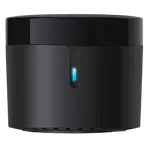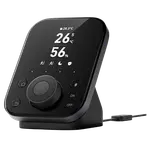




BroadLink RM4 Pro Review: An IR and RF Blaster That Replaces Remotes and a Harmony Hub
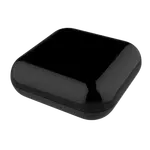
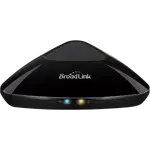
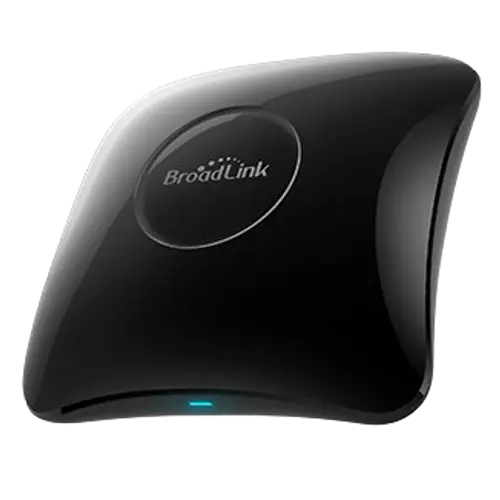
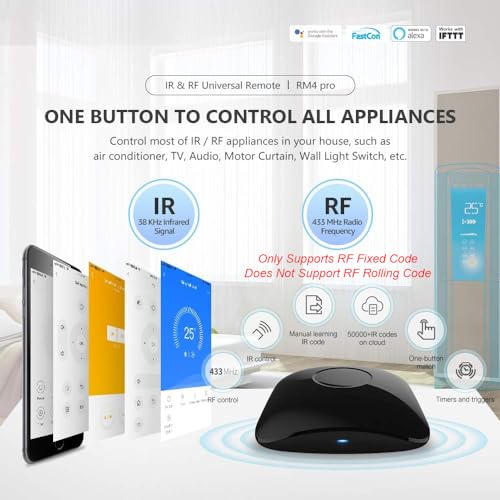
The BroadLink RM4 Pro is the RF-capable big brother of the RM4 Mini: a small, affordable Wi-Fi hub that learns and blasts both infrared (TVs, ACs, receivers, set-top boxes) and radio (RF) signals for things like blinds, curtains, fans and RF outlets. It sets up through the BroadLink app, learns commands from your existing remotes, chains them into scenes, and integrates well with Alexa, Google Home and Home Assistant for fast voice and local control. Owners often pick it over a Logitech Harmony for half the price and the ability to switch each device independently. The big asterisk is RF: many RF devices use proprietary or rolling-code protocols the Pro cannot reproduce, so it only reliably handles common fixed-code 433MHz gear. It is 2.4GHz Wi-Fi only, cloud-reliant by default, and the app's setup flow is a bit clunky.
- IR and RF device control
- Alexa and Google Home users
- Home Assistant tinkerers
- Harmony Hub alternative seekers
Pros
- Controls both IR and RF devices (TVs, ACs, blinds, fans, RF outlets) in one small unit
- Smart learning copies IR and RF buttons, with RF frequency auto-detect
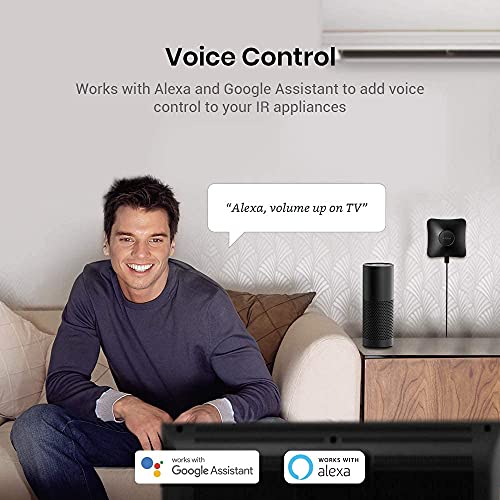
- Fast Alexa and Google Home voice control, with scene chaining and delays
- Excellent local control through Home Assistant (remote entity and send_command)
- Cheaper than a Logitech Harmony hub, with independent per-device on/off
- Tiny and USB powered, easy to hide behind a TV
Cons
- RF is hit or miss: proprietary/rolling-code devices often will not work
- Only common fixed-code (around 433MHz) RF bands are supported; check the FCC ID first
- 2.4GHz Wi-Fi only, and cloud-reliant by default
- App has awkward translated English and a confusing setup flow
- Devices can drop offline until you reopen the app; voice channel changing is fiddly
- No native Apple HomeKit or SmartThings (HomeKit only via Home Assistant)
Who is the BroadLink RM4 Pro for?
This is the version of BroadLink's Wi-Fi universal remote for people who need radio (RF) control as well as infrared. As an IR blaster it handles TVs, air conditioners, receivers, set-top boxes and the like, and as an RF blaster it can learn and send signals to compatible RF devices such as blinds, curtain motors, fans and RF outlets. It works as a universal remote via a brand library plus a smart-learning mode that copies any remote's buttons (with auto-detect for RF frequency), connects over 2.4GHz Wi-Fi, and integrates with Amazon Alexa, Google Home and Home Assistant (no Apple HomeKit or SmartThings natively). You can build scenes that chain commands with timing delays (for example a Watch TV scene), and trigger them by voice. It best suits people consolidating IR and RF remotes, smart-home users who want voice on/off for non-smart gear, Home Assistant tinkerers wanting local control, and anyone wanting a cheaper alternative to a Logitech Harmony hub.
What buyers love
The headline win is doing IR and RF in one tiny, cheap box. Owners use it to control TVs, receivers, fans, garage and gas fireplaces, blinds and RF outlets, and praise how learning mode reliably copies both IR and RF button presses once you get the first one done. Setup through the app is generally quick, the brand library covers many devices (and learning fills the gaps), and scenes let you string actions together. Alexa and Google Home integration is a repeated highlight: linking the skill is easy and voice commands fire almost instantly, with Google/Alexa routines able to trigger BroadLink scenes. It is a favorite for Home Assistant users, where the BroadLink integration creates a remote entity and send_command service for fully local IR/RF control. Several buyers compared it directly to a Logitech Harmony and chose the Pro for costing about half as much and, crucially, letting you turn each device on or off independently rather than forcing a whole-activity state.
What to know before you buy
The most important caveat is RF: many RF devices use proprietary, complex or rolling (changing) frequencies that the Pro simply cannot reproduce, and it only supports the most common fixed-code bands (around 433MHz). Several owners failed with ceiling fans, older garage door openers, and certain string and pool lights, while standard IR gear worked fine. The practical advice from reviewers is to check your device's FCC ID for its frequency and test RF quickly so you can return it if a critical device fails. Beyond RF: it is 2.4GHz Wi-Fi only, it relies on BroadLink's cloud by default (you can unlock it for local Home Assistant use, but the app account/cloud is the default path), and the app has awkward translated English and a setup flow that defines a device separately from programming its buttons, which can confuse. Devices occasionally drop offline until you open the app, voice-based channel changing is fiddly, and there is no Apple HomeKit or SmartThings without going through Home Assistant. A few buyers could not get it to connect at all.
Is the BroadLink RM4 Pro worth it?
If you need both IR and RF control, yes, with one caution: it is a capable, inexpensive blaster that consolidates remotes, integrates beautifully with Alexa, Google and especially Home Assistant, and undercuts a Harmony hub while offering more flexible per-device control. For IR gear it is a safe, easy win. For RF it is a gamble, so confirm your RF devices use a common fixed-code frequency (check the FCC ID) and test early within the return window. Go in expecting 2.4GHz Wi-Fi, a cloud-by-default app with a clunky setup, and no native HomeKit. If your needs fit, it is one of the best-value IR/RF hubs available; if you only have IR devices, the cheaper RM4 Mini will do.
Frequently asked questions
What is the difference between the RM4 Pro and the RM4 Mini?
The Pro adds RF (radio frequency) control on top of infrared, so it can operate RF devices like some blinds, curtain motors, fans and RF outlets. The Mini is IR only. If all your devices use IR, the Mini is enough; choose the Pro only if you specifically need RF.
Will it control my RF ceiling fan, garage door or blinds?
Maybe. It only handles common fixed-code RF (around 433MHz). Many RF devices use proprietary or rolling (changing) frequencies it cannot reproduce, and owners report failures with some ceiling fans and older garage openers. Check the device's FCC ID for its frequency and test quickly within the return window.
Does it work with Alexa, Google Home and Apple HomeKit?
It works with Amazon Alexa, Google Home and Home Assistant, with fast voice control and scene triggering. It does not natively support Apple HomeKit or Samsung SmartThings, though you can expose it to HomeKit through Home Assistant.
Can I use it locally without the cloud?
By default it uses BroadLink's app and cloud. However, it integrates cleanly with Home Assistant, where you can unlock it for local control and learn IR and RF commands without relying on the BroadLink app day to day.
How do I add devices that are not in the app's library?
Use the learning mode: point your existing remote at the RM4 Pro and press a button, and it copies the command (IR or RF, with auto-detect for RF frequency). It takes a few minutes to capture the buttons you use, then you can build scenes and voice commands.