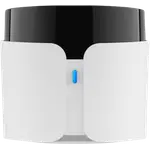




Moes RF IR Universal Remote Review: One Hub for Infrared and 433 MHz Devices
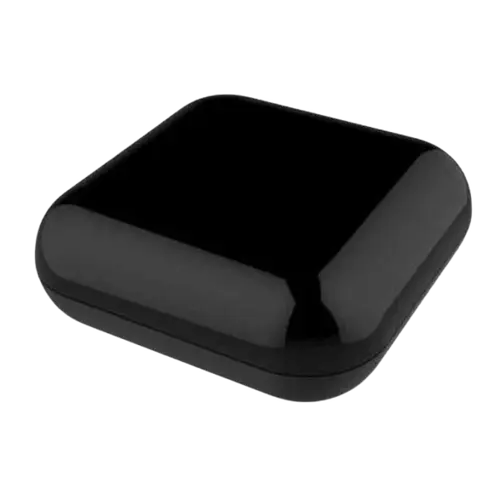
The Moes UFO-R2-RF is a Wi-Fi hub for the appliances your smart home cannot normally see: anything controlled by an infrared remote, such as air conditioners, TVs and set-top boxes, plus RF devices like some blinds, fans and older sensors. It learns remote codes, exposes the results to Alexa, Google Home and Home Assistant, and needs no hub of its own beyond 2.4 GHz Wi-Fi. It is not a smart home hub in the wider sense: there is no Zigbee, Z-Wave, Thread, Matter or Bluetooth, and no Apple HomeKit support.
- Controlling air conditioners by voice
- Old TVs and AV gear
- RF blinds, fans and switches
- Alexa and Google Home households
Pros
- Controls both infrared and RF appliances from one hub
- Smart learning captures codes from remotes not in the database
- Brings air conditioners and old AV gear into voice control
- Works with Alexa, Google Home and Home Assistant
- No hub required beyond 2.4 GHz Wi-Fi
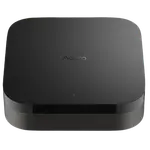
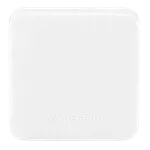
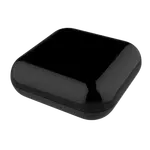
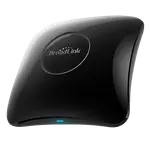
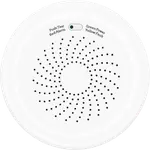
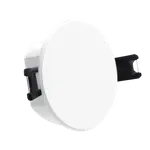
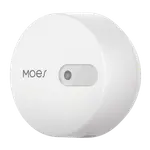
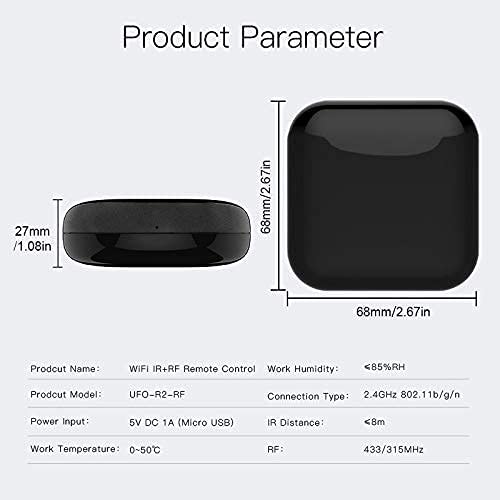
- Small footprint at 68 x 68 x 27 mm
- Low price
Cons
- Infrared needs line of sight, so one unit per room
- No Apple HomeKit, SmartThings or Matter support
- Not a protocol hub: no Zigbee, Z-Wave, Thread or Bluetooth
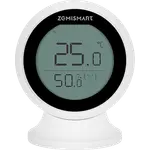
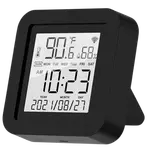
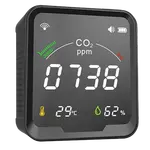
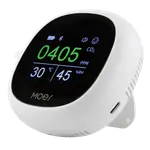
- No built-in temperature, humidity, light or motion sensors
- 2.4 GHz Wi-Fi only, with no Ethernet
- One year warranty
Who is the Moes RF IR remote for?
Every home has appliances that predate smart control, and an air conditioner is usually the most valuable one to automate: it draws a lot of power and it only takes commands from a small infrared remote. This hub sits in the room, learns those codes, and turns them into something Alexa, Google Home or Home Assistant can trigger. The RF side extends the same idea to 433 MHz style devices, which is where many cheap blinds, ceiling fans and garage or gate remotes live. Smart learning means it can capture codes from remotes that are not in the built-in database.
What it offers
Two radios that matter here: infrared, which is line of sight and so needs the hub in the same room facing the appliance, and RF, which passes through walls at short range and covers a different class of device. Both feed into the universal remote function, so a single app screen replaces a drawer of remotes. Integration covers Google Home, Alexa and Home Assistant, which is enough for voice control and for automations such as turning the air conditioner on when a temperature sensor elsewhere crosses a threshold. The unit is small at 68 x 68 x 27 mm and powers over USB style supply, so it can sit on a shelf or a TV unit.
What to know before you buy
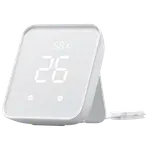
Infrared is line of sight: the hub must see the appliance, which means one unit per room and careful placement. There is no Apple HomeKit support and no SmartThings, and no Matter, so an Apple household gains nothing here. It is not a protocol hub either: no Zigbee, Z-Wave, Thread or Bluetooth, so it will not adopt sensors or bulbs. It has no built-in temperature, humidity, light or motion sensing, which some competing IR hubs include to drive climate automations, so any such trigger has to come from a separate sensor. Wi-Fi is 2.4 GHz only, and there is no Ethernet.
Is the Moes RF IR remote worth it?
It is inexpensive, and the payoff is concentrated: making an air conditioner voice controllable and schedulable is usually worth more than the device costs, especially in a hot climate. The RF support is the differentiator against IR-only hubs, and worth having if you own 433 MHz blinds or fans. Look elsewhere if you need HomeKit, or if you wanted a hub that also handles Zigbee sensors.
Frequently asked questions
What can the Moes RF IR remote actually control?
Anything driven by an infrared remote, such as air conditioners, TVs, set-top boxes and audio gear, plus RF devices like some blinds, fans and gate remotes.
Does it work with Apple HomeKit?
No. Google Home, Alexa and Home Assistant are supported. Apple HomeKit, SmartThings and Matter are not.
Do I need one in every room?
For infrared, effectively yes, because IR requires line of sight to the appliance. RF is less positional but still short range.
Can it trigger my air conditioner from a temperature reading?
Only with a separate sensor. This hub has no built-in temperature or humidity sensing, so the trigger has to come from elsewhere in your smart home.
Does it need a hub or bridge?
No. It connects directly over 2.4 GHz Wi-Fi.