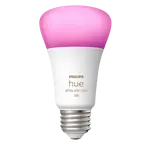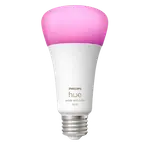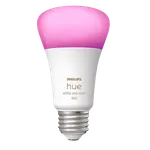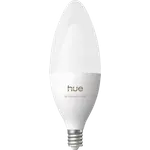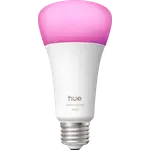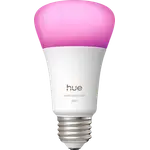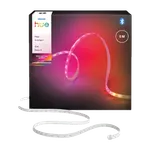
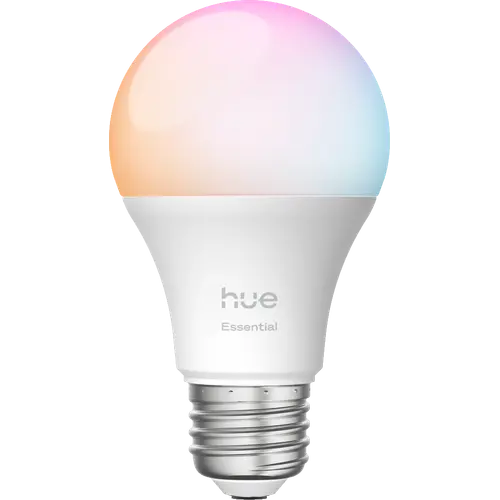


Philips Hue Essential A19 Review: The Cheap Way Into Hue, With One White-Light Compromise
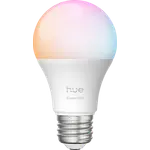
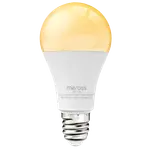
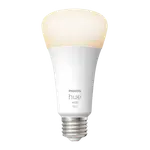
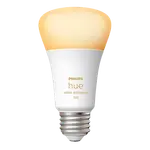
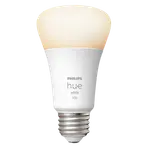
The Philips Hue Essential A19 is Signify's entry-level color bulb, and it is the cheapest honest way into the Hue ecosystem. It is a genuine Hue light underneath: 800 lumens from 8.8W on a standard E26 base, 16 million colors, a 2200K to 6500K white range, smooth dimming down to 2%, and the Zigbee mesh that owners repeatedly describe as pairing in minutes, responding instantly and never dropping off. The one real compromise shows up at the warm end of the white scale, where owners who also run the flagship Hue bulbs report that the deep sub-2700K oranges come out weak and slightly pink, and a few find it dimmer in practice than the flagship 800 lumen A19. If you want warm incandescent-style light in a bedroom, buy the flagship; for color, scenes and everywhere else in the house, this is the better value.
- Expanding an existing Hue system
- First-time Hue buyers
- Color and scene lighting
- Budget-conscious smart lighting
Pros
- Genuine Hue reliability: pairs in minutes, responds instantly and stays connected
- Rich color, a 2200K to 6500K white range and smooth dimming down to 2%
- Works with Alexa, Google Home, Apple Home, SmartThings and Home Assistant, with Matter through the Hue Bridge
- Zigbee keeps it off your Wi-Fi and repeats the mesh for other Hue devices
- 800 lumens from 8.8W on a standard E26 base, with a two year warranty
Cons
- Deep warm whites below 2700K come out weak and slightly pink versus the flagship Hue bulbs
- Some owners find it dimmer in practice than the flagship 800 lumen A19
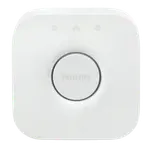
- Voice control, remote access, automations and Matter all need the separately sold Hue Bridge
- Isolated reports of unexplained brightness flicker and of a bulb failing early
- Still a premium purchase next to a non-smart bulb
Who is the Philips Hue Essential A19 for?
This is the bulb for anyone who wants Hue without paying the flagship price. It is a standard A19 shape on an E26 base, so it drops into ordinary lamps, ceiling fans and fixtures, and it puts out 800 lumens (a 60W incandescent equivalent) while drawing 8.8W. It speaks both Bluetooth and Zigbee: Bluetooth lets you control it straight from the phone with no extra hardware, and Zigbee is how it joins a Hue Bridge for the full system. Owners in this pool fall into two camps and the bulb suits both. The first already runs Hue and wants to fill more sockets cheaply, and they report it pairing instantly with an existing Bridge and syncing straight into scenes and voice routines they had already built. The second is coming to Hue for the first time and wants the ecosystem's reliability rather than the cheapest Wi-Fi bulb on the shelf, and several say exactly that: they moved off no-name bulbs specifically because those clogged the home network and dropped offline.
What buyers love
Setup is the most repeated praise, and the numbers people quote are minutes rather than hours: scan the code in the Hue app, power the bulb on, done. Right behind it is reliability. Owners describe a rock-solid connection to the hub, instant response from the app and voice, and no random disconnections or glitches, which is precisely what the Zigbee mesh buys over Wi-Fi bulbs (the bulb never touches your Wi-Fi network, and as a mains-powered Hue light it repeats the mesh for other Hue devices nearby). The value framing comes up constantly: people who own the premium Hue bulbs say these deliver the same light quality, the same colors and the same response for much less, and one long-time Hue owner is simply glad Signify finally answered the budget end of the market. Color gets strong marks too, with several owners saying they bought expecting worse color accuracy than the flagship and found none. The scenes and effects are a highlight, including a candlelight flicker that one owner calls surprisingly realistic, and the dimming is praised for staying smooth all the way to the bottom instead of cutting out, which makes it usable as a night-level light.
What to know before you buy
The consistent criticism is the warm end of the white range. On paper the bulb spans 2200K to 6500K, but an owner running it alongside the standard Hue lineup reports that it will not produce the deep orange whites below 2700K, and that even around that mark a little pink creeps in, enough that they would not use it in a bedroom or mix it into fixtures shared with regular Hue bulbs. The colored spectrum is not affected, so this is specifically about warm white. Related to that, a few owners perceive it as dimmer than the flagship 800 lumen A19 and than their top-tier Hue bulbs, and one reports unexplained flickering between brightness levels across a whole set. There is also a single report of one bulb in a four-pack failing inside two months, against a two year manufacturer warranty. Finally, understand the architecture before buying: Bluetooth alone covers app control of the bulbs in one room, and the separately sold Hue Bridge is what unlocks voice assistants, remote access, richer automations and the Matter path to other platforms. Owners hit this regularly, one noting they still needed a hub before Google could see the light.
Is the Philips Hue Essential A19 worth it?
For most sockets, yes. It carries a high average rating, and the pattern in the reviews is that people who came in skeptical about the cheaper Hue line came away saying it behaves like the expensive one. You get the Hue app, the scenes and effects, dimming to 2%, a two year warranty, and support across Alexa, Google Home, Apple Home, SmartThings and Home Assistant, with Matter available once a Hue Bridge is in place. It still costs more than a dumb bulb, and that is the trade every owner acknowledges. The honest exception is the room where you want a deep, warm, incandescent-style glow: that is where the Essential visibly gives ground to the flagship, and where paying up is the right call. Everywhere else, especially for color, scenes and whole-house coverage, this is the better buy of the two.
Frequently asked questions
Do you need a Hue Bridge for the Philips Hue Essential A19?
Not to get started. The bulb has Bluetooth, so the Hue app can control it directly, and one owner reports doing that at long range from outside the house. The Bridge is what unlocks the rest: voice assistants, remote access away from home, richer automations and the Matter path to other platforms. Signify lists the Bridge as required for Alexa, Apple Home, Google Assistant and SmartThings control.
How is the Essential different from the standard Philips Hue A19 bulb?
It is the entry-level line, so it costs much less while keeping the same Zigbee reliability, the same app and the same 800 lumen output. The difference owners actually notice is at the warm end of the white range: below about 2700K the Essential will not produce the deep orange glow the flagship bulbs manage, and some see a slight pink cast around that point. A few also perceive it as dimmer than their top-tier Hue bulbs. Colored light is not affected.
Does it work with Alexa, Google Home, Apple Home and Home Assistant?
Yes, all four, plus Samsung SmartThings. Signify lists them as supported once the bulb is on a Hue Bridge, and owners confirm it in practice, including one running the bulbs through Home Assistant. Home Assistant can also talk to it two ways: the official Philips Hue integration for a Bridge setup, or Zigbee2MQTT for a direct Zigbee connection without one.
Does the Philips Hue Essential A19 support Matter?
Yes, by way of the Hue Bridge. The bulb itself is a Zigbee and Bluetooth device, and Signify's spec sheet describes Matter functionality as arriving through the Bridge, which exposes your Hue lights to Matter controllers. Add a Bridge and the bulb becomes reachable from a Matter home.
How bright is it and how low does it dim?
It produces 800 lumens, the equivalent of a 60W incandescent, from 8.8W, which owners describe as plenty for living rooms, bedrooms and offices, particularly in a multi-bulb fixture. At the other end it dims to 2% brightness, and owners single out how smooth that descent is, calling it easy on the eyes for nighttime use.
Does it work as a Zigbee repeater?
Yes. Philips Hue documents that each Hue bulb acts as a signal repeater and forms a mesh network, so every powered Essential bulb you add extends the range of the rest of your Hue devices. It also means the bulbs run on their own Zigbee network rather than on your Wi-Fi, which several owners cite as the reason they left cheaper Wi-Fi bulbs behind.