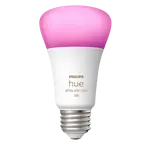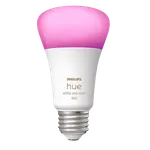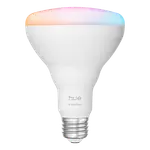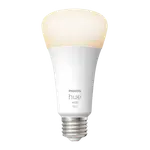




Philips Hue Essential BR30 Review: Hue Color for Your Recessed Cans, Without the Flagship Price
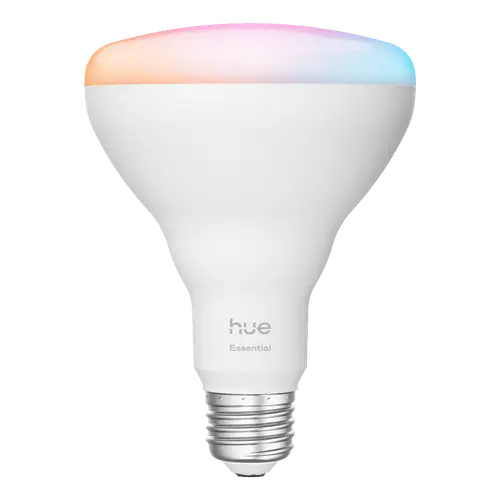
The Philips Hue Essential BR30 is Signify's entry-level flood bulb, and it is the cheapest honest way to put real Hue color into recessed cans and can lights. It is a genuine Hue light underneath: 650 lumens from 7.2W on a standard E26 base, 16 million colors, a 2200K to 6500K white range, smooth dimming down to 2%, and the Zigbee mesh that owners credit for easy pairing and steady, responsive control. Owners running large Hue systems repeatedly report that they cannot tell it apart from the pricier Hue bulbs, and the complaints that do come back are small: the dimming floor stops higher than some would like, the color rendering reads as unremarkable on paper, and voice control, remote access and Matter all wait behind the separately sold Hue Bridge. For flood sockets, this is the better value of the two.
- Recessed cans and can lights
- Expanding an existing Hue system
- First-time Hue buyers
- Budget-conscious smart lighting
Pros
- Owners with large Hue systems report they cannot tell it apart from the pricier Hue bulbs
- 650 lumens of white and color light from 7.2W, in the BR30 flood shape recessed cans are built for
- A 2200K to 6500K white range with smooth dimming down to 2%
- Works with Alexa, Google Home, Apple Home, SmartThings and Home Assistant, with Matter through the Hue Bridge
- Zigbee keeps it off your Wi-Fi and every bulb repeats the mesh, backed by a two year warranty
Cons
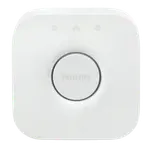
- Voice control, remote access, automations and Matter all need the separately sold Hue Bridge
- Dimming stops at 2% and one owner wanted it to go lower
- Color rendering reads as unremarkable on paper next to the flagship Hue range
- One owner finds the housing feels more plastic than the earliest Hue generations
- An isolated report of a defective bulb arriving in a multipack
Who is the Philips Hue Essential BR30 for?
This is the bulb for the sockets a standard A-shape bulb never fills properly. BR30 is the wide reflector shape that recessed cans, can lights and floodlight fittings are built around, so it throws its 650 lumens down into the room instead of scattering them sideways. One owner runs it exactly that way, in a living room floodlight socket, and another points out that the shape aims the light downward and suits a fitting mounted high. It screws into an ordinary E26 base and draws 7.2W. It speaks both Bluetooth and Zigbee: Bluetooth lets the Hue app control it with no extra hardware, and Zigbee is how it joins a Hue Bridge for the full system. The owners in this pool fall into two camps and the bulb suits both. The first already runs Hue, in some cases dozens of bulbs, and wants to fill more sockets without paying flagship prices. The second is arriving at Hue for the first time and wants the ecosystem's reliability rather than the cheapest bulb on the shelf, which is exactly the move one of them describes after a run of off-brand bulbs kept failing.
What buyers love
Value dominates, and it arrives with a specific claim attached: owners who already run large Hue systems say they cannot tell these apart from the expensive ones. One with fifteen Hue bulbs reports no noticeable difference against the higher-priced models, and another with more than fifty says the same about color, granting only that absolute color parity across the house is not something they need. A third notes the brightness matches the older Hue bulbs at a much lower cost. Setup is the next most repeated praise: pair it in the Hue app and it is, in one owner's words, as easy as screwing them in. Reliability follows, and it is usually framed against what people left behind, namely cheap Wi-Fi bulbs that fail or lose sync, where the Zigbee mesh keeps these off the home network entirely. Color and the scene library get strong marks, with owners describing vibrant color ambiance, whites that move smoothly from warm to cool, and the plain fun of programming colors to match a mood. Brightness satisfies in real rooms: offices, kitchens, living rooms and medium bedrooms all come up. And the automation side is what keeps long-time owners in the system, one describing night lights that come on at bedtime and porch lights that follow sunset and sunrise, all reachable from a phone even from another country.
What to know before you buy
The architecture is the first thing to understand. Bluetooth on its own covers app control of the bulbs in one room, and the separately sold Hue Bridge is what unlocks voice assistants, remote access, richer automations and the Matter path to other platforms; one owner confirms it pairs happily with a second-generation Bridge. On the light itself the criticisms are modest and consistent. Dimming bottoms out at 2%, which owners describe as smooth and usable, though one says plainly that they wish it went lower and flags the color rendering as unremarkable on paper. Another finds the housing feels more plastic and less substantial than the glass and aluminium of the earliest Hue generations. On Apple Home, one owner calls the setup slightly awkward at times, and another recommends running a Matter capable home hub so that several bulbs in the same fixture stay in sync. There is also a single report of one defective bulb arriving in a multipack, against a two year manufacturer warranty.
Is the Philips Hue Essential BR30 worth it?
For flood sockets, yes. It carries a high average rating, and the pattern in the reviews is that people who came in skeptical about the cheaper Hue line came away describing it as the same light for less. You get the Hue app, the scenes and effects, dimming to 2%, a two year warranty, and support across Alexa, Google Home, Apple Home, SmartThings and Home Assistant, with Matter available once a Hue Bridge is in place. It still costs more than a plain flood bulb, and every owner acknowledges that trade. What tips it is that this shape is where the price gap hurts most: recessed lighting means buying several bulbs at once, so the saving multiplies across a ceiling. Unless you specifically need the deepest dimming and the highest color fidelity Hue sells, this is the one to put in the cans.
Frequently asked questions
Do you need a Hue Bridge for the Philips Hue Essential BR30?
Not to get started. The bulb has Bluetooth, so the Hue app can control it directly with no extra hardware. The Bridge is what unlocks the rest: voice assistants, remote access away from home, richer automations and the Matter path to other platforms. Signify lists the Bridge as required for Alexa, Apple Home, Google Assistant and SmartThings control, and one owner confirms the bulb pairs fine with a second-generation Bridge.
Where does a BR30 bulb go?
BR30 is the wide reflector shape used by recessed cans, can lights and floodlight fittings, so it aims its light down into the room rather than out in every direction. It still uses the same standard E26 screw base as an ordinary bulb, so it drops straight into those fixtures. One owner runs it in a living room floodlight socket, and another notes the downward beam suits a fitting mounted high.
Does it work with Alexa, Google Home, Apple Home and Home Assistant?
Yes, all four, plus Samsung SmartThings. Signify lists them as supported once the bulb is on a Hue Bridge, and owners confirm it in practice, one calling the Apple Home connection excellent. Home Assistant can reach it two ways: the official Philips Hue integration for a Bridge setup, or Zigbee2MQTT for a direct Zigbee connection without one.
Does the Philips Hue Essential BR30 support Matter?
Yes, by way of the Hue Bridge. The bulb itself is a Zigbee and Bluetooth device, and Signify's spec sheet describes Matter functionality as arriving through the Bridge, which exposes your Hue lights to Matter controllers. One owner adds a practical tip for Apple Home users: run a Matter capable home hub so that several bulbs in the same fixture stay in sync.
How bright is it and how low does it dim?
It produces 650 lumens from 7.2W, which owners describe as plenty for an office, a kitchen, a living room or a medium bedroom, and one reports the brightness matching their older Hue bulbs. At the other end it dims to 2% brightness. Owners find that descent smooth, though one would have liked it to reach lower still.
Does the Philips Hue Essential BR30 work as a Zigbee repeater?
Yes. Philips Hue documents that each Hue bulb acts as a signal repeater and forms a mesh network, so every powered Essential BR30 you add extends the range of the rest of your Hue devices. It also means the bulbs run on their own Zigbee network instead of your Wi-Fi, which is exactly why several owners left cheaper Wi-Fi bulbs behind.