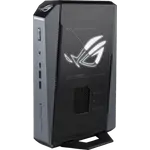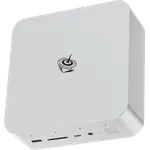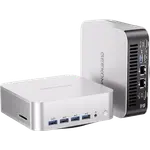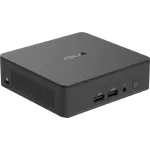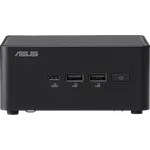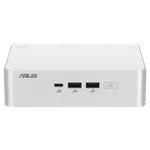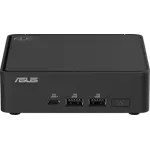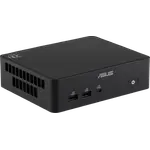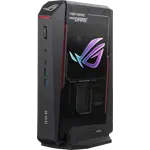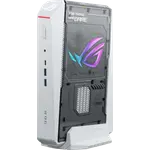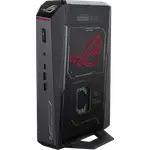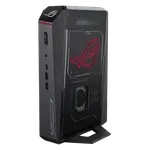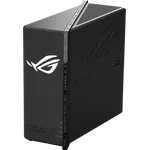
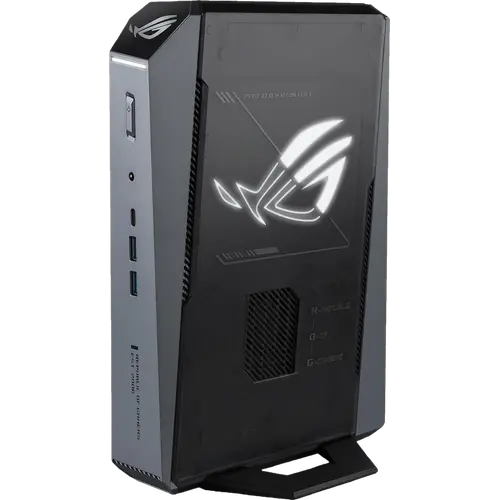


Asus ROG GR70 Review: A 16-Core Gaming Mini PC With Five Display Outputs
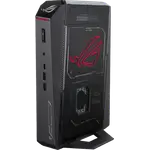
The ROG GR70 puts a 16-core, 32-thread AMD Ryzen 9 9955HX and an NVIDIA GeForce RTX 5070 Laptop GPU into a chassis measuring 282 x 188 x 57 mm, with 32GB of dual-channel DDR5-5600 and a 2TB PCIe 4.0 NVMe drive already installed. Connectivity is its quiet strength: a USB 4.0 Type-C port at 40Gbps, six USB-A ports, two HDMI 2.1 outputs and two DisplayPort 2.1 outputs, so five displays can run from one small box. The compromises are a 330W external adapter, a single 2.5G Ethernet port, no Thunderbolt certification and no NPU, since this Zen 5 processor is a gaming chip rather than an AI-focused one. For high-frame-rate gaming or GPU work where a tower will not fit, it delivers, and the memory and storage both remain user-upgradeable.
- High-frame-rate gaming in small spaces
- Multi-display setups
- 3D rendering and video work
- Living-room and LAN builds
Pros
- 16-core, 32-thread AMD Ryzen 9 9955HX
- Discrete NVIDIA GeForce RTX 5070 Laptop GPU
- Five video outputs: two HDMI 2.1, two DisplayPort 2.1 and USB 4.0 with DisplayPort
- USB 4.0 Type-C at 40Gbps plus six USB 3.2 Gen2 Type-A ports
- 2TB PCIe 4.0 NVMe drive included, upgradeable to PCIe 5.0
- Memory upgradeable to 96 GB across two SO-DIMM slots
- Triple-fan QuietFlow cooling
- Front combo audio jack and a Kensington lock slot
Cons
- Requires a 330W external power adapter
- No Thunderbolt certification, only USB 4.0
- No NPU, so no on-device AI acceleration
- Only one 2.5G Ethernet port
- Heavy for a mini PC at 2.75 kg
- No VESA mount included, no SD card slot and no fingerprint sensor
- No built-in speakers or microphone
- Ships with Windows 11 Home rather than Pro
Who is the Asus ROG GR70 for?
This is built for gaming and GPU-accelerated creative work rather than office duty. The Ryzen 9 9955HX brings 16 Zen 5 cores and 32 threads, which is desktop-class parallelism for compiling, encoding and simulation, while the RTX 5070 Laptop GPU with 8GB of memory handles modern titles and GPU rendering. It suits a desk where a mid-tower is not an option, a living-room setup that needs to look presentable, or anyone who wants to carry a real gaming machine between locations, accepting that the power adapter travels with it. ARGB lighting and a side LED panel make clear this is a gaming product rather than a discreet business box.
What stands out on paper
Display output is the headline: two HDMI 2.1 ports, two DisplayPort 2.1 ports and a USB 4.0 Type-C port carrying DisplayPort mean five video outputs without a dock, which is more than most desktops of any size provide. That USB 4.0 port also runs at 40Gbps for external storage or an eGPU-class enclosure, and there are six USB 3.2 Gen2 Type-A ports plus a front USB-C for peripherals. Storage and memory are both serviceable: the M.2 2280 slot holds a 2TB PCIe 4.0 drive and accepts PCIe 5.0 replacements, while the two SO-DIMM slots run DDR5-5600 and take up to 96 GB. Thermals use a triple-fan QuietFlow design, which is what allows a 70W-class CPU and a discrete GPU to coexist in under three liters. A front combo audio jack covers headsets directly, and a Kensington lock slot handles physical security.
What to know before you buy
The 330W external adapter is a significant desk companion, and at 2.75 kg this is heavy for the mini PC category, so treat portability as relative. Networking is a single 2.5G Ethernet port with no second port for redundancy, and the wireless side pairs Wi-Fi 7 with Bluetooth 5.4. The USB-C port is USB 4.0 rather than Thunderbolt, so devices that specifically require Thunderbolt certification are not guaranteed to work. This processor has no NPU, which means Windows features that depend on on-device AI acceleration will not run locally the way they do on a Copilot+ machine. There is also no VESA mount in the box, no SD card slot and no fingerprint sensor, the chassis has no built-in speakers or microphone, and it ships with Windows 11 Home rather than Pro.
Is the Asus ROG GR70 worth it?
The value case rests on how much the size matters to you. A tower with the same GPU class costs less and upgrades further, so what you pay for here is a 16-core CPU, a discrete RTX 5070 and five display outputs in a body that fits under a monitor. If that is the constraint you are solving, it is well specified for the job, with upgradeable memory and storage that extend its useful life. Buyers who need Thunderbolt, an NPU for local AI work, or dual Ethernet should look at other configurations in this category, and anyone chasing the absolute top GPU tier will find higher options in Asus's own small-form-factor lineup.
Frequently asked questions
How many displays can the Asus ROG GR70 drive?
Five. It has two HDMI 2.1 ports, two DisplayPort 2.1 ports and a USB 4.0 Type-C port that also carries DisplayPort, so no adapter or dock is needed for a multi-monitor setup.
Does the ROG GR70 have Thunderbolt?
No. The rear Type-C port is USB 4.0 running at 40Gbps with DisplayPort support, which covers most of the same uses, but it is not Thunderbolt certified.
Can I upgrade the RAM and SSD?
Yes. It ships with 32 GB of DDR5-5600 across two SO-DIMM slots and supports up to 96 GB using two 48 GB modules. The M.2 2280 slot holds the included 2TB PCIe 4.0 drive and also accepts PCIe 5.0 drives.
Does it have an NPU for AI features?
No. The Ryzen 9 9955HX is a gaming-focused Zen 5 processor without a neural processing unit, so AI features that require on-device acceleration are not supported the way they are on Copilot+ systems.
What power supply does the ROG GR70 use?
An external 330W adapter, included with the power cord. There is no internal power supply, so plan for the brick alongside the chassis.
Does it come with a VESA mount?
No. The box contains the AC adapter, power cord, user manual and warranty card. The system stands on its own base rather than mounting behind a display.