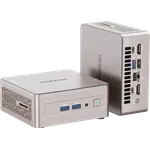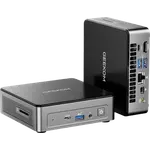


Geekom A9 Max Review: Twelve Zen 5 Cores and Ten Ports in a Sub-Liter Metal Box
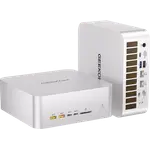
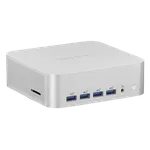
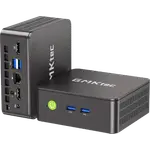
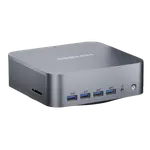
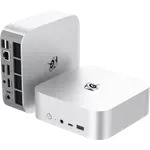
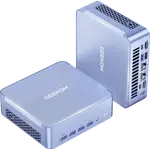
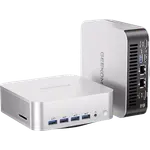
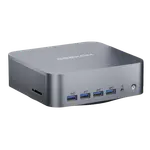
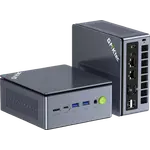
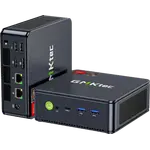
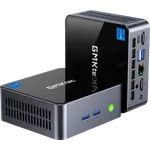
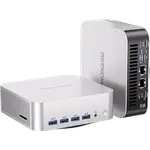
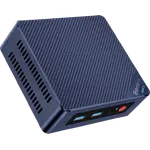
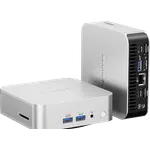
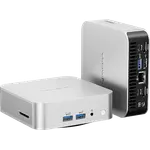
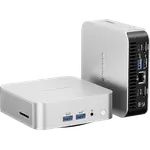
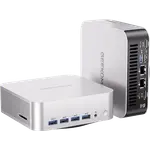
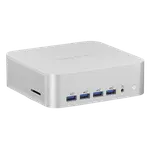
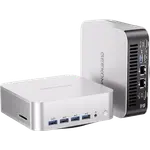
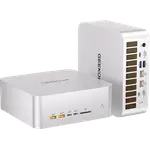
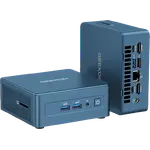
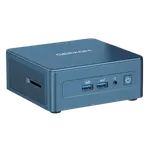
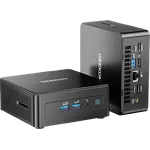
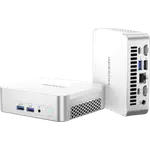
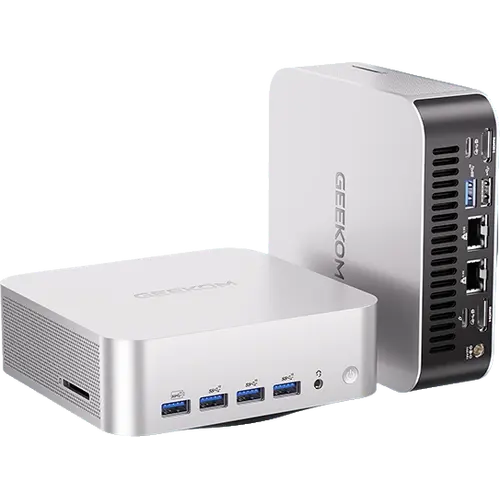
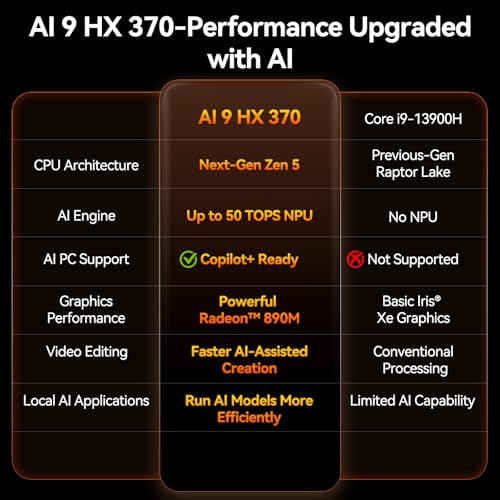
The Geekom A9 Max pairs the twelve-core, twenty-four-thread AMD Ryzen AI 9 HX 370 with Radeon 890M graphics and a 50 TOPS NPU, shipping with 32 GB of dual-channel DDR5 and a 1 TB Gen 4 NVMe drive. What sets it apart is the port count for its size: five USB 3.2 Type-A ports, two USB4 Type-C ports with DisplayPort output, two HDMI 2.1 FRL outputs, dual 2.5G Ethernet, an SD 4.0 card reader and a Kensington lock slot, all in a full-metal chassis under a liter. Memory takes 128 GB and there is a second M.2 2230 slot free, so it grows with the workload. The trade-offs are the external 120W adapter and the absence of Thunderbolt certification, but for AI-capable desktop work in a small footprint it is comprehensively equipped.
- Local AI and Copilot+ workloads
- Multi-display productivity desks
- Content creation on a small footprint
- Dual-network and home-lab setups
Pros
- Twelve-core, twenty-four-thread Ryzen AI 9 HX 370 with Radeon 890M
- 50 TOPS NPU for on-device AI and Copilot+ features
- Dual 2.5G Ethernet ports
- Two USB4 Type-C ports at 40Gbps with DisplayPort output
- Five USB 3.2 Gen 2 Type-A ports, one always-on
- Two HDMI 2.1 FRL outputs, up to four displays
- SD 4.0 card reader and Kensington lock slot
- Memory to 128 GB plus a free M.2 2230 slot; HDMI cable and VESA mount included
Cons
- External 120W power adapter rather than a built-in supply
- USB4 rather than Thunderbolt certified
- No discrete GPU for demanding gaming
- No built-in speakers, microphone or fingerprint sensor
Who is the Geekom A9 Max for?
This targets people who want desktop-class compute without a tower. The Ryzen AI 9 HX 370 brings twelve Zen 5 cores and twenty-four threads at up to 5.1 GHz within a 54W TDP, which covers software development, virtualization, photo and video editing, and heavy multitasking. The integrated 50 TOPS NPU qualifies it for Copilot+ features that run on the device, and Radeon 890M graphics handle 1080p gaming and GPU-accelerated creative tasks. Dual 2.5G Ethernet also makes it a credible home-lab or small-server node, where one port faces the LAN and the other a NAS or isolated segment.
What stands out on paper
Connectivity is the headline. Five USB 3.2 Gen 2 Type-A ports, one of which stays powered when the system is off, sit alongside two USB4 Type-C ports at 40Gbps that also carry DisplayPort, so external SSDs, docks and displays all have somewhere to go. Video output covers two HDMI 2.1 FRL ports plus the two USB-C outputs, supporting up to four displays and 8K output. The SD 4.0 card reader is a genuine convenience for camera work, and the Kensington lock slot handles physical security. Storage uses an M.2 2280 Gen 4 drive with a second M.2 2230 Gen 4 slot free for expansion, memory runs dual-channel DDR5 to a 128 GB ceiling, and the full-metal monoblock chassis with dual copper heat pipes and the IceBlast cooling system keeps a 54W processor in check in under a liter of volume.
What to know before you buy
Power comes from an external 120W adapter rather than an internal supply, so the desk gains a brick. The USB-C ports are USB4 rather than Thunderbolt certified: they cover most of the same ground at 40Gbps, but devices that specifically demand Thunderbolt are not guaranteed. There is no discrete GPU, so demanding modern games at high settings are out of scope, and the chassis has no built-in speakers, microphone or fingerprint sensor. Note also that this is the HX 370 configuration: Geekom sells the same chassis with the newer HX 470 processor, so check the CPU on the listing you are buying if the generation matters to you.
Is the Geekom A9 Max worth it?
It sits at the productive end of the mini PC market rather than the cheap end, and the specification justifies the position: a twelve-core Zen 5 processor, 32 GB of upgradeable DDR5, a 1 TB Gen 4 drive, dual 2.5G networking, dual USB4 and an SD reader, backed by a three-year warranty. Buyers who only need browsing and office work will find cheaper machines that suffice, and anyone chasing serious gaming needs a discrete GPU. For AI-assisted work, development or creative tasks where the machine has to stay small and quiet, this is one of the better-equipped options in the category.
Frequently asked questions
What is the difference between the Geekom A9 Max HX 370 and HX 470?
They share the same chassis, ports and cooling. The difference is the processor: this configuration uses the Ryzen AI 9 HX 370, while the newer edition of the same machine uses the Ryzen AI 9 HX 470.
How many displays can the A9 Max drive?
Up to four, using the two HDMI 2.1 FRL ports plus the two USB4 Type-C ports, which carry DisplayPort output. It supports resolutions up to 8K.
Can I upgrade the RAM and storage?
Yes. The DDR5 SO-DIMM memory can be taken to 128 GB, the M.2 2280 slot holds the included 1 TB Gen 4 drive, and a second M.2 2230 Gen 4 slot is free for another SSD.
Does the A9 Max have Thunderbolt?
No. It has two USB4 Type-C ports running at 40Gbps with DisplayPort support, which covers most Thunderbolt use cases, but they are not Thunderbolt certified.
Is it capable of running local AI models?
It has the hardware for on-device AI: a 50 TOPS NPU plus Radeon 890M graphics, and memory expandable to 128 GB. Performance with large local models still depends heavily on the model size and the software stack, so treat it as a Copilot+ class machine rather than a dedicated AI workstation.
Does it include an SD card reader?
Yes, an SD 4.0 card reader is built into the chassis, alongside a 3.5 mm headphone jack on the front.