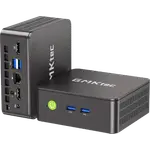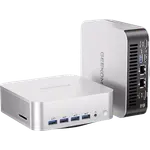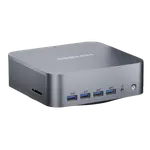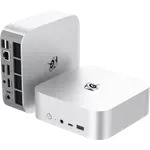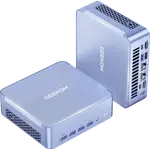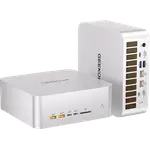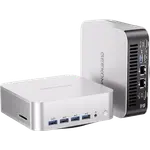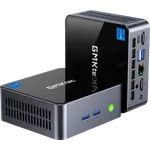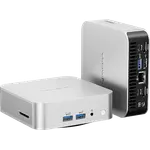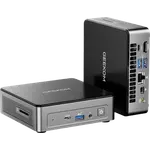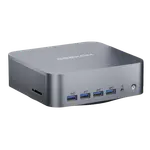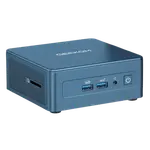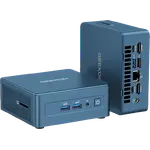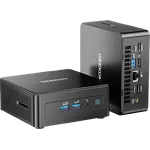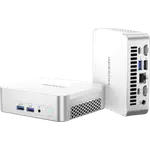


Geekom A9 Mega Review: Strix Halo Graphics in a Mini PC Chassis
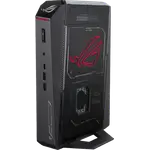
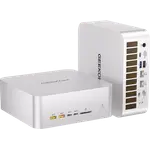
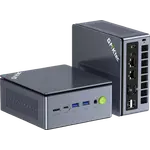
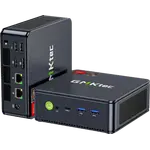
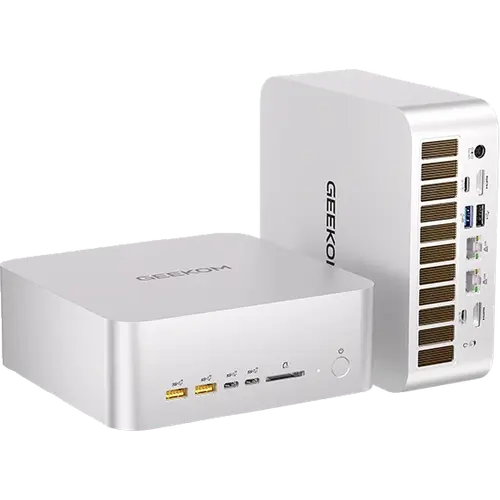
The A9 Mega is the most ambitious machine Geekom builds, and the reason is the silicon: the Ryzen AI Max+ 388 pairs eight Zen 5 cores with Radeon 8060S graphics, a GPU class that behaves far closer to a discrete card than a typical integrated part, and 118 TOPS of combined AI performance. Memory is 64GB of LPDDR5X running at 7500 MHz, which is what makes that GPU usable for large local models, since it shares the pool. Vapor chamber cooling, dual 2.5G Ethernet, Wi-Fi 7, two USB4 ports and a fingerprint button round it out. The cost is real in two ways: this is priced like a workstation, and the memory is soldered, so 64GB is the ceiling for the life of the machine.
- Local AI model deployment
- GPU-accelerated rendering
- High-performance gaming
- 8K video editing
Pros
- Ryzen AI Max+ 388 with 118 TOPS combined AI performance
- Radeon 8060S graphics, the top Strix Halo configuration
- 64GB LPDDR5X at 7500 MHz shared with the GPU for large local models
- Storage expandable to 4TB with RAID 0 and RAID 1 support
- Vapor chamber cooling for sustained workloads
- Dual 2.5G Ethernet, Wi-Fi 7 and Bluetooth 5.4
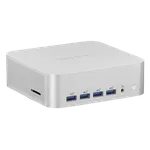
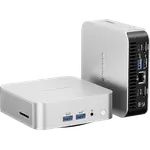
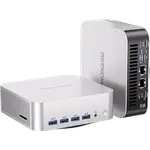
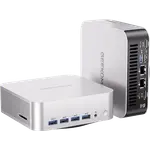
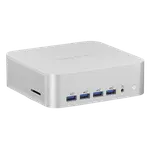
- Fingerprint reader in the power button and an SDXC card reader
- Three-year warranty
Cons
- Memory is soldered, so 64GB is a permanent ceiling
- Priced above the entire mainstream mini PC market
- Dimensions, weight and power adapter rating are not published
- Full USB port breakdown is not stated beyond the two USB4 ports
- Only one HDMI output
- Too new to have any buyer feedback
Who is the Geekom A9 Mega for?
This is aimed at people who would otherwise buy a tower with a discrete GPU. The Radeon 8060S is the top graphics configuration on AMD's Strix Halo platform, and because it draws on the same 64GB LPDDR5X pool as the CPU, it can hold models and scenes that would not fit in the VRAM of a mid-range graphics card. That combination suits local AI deployment, 3D rendering, 8K video work and gaming in a machine small enough to sit on a desk. It also suits anyone who wants that capability without the noise and power draw of a full tower, with vapor chamber cooling handling sustained loads.
What stands out on paper
The memory subsystem is the headline alongside the GPU: 64GB of LPDDR5X at 7500 MHz gives substantially more bandwidth than the DDR5 SODIMM setups in the rest of Geekom's range, which is exactly what a large integrated GPU needs. Storage starts at 1TB on PCIe Gen4 and expands to 4TB, with RAID 0 and RAID 1 supported, so you can trade capacity for speed or redundancy. Networking runs dual 2.5G Ethernet plus Wi-Fi 7 with a 3D stereo antenna design and Bluetooth 5.4. The chassis adds an SDXC card reader and, unusually for a mini PC, a fingerprint reader built into the power button. Windows 11 Pro is preinstalled and the warranty is three years.
What to know before you buy
Two limits matter. The memory is soldered LPDDR5X, so the 64GB it ships with is permanent, and that is a meaningful constraint on a machine sold for AI work where memory is usually the first thing you want more of. The price also sits far above the rest of the mini PC market, into territory where a desktop with a discrete GPU becomes a genuine alternative if size is not a constraint. Geekom does not publish the chassis dimensions, weight or power adapter rating for this model, and the full port breakdown beyond the two USB4 ports and single HDMI 2.1 is not stated. Being newly released, there is also no buyer feedback yet.
Is the Geekom A9 Mega worth it?
It is worth it for a narrow but real audience: anyone who needs a large unified memory pool feeding capable graphics in a small, quiet box. For local model inference in particular, 64GB shared with a Radeon 8060S does things a mini PC with an 890M and separate DDR5 cannot. If you do not need that, the A9 Max costs substantially less, keeps upgradeable memory and covers ordinary workstation duty just as well. Judge it on whether the unified memory and GPU class are the point of the purchase.
Frequently asked questions
Why does the A9 Mega cost so much more than the A9 Max?
Different silicon class. The A9 Mega uses AMD's Strix Halo platform with Radeon 8060S graphics and 64GB of high-bandwidth LPDDR5X shared with the GPU, which is aimed at workloads that would otherwise need a discrete card. The A9 Max uses a Strix Point chip with Radeon 890M and standard DDR5.
Can I upgrade the memory later?
No. The 64GB of LPDDR5X is soldered to the board, which is how it reaches 7500 MHz. If you expect to need more memory, this is not the machine to buy.
How much storage can it take?
It ships with a 1TB PCIe Gen4 SSD and expands to 4TB, with RAID 0 or RAID 1 available if you fit more than one drive.
Is it good for local AI models?
That is its main design goal. 118 TOPS of AI performance plus 64GB of memory shared between the CPU and Radeon 8060S lets it hold larger models than a mini PC with a smaller integrated GPU and separate system memory.
Does it have a fingerprint reader?
Yes, built into the power button, which is unusual in this category and useful for Windows Hello sign-in without a separate peripheral.
Can it handle gaming?
Yes. The Radeon 8060S is the strongest integrated GPU option on the platform and Geekom positions the machine for high-performance gaming alongside AI and rendering work.