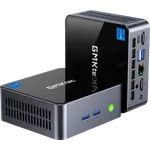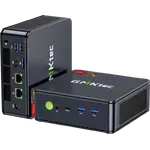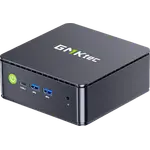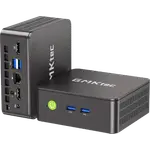





GMKtec EVO-X3 Review: A 128GB Strix Halo AI Workstation in a Metal Tower
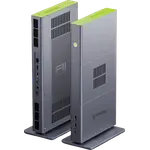
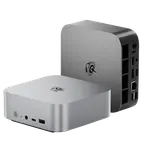
The GMKtec EVO-X3 is a compact AI workstation built around AMD's Ryzen AI Max+ 395, pairing 16 Zen 5 cores with 128GB of unified LPDDR5X-8000 memory that the GPU can draw on as VRAM for large local models. Its slim, full-metal tower, triple-fan cooling, dual PCIe 4.0 M.2 slots, USB4 and OCuLink make it flexible for AI, creative and home-lab work. The trade-offs are a soldered, non-upgradeable memory pool, a single USB4 port, no dedicated DisplayPort or Thunderbolt, and a premium price tier.
- Local AI and large-language-model inference
- Home labs and 24/7 servers
- Content creation and 1080p gaming
- Developers running containers and builds
Pros
- AMD Ryzen AI Max+ 395 with 16 Zen 5 cores and 32 threads, up to 5.1GHz
- 128GB of unified LPDDR5X-8000 memory, with up to 96GB usable as VRAM
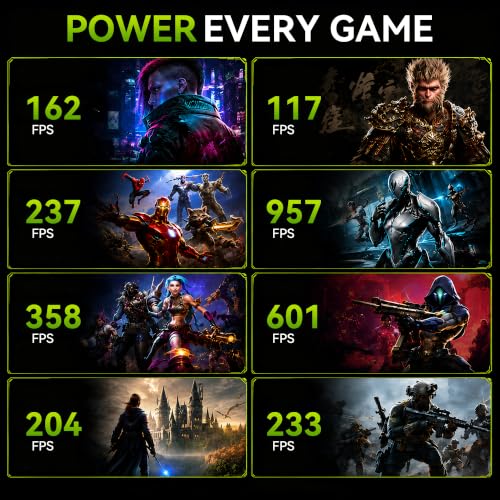
- Radeon 8060S GPU with 40 RDNA 3.5 compute units and 1080p gaming capability
- XDNA 2 NPU at 50 TOPS, up to 126 TOPS of total AI performance
- OCuLink PCIe Gen 4 x4 port for an external desktop GPU
- USB4 Type-C at 40Gbps and HDMI 2.1 for up to 8K output
- Two M.2 2280 PCIe 4.0 x4 SSD slots, expandable to 16TB
- Wi-Fi 7, Bluetooth 5.4 and 2.5G Ethernet
- Full-metal CNC chassis with triple-fan, triple-heat-pipe cooling
- Windows 11 Pro included and Linux compatible
Cons
- 128GB of memory is soldered and cannot be upgraded
- Only one USB4 Type-C port
- No dedicated DisplayPort and no Thunderbolt
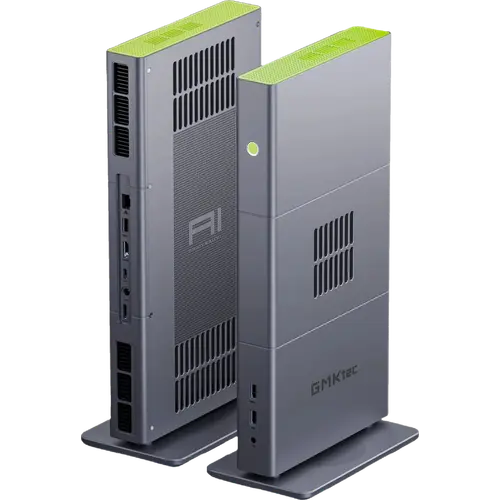
- Large and heavy for a mini PC, at roughly 2.3kg and 353mm tall
- Requires a sizable external power brick
- One-year warranty
- No SD card slot, speakers, microphone or fingerprint reader
Who is the GMKtec EVO-X3 for?
It is for people who want workstation-class AI and multitasking performance on a desk, not a rack. The Ryzen AI Max+ 395 runs 16 Zen 5 cores and 32 threads up to 5.1GHz with a Radeon 8060S integrated GPU of 40 RDNA 3.5 compute units, and the 128GB of unified LPDDR5X-8000 memory can hand up to 96GB to the GPU as VRAM. That combination suits running large language models and diffusion models locally, editing video and 3D content, running virtual machines and containers, or a quiet always-on home server. Because the chassis is a 353mm tall, 2.3kg metal tower rather than a palm-sized box, it is best for a permanent desk or shelf with room for its external power brick.
What the GMKtec EVO-X3 offers
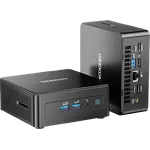
The standout is the memory and AI platform: 128GB of LPDDR5X-8000 lets the EVO-X3 load models far larger than a typical mini PC, and the XDNA 2 NPU adds 50 TOPS, for up to 126 TOPS of total AI compute. Graphics come from the Radeon 8060S, which is rated for 1080p AAA gaming and is backed by an OCuLink PCIe Gen 4 x4 port that can attach an external desktop GPU. Storage starts at 2TB on a PCIe 4.0 x4 NVMe SSD with a second free M.2 2280 slot for expansion. Around the back there is USB4 Type-C at 40Gbps, HDMI 2.1 for up to 8K, a 2.5G Ethernet port and a DC input, while the front carries USB-A 3.2 Gen 1, USB-A 2.0, a 3.5mm combo jack and the power button. Wi-Fi 7 and Bluetooth 5.4 handle wireless, three fans and triple heat pipes keep the 140W performance mode in check, and the machine ships with Windows 11 Pro and also runs Linux.
What to know before you buy
The 128GB of LPDDR5X is soldered, so buy the capacity you need: there is no aftermarket memory upgrade, and the two M.2 slots are the only user-serviceable parts. Video expansion is limited compared with a full desktop: a single USB4 Type-C port, no dedicated DisplayPort and no Thunderbolt, so multi-monitor setups lean on HDMI and USB-C. Networking is a single 2.5G port. The tower is large and heavy for a mini PC, it relies on a sizable external power brick, and there is no SD card reader, speakers, microphone or fingerprint reader. Coverage is a one-year warranty.
Is the GMKtec EVO-X3 worth it?
The EVO-X3 sits at the premium end of the mini PC range and is priced like the workstation it is, so the value depends on whether you will use the memory and AI headroom. If your work is local AI, large-model inference, virtualisation or heavy creative multitasking, the 128GB unified pool and the OCuLink and USB4 expansion path are hard to match in this footprint. If you only browse, stream and run light office tasks, a cheaper mini PC delivers the same experience for far less. Choose it for the AI and memory ceiling, not for port count.
Frequently asked questions
What processor and graphics does the GMKtec EVO-X3 use?
It is built on the AMD Ryzen AI Max+ 395, a 16-core, 32-thread Zen 5 processor that boosts to 5.1GHz, paired with a Radeon 8060S integrated GPU with 40 RDNA 3.5 compute units.
How much memory does the EVO-X3 have, and can it be upgraded?
This configuration ships with 128GB of LPDDR5X-8000 unified memory. It is soldered to the board and is not upgradeable, so choose the capacity you need up front; up to 96GB can be allocated to the GPU as VRAM.
Can the GMKtec EVO-X3 run large language models locally?
Yes. The 128GB of unified memory combined with the XDNA 2 NPU's 50 TOPS and up to 126 TOPS of total AI performance is designed for local model inference, including very large language models, without relying on the cloud.
Does the GMKtec EVO-X3 support an external graphics card?
Yes, through the OCuLink PCIe Gen 4 x4 port on the rear, which can connect a compatible eGPU dock. The USB4 Type-C port can also drive docks and displays.
How many displays and what ports does the EVO-X3 have?
Video output is 1x HDMI 2.1, rated up to 8K, plus 1x USB4 Type-C with DisplayPort alt mode. There is no dedicated DisplayPort or Thunderbolt port. The rear also has USB-A 3.2 Gen 2, 2.5G Ethernet and DC input; the front has USB-A 3.2 Gen 1, USB-A 2.0 and a 3.5mm audio combo jack.
What operating system does the GMKtec EVO-X3 ship with?
It ships with Windows 11 Pro and is also compatible with Ubuntu and other Linux distributions.