



Philips Hue Outdoor Motion Sensor Review: Weatherproof, Long-Range and Powerful, but Almost Too Sensitive
The Philips Hue Outdoor Motion Sensor is a weatherproof (IP54) Zigbee sensor that owners rate well. Its standout is range and sensitivity: reviewers repeatedly say it's far more sensitive and longer-range than the indoor Hue sensor or rivals like Aqara, detecting people head-on at up to ~60 ft and even cars 100 ft away (the newer single-screw model is more sensitive than the older four-screw one). Just as important for real automations, its on-timer is user-controllable and resets every time it detects motion, so lights stay on while you're present, unlike sensors with a fixed 'mystery' timer that shut off unpredictably (a common complaint about Aqara for spaces like garages). It's rugged enough for rain, snow and deep cold (owners even use it inside freezers for reliable sub-zero temperature plus door-open detection), includes a dusk-to-dawn light sensor (so lights trigger only when dark, saving energy) and a temperature sensor (readable via Home Assistant or the Hue REST API), and it integrates with HomeKit, Alexa, Google, SmartThings, Home Assistant and third-party Zigbee hubs like Hubitat, with Matter via the Hue Bridge. The flip side of that sensitivity: it triggers on street traffic, blowing leaves and bugs, so you'll likely lower sensitivity to Low, aim it carefully, or even tape part of the sensor. Other gripes: the mount has no tilt/pan adjustment (so aiming means repeated unmount/remount), the back cover is hard to open for battery changes, it's pricey, it needs a Hue Bridge (unless paired to a third-party hub), it only comes in black, and one unit had a battery leak. For Hue owners wanting reliable, long-range outdoor lighting automation, it's a top pick, once you tame the sensitivity.
- Outdoor Hue lighting automation (porches, driveways)
- Garages needing a reset-on-motion timer
- Long-range or wide-area detection
- Cold/wet environments (even freezers) with temperature sensing
Pros
- Excellent long range and sensitivity (better than indoor Hue and many rivals)
- Controllable on-timer that resets on motion (great for garages/presence)
- Weatherproof (IP54) and cold-tolerant, with light and temperature sensors
- Works with HomeKit, Alexa, Google, Home Assistant and third-party Zigbee hubs
Cons
- So sensitive it triggers on cars, leaves and bugs (needs careful tuning/aiming)
- No tilt/pan-adjustable mount; hard-to-open battery cover
- Requires a Hue Bridge (or third-party hub); pricey; black only
- Avoid rechargeable batteries; isolated battery-leak report
Who is the Philips Hue Outdoor Motion Sensor for?
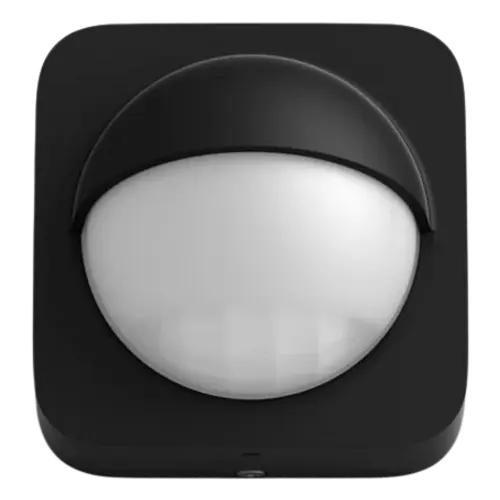
This is a weatherproof (IP54) Zigbee outdoor motion sensor that also measures ambient light and temperature, with a wide 160-degree horizontal field of view and about 12m/39ft range. It requires a Hue Bridge (or works with third-party Zigbee hubs like Hubitat), runs about two years on 2x AAA, and integrates with Apple HomeKit, Alexa, Google, SmartThings, Home Assistant and Matter (via the Bridge). It's ideal for Hue owners automating outdoor lights, on porches, driveways, garages and around the yard, especially where long range and a reset-on-motion timer matter. It's not for you if you don't have a Hue/Zigbee hub or want a cheap, simple sensor.
What buyers love
Range and sensitivity top the list: owners find it far more sensitive and longer-range than the indoor Hue sensor or other brands, reliably reaching well across a driveway (the newer single-screw version is more sensitive than the old four-screw one). The controllable on-timer that resets with each detection is a big deal, it keeps lights on while someone is present, which owners contrast favorably with Aqara's fixed internal timer that shuts off unpredictably. It's genuinely rugged, handling rain, snow and deep cold (some use it in freezers for reliable sub-zero temperature and door-open detection). The dusk-to-dawn light sensor triggers lights only when dark (saving energy), the temperature sensor is accessible via Home Assistant or the Hue REST API, and automations are flexible (conditional brightness by time, scenes, revert-after-X-minutes). It pairs easily and works with HomeKit, Alexa, Google and third-party hubs like Hubitat, with a corner mount included and multi-year battery life.
What to know before you buy
The main quirk is that it's almost too sensitive: owners report it triggering on street traffic, blowing leaves and even bugs, so you'll likely need to lower sensitivity to Low, aim it carefully, or add automation conditions (like requiring the sensor active for 10+ seconds), some even tape over part of the sensor to limit its reach. The mount has no tilt/pan adjustment, so aiming it precisely means shimming and repeated unmounting/remounting (owners wish for an adjustable mount). The back cover is hard to remove for battery replacement (instructions are unclear; a little silicone grease on the seal helps), and it's pricey like all Hue. It requires a Hue Bridge unless you pair it to a third-party Zigbee hub (e.g. Hubitat, where the Hue Bridge isn't needed). It only comes in black, avoid rechargeable batteries (range drops as voltage falls, and the manual advises against them), and one owner reported a battery leaking inside and disabling the unit.
Is the Philips Hue Outdoor Motion Sensor worth it?
For Hue owners, yes. It's weatherproof, long-range, and its controllable reset-on-motion timer plus light/temperature sensing make it genuinely capable for outdoor lighting automation, which is why it is well rated. The main thing to accept is its high sensitivity, you'll spend time dialing it down and aiming it (a task made harder by the non-adjustable mount) to avoid triggers from cars, leaves and bugs. Factor in the higher price, the fiddly battery cover, the Hue Bridge requirement (or a third-party hub), and black-only color, and for anyone building reliable outdoor Hue automations around porches, driveways or garages, it's a top choice; if you want something cheap and simple, look elsewhere.
Frequently asked questions
Is it too sensitive?
It can be. Owners love the long range but find it triggers on street traffic, blowing leaves and bugs. The fix is to lower sensitivity to Low, aim it carefully, or add automation conditions (like requiring sustained motion), some even tape part of the sensor to limit its reach. Once tuned, it works very well.
Do I need a Hue Bridge?
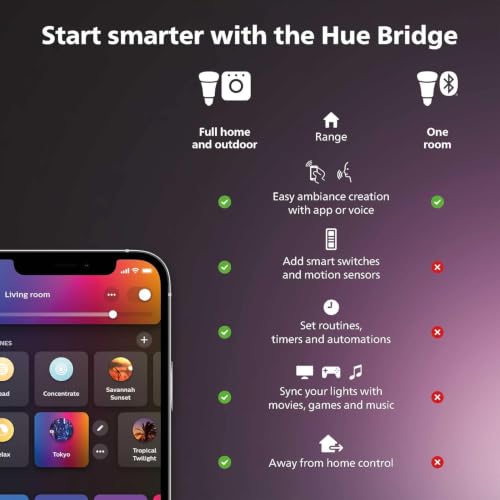
For the Hue ecosystem, yes, it requires a Hue Bridge. However, because it's a Zigbee device, it also works with third-party hubs like Hubitat without the Hue Bridge. It integrates with HomeKit, Alexa, Google, SmartThings and Home Assistant, with Matter available via the Bridge.
How is the range compared to the indoor Hue sensor?
Much better. Owners report it's noticeably more sensitive and longer-range, reaching people head-on at up to ~60 ft and even cars far down a driveway. The newer single-screw model is also more sensitive than the older four-screw version, so range is a genuine strength.
Does it handle cold and wet weather?
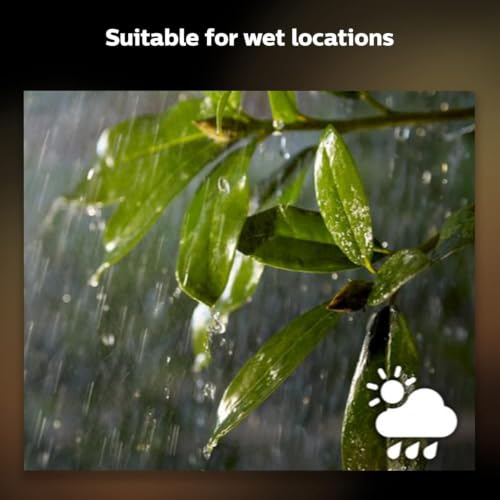
Yes, it's IP54-rated and rugged. Owners use it through rain, snow and deep cold, and some even place it inside freezers, where it reliably reports sub-zero temperatures and detects the door opening. It's clearly built for year-round outdoor use.
Is the battery easy to replace?
Not especially. The back cover is hard to remove and the pictorial instructions are unclear; some owners apply a little silicone grease to the seal to make future openings easier. Battery life is good (around one to two years), but avoid rechargeable batteries, as range drops as their voltage falls.