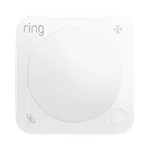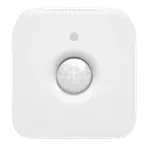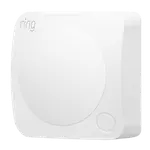
Ring Motion Detector (3rd Gen) Review: Sidewalk Sensing Without a Base Station
The Ring Motion Detector (3rd Gen) is an indoor PIR sensor built for Ring's Amazon Sidewalk line: it needs no hub or base station to work, covers a 90-degree field out to about 30 ft, and runs for up to two years on a pair of AA batteries. If you already own a Ring Alarm system it can also join over Z-Wave, and it pairs with Alexa and Home Assistant, but there is no Google Home, Apple HomeKit, SmartThings or Matter support, and it is strictly for indoor use.
- Ring Alarm owners
- Amazon Sidewalk households
- Alexa users
- Indoor rooms and hallways
- Homes with pets
Pros
- No hub or base station needed: connects over Amazon Sidewalk
- Can join an existing Ring Alarm system over Z-Wave
- 90-degree field of view and about 30 ft of range from a single sensor
- Up to two years on a pair of AA batteries
- Pet-friendly sensitivity settings reduce false alerts from pets under 50 lbs
- Motion alerts and low battery notifications in the Ring app
- Works with Alexa and Home Assistant (through ring-mqtt)
Cons
- Relies on Amazon Sidewalk coverage, with no Wi-Fi fallback
- Indoor only, with no weather resistance
- No ambient light or temperature sensing
- No Google Home, Apple HomeKit, SmartThings or Matter support
- 24/7 professional monitoring needs a Ring subscription
- Ships as the device only, with no mounting hardware
Who is the Ring Motion Detector (3rd Gen) for?
It suits two kinds of buyer. The first is someone who wants motion detection without a hub or base station: the Motion Detector (3rd Gen) is part of Ring's Amazon Sidewalk line, so it connects through the shared Sidewalk network rather than Wi-Fi, and no Ring Alarm base is needed to use it with the Ring app. The second is an existing Ring Alarm owner who wants to add coverage to one more room, because the sensor is backward compatible and can join a Ring Alarm system over Z-Wave. It is an indoor sensor, so it belongs in living rooms, hallways and entryways rather than outside. Because its sensitivity settings are pet-friendly, it also suits homes with cats and dogs.
What the Ring Motion Detector (3rd Gen) offers
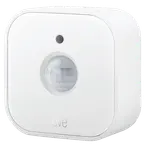
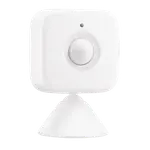
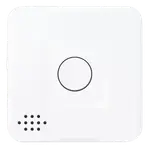
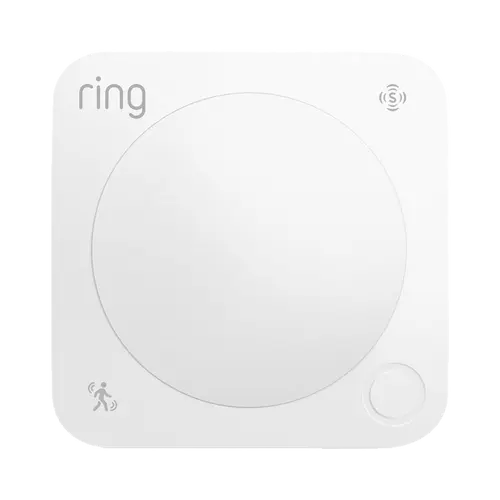
The core spec is a passive infrared detector with a 90-degree field of view and a range of about 9.1 m (30 ft), enough to watch a room from a corner. It is built on Amazon Sidewalk, which means no Wi-Fi credentials to manage and no hub to buy: as long as Sidewalk coverage is available, the sensor connects to the Ring app by scanning its QR code. It runs on two AA batteries for up to two years, so there are no coin cells to hunt down, and the Ring app reports battery level and sends low battery alerts. Motion alerts arrive as push notifications, and sensitivity can be tuned with pet-friendly settings that reduce false alerts from pets under 50 lbs. The sensor is compact at 66 x 66 x 40 mm and comes in white. On the software side it works with Alexa, and Home Assistant can read Ring Alarm sensors through the ring-mqtt integration.
What to know before you buy
The biggest consideration is connectivity: the Motion Detector (3rd Gen) depends on Amazon Sidewalk, and how well that works at your address depends on nearby compatible Sidewalk bridges such as Echo devices and Ring cameras. There is no Wi-Fi fallback of its own. It is also an indoor-only device with no weather resistance, and it senses motion alone, so there is no ambient light or temperature sensor. Ecosystem support is narrow. It works with Alexa and, indirectly, Home Assistant, but there is no Google Home, Apple HomeKit, Samsung SmartThings or Matter. Advanced features such as 24/7 professional monitoring require a Ring subscription, and the box contains the device only, so mounting hardware is not included. It is backed by a one-year limited warranty.
Is the Ring Motion Detector (3rd Gen) worth it?
For the right home it is a tidy way to add motion detection without buying into a hub-based system: it installs in minutes, connects over Sidewalk, and can fold into an existing Ring Alarm setup over Z-Wave if you have one. The combination of a 90-degree field, roughly 30 ft of range, two years on AA batteries and pet-friendly settings covers the everyday job of turning a room into an alert zone. The trade-offs are the ones you would expect from a Sidewalk sensor: it is indoor-only, it lives inside the Ring and Alexa ecosystems, and it leaves out Google Home, HomeKit, SmartThings and Matter. If you are already in Ring's world, or you simply want a hubless sensor and use Alexa, it is a sensible pick; if you need outdoor coverage or Apple, Google or SmartThings integration, look elsewhere.
Frequently asked questions
Does the Ring Motion Detector (3rd Gen) need a hub or base station?
No. It is built on Amazon Sidewalk and connects to the Ring app without a Ring Alarm base station, as long as Amazon Sidewalk coverage is available in your area through a compatible Sidewalk bridge such as an Echo device or a Ring camera.
Does it work with an existing Ring Alarm system?
Yes. Alongside Amazon Sidewalk it also supports Z-Wave, so it can be added to a Ring Alarm system, with the base station handling the Z-Wave connection.
How long does the battery last?
Ring rates it at up to two years on the two included AA alkaline batteries, depending on how many events it records and how close it sits to a Sidewalk gateway.
Does it work with Alexa, Google Home or Apple HomeKit?
It works with Alexa, and Home Assistant can reach Ring Alarm sensors through the ring-mqtt integration. It does not support Google Home, Apple HomeKit, Samsung SmartThings or Matter.
Does it detect pets?
It is a passive infrared motion sensor, and large pets or small children can still trigger it. Ring provides pet-friendly sensitivity settings intended to reduce false alerts from pets under 50 lbs.
Is it for indoor or outdoor use?
Indoor. The Motion Detector (3rd Gen) has no weather resistance rating, so it is meant for rooms, hallways and entryways rather than gardens or gates.