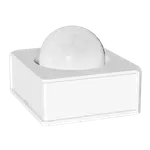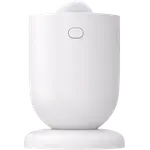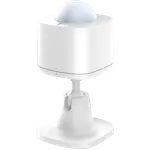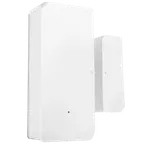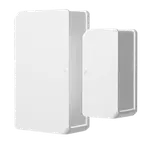





Sonoff SenseGuard Motion Gen2 Review: A Cheap Zigbee PIR That Finally Measures Real Lux
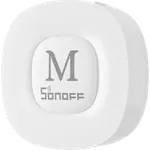
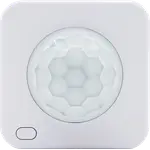
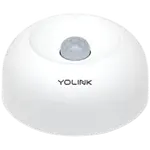
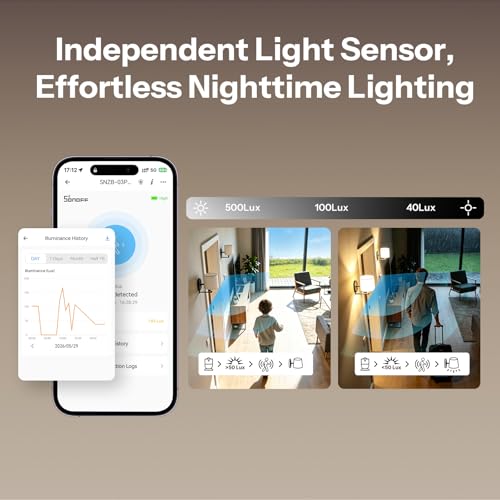
The Sonoff SenseGuard Motion Gen2 (SNZB-03PR2) is a small, inexpensive Zigbee motion sensor whose real upgrade over the previous generation is a proper lux sensor: it reports actual illuminance values rather than a simple light or dark flag, which is what lets you write automations that only turn a light on when the room is genuinely dark. Detection is fast across a 120 degree, 6 metre field, the cooldown is adjustable from 5 to 60 seconds, and a CR2477 cell is rated for up to three years. It is an excellent fit for Home Assistant through Zigbee2MQTT or ZHA and pairs happily with an Echo device that has Zigbee built in. SmartThings owners should wait: the current Edge driver covers the older model, not this one.
- Home Assistant users
- Light-level automations
- Budget Zigbee builds
- Hallways and stairways
- Homes with pets
One sensor per room you want covered.
Buy on Amazon USACheck pricePros
- True lux measurement, not just a light or dark flag, with up to 6 months of illuminance history
- Fast PIR detection across a 120 degree angle and 6 metre range
- Cooldown adjustable from 5 to 60 seconds to suit busy or quiet rooms
- Up to 3 years on a single CR2477 cell
- Recognised out of the box by Home Assistant through Zigbee2MQTT or ZHA
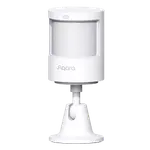
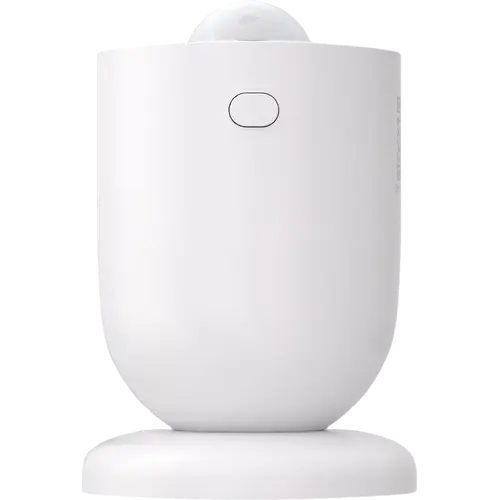
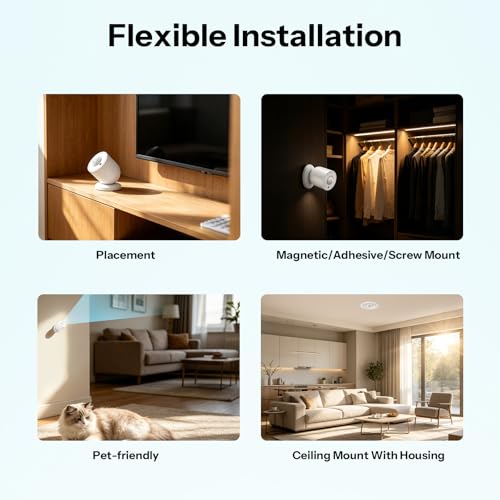
- Magnetic, adhesive or free-standing mounting with a rotating sensor head
- Very inexpensive for the feature set
Cons
- SmartThings is advertised but the current Edge driver does not yet recognise this model
- Requires a Zigbee hub, with no Wi-Fi, Thread or Matter of its own
- Alexa exposes limited configuration once paired
- The lux scale is non-linear and benefits from calibration
- No temperature sensor
- Indoor only, with no weather resistance rating
Who is the Sonoff SenseGuard Motion Gen2 for?
This is a sensor for people who already run a Zigbee network and want to add motion cheaply without giving up automation quality. It needs a Zigbee coordinator, so it suits Home Assistant setups, SONOFF hub owners, and anyone with an Echo device that has a Zigbee radio inside. The lux sensor pushes it beyond basic motion duty: it is well suited to lighting automations that should only fire after dark, and to rooms where you want to log how bright it actually gets. The adjustable cooldown makes it equally at home in a busy hallway, where you want it to re-trigger quickly, and in a room where constant retriggering would be noise.
What buyers love
Home Assistant compatibility is the standout theme. Owners consistently report that it is recognised immediately over Zigbee2MQTT or ZHA, with both the motion and the brightness entities exposed and no custom blueprint or driver needed. Pairing with an Echo device that has a built-in Zigbee hub is also reported as straightforward, with roughly a second between motion and the light coming on. The real lux measurement draws specific praise from more technical owners, who note that the previous generation only offered a dark or light flag, and that a numeric reading makes light-conditioned automations genuinely possible. Owners also like how compact and easy to hide it is, and the magnet in the base gets repeated mentions as a convenient mounting option.
What to know before you buy
The clearest caveat is SmartThings. Several owners report that although compatibility is advertised, neither the stock driver nor SONOFF's own Edge driver recognises this model, because the existing driver targets the previous SNZB-03P. If SmartThings is your hub, treat that support as pending rather than present. One owner also found the Alexa side thin on configuration options once paired. On the hardware, the lux reading is useful but one detailed review notes it is non-linear, so calibrate rather than trusting absolute values, and one owner found pairing took longer than for other Zigbee devices. Finally, this is a hub-dependent Zigbee device with no Wi-Fi, Thread or Matter of its own, it has no temperature sensor, and it is an indoor sensor with no weatherproofing rating.
Is the Sonoff SenseGuard Motion Gen2 worth it?
For a Home Assistant or Echo-based Zigbee network, this is close to a default choice. It costs very little, the three-year battery keeps maintenance down, and the combination of fast PIR, a configurable cooldown and a genuine illuminance value covers most of what motion automations actually need. The competition at this price generally gives you motion and a crude light flag; getting real lux plus six months of illuminance history at the low end is the reason to pick this over the previous generation. The one group who should hold off is SmartThings users, at least until driver support catches up with the hardware.
Frequently asked questions
Does the Sonoff SenseGuard Motion Gen2 need a hub?
Yes. It is a Zigbee device with no Wi-Fi of its own, so it needs a Zigbee coordinator. That can be a SONOFF Zigbee hub or dongle, a Home Assistant setup running Zigbee2MQTT or ZHA, or an Echo device with a built-in Zigbee radio.
Does it work with Home Assistant?
Yes, and this is where it is strongest. It is picked up by both Zigbee2MQTT and ZHA with any Zigbee coordinator, exposing motion and illuminance as separate entities without extra configuration.
Does it work with SmartThings?
Not reliably at the moment. SONOFF advertises SmartThings compatibility, but owners report that the available Edge driver still targets the previous SNZB-03P model and does not recognise this one. If SmartThings is your only hub, this is worth checking before buying.
What is different from the older SNZB-03P?
The light sensing. The older model reported only a dark or light state, while this one measures actual lux values that can be used as automation conditions and stores illuminance history for up to 6 months. The detection cooldown is also adjustable from 5 to 60 seconds.
How far and wide does it detect?
SONOFF specifies a 120 degree detection angle and a 6 metre range. The sensor head rotates so you can aim it away from areas where pets move around.
How long does the battery last?
It runs on a single CR2477 coin cell rated for up to three years of operation, which is longer than most AAA-powered Zigbee motion sensors.