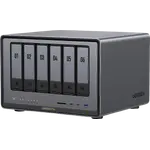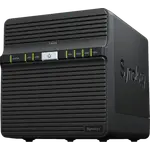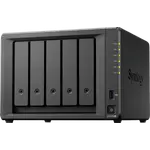


Synology DS423 Review: Four Bays Without the Plus Tax
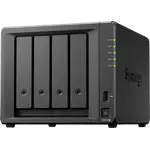
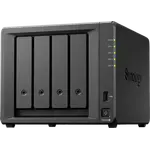
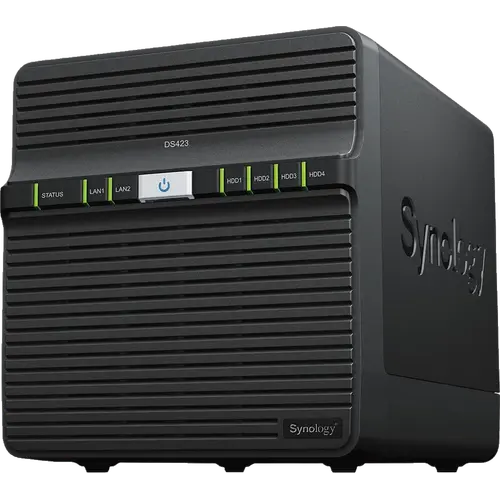
The DS423 is the cheapest way to get four bays and parity RAID from Synology. It supports RAID 5, RAID 6 and SHR with hot-swap trays, which is the real reason to buy four bays, but it keeps the Realtek ARM chip, so Container Manager and Virtual Machine Manager are unavailable and there is no hardware transcoding.
- Bulk storage
- RAID 5 and RAID 6
- Household file sharing
- Camera recording
Pros
- Four hot-swap bays with RAID 5 and RAID 6
- Synology Hybrid RAID for mismatched drives
- Btrfs with snapshots
- Three USB ports
- Cheapest four-bay Synology
Cons
- No Docker or virtual machines (ARM)
- No hardware transcoding
- Two 1 GbE ports, no 2.5 GbE
- No M.2 NVMe slots
- 32.41 W is high for an ARM model
Who is the DS423 for?
Buyers who want capacity and redundancy rather than a home server: a lot of storage, protected by parity, on the most affordable four-bay Synology.
What the DS423 offers
Four hot-swap bays with RAID 5, RAID 6 and SHR, two Gigabit ports, three USB ports, Btrfs with snapshots, Surveillance Station, and DSM with iSCSI, NFS and rsync.
What to know before you buy
No Container Manager, no virtual machines and no hardware transcoding, all consequences of the ARM processor. There are no M.2 slots and networking is two Gigabit ports rather than 2.5 GbE, so throughput is capped well below what four drives can deliver.
Is the DS423 worth it?
For pure protected storage, it is good value. If you expect to self-host anything, or to stream media that needs converting, the DS425+ is the model that actually supports it and is the more future-proof buy.
Frequently asked questions
How much usable space do four drives give?
In RAID 5 you lose one drive to parity, so four 8 TB drives give roughly 24 TB usable. RAID 6 spends two drives and leaves about 16 TB, in exchange for surviving two simultaneous failures.
Why is it cheaper than the DS425+?
The DS425+ has an Intel processor, which brings hardware transcoding, Container Manager, virtual machines, a 2.5 GbE port and two M.2 slots. The DS423 keeps the ARM chip and skips all of that.