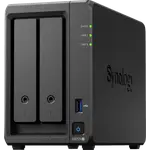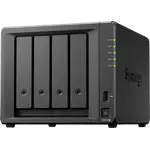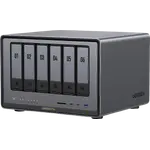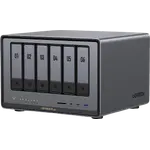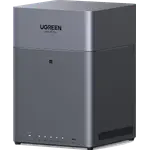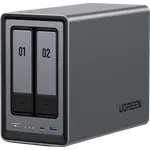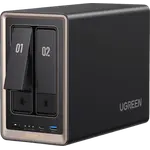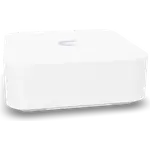
Ubiquiti UNAS 4 Review: Four Bays, Still One Cable
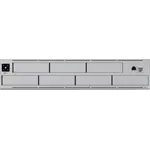
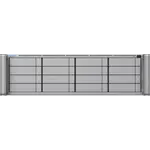
The UNAS 4 keeps the single-cable PoE design of the UNAS 2 and doubles it: four 3.5-inch bays plus two M.2 NVMe slots for caching, on the same quad-core Cortex-A55 and 2.5 GbE port. It is still UniFi Drive, so it stores and shares files inside the UniFi console but does not run containers or third-party apps.
- Existing UniFi networks
- Single-cable installs
- NVMe caching
- UniFi Protect footage
Pros
- Four bays plus two M.2 NVMe slots
- Powered over Ethernet at 90 W, single cable
- Managed inside the UniFi console
- 2.5 GbE networking
- No subscription
Cons
- No Docker, virtual machines or app store
- RAID levels not published
- Memory, power and noise not published
- Only 2.5 GbE despite four bays
- Only makes sense inside UniFi
Who is the UNAS 4 for?
UniFi households and small offices needing more than a mirror, who value the tidy PoE install and unified management more than a broad software catalogue.
What the UNAS 4 offers
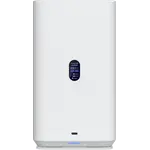
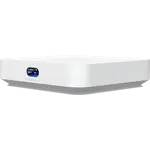
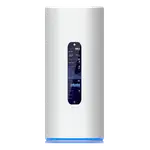
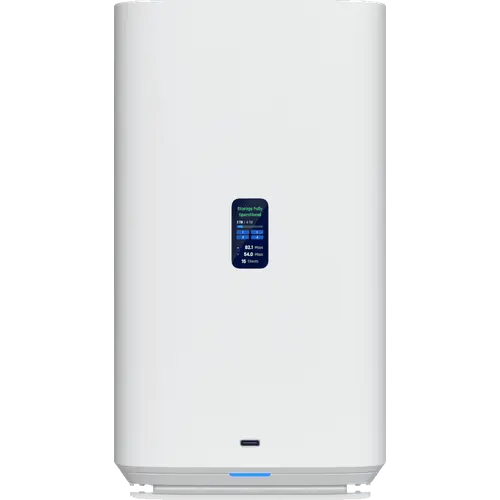
Four 3.5-inch bays plus two M.2 NVMe slots, a quad-core ARM Cortex-A55, 2.5 GbE, a 5 Gbps USB-C port, a front display, PoE+++ power at 90 W, and UniFi Drive with snapshots and remote backup.
What to know before you buy
No containers, virtual machines or app store, as with the whole UNAS line. Ubiquiti does not publish memory, power, noise or the supported RAID levels for this model, so several fields remain unconfirmed.
Is the UNAS 4 worth it?
The most sensible desktop UNAS for a UniFi site: four bays, NVMe caching and one cable. Judged purely on features per pound against a Synology or UGREEN, it loses badly, which is the trade the ecosystem asks of you.
Frequently asked questions
What do the M.2 slots do?
They provide NVMe SSD caching in front of the hard drives, which speeds up repeated reads. Ubiquiti does not document using them as an independent storage volume.
Is 90 W of PoE a problem?
It needs a switch port or injector that can supply PoE+++ at 90 W, which is more than most switches deliver per port. Check your switch before assuming a single cable will do.