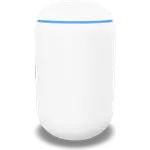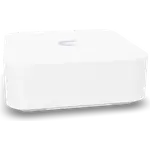


Ubiquiti UNAS Pro 4 Review: 1U With Dual 10G SFP+
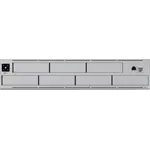
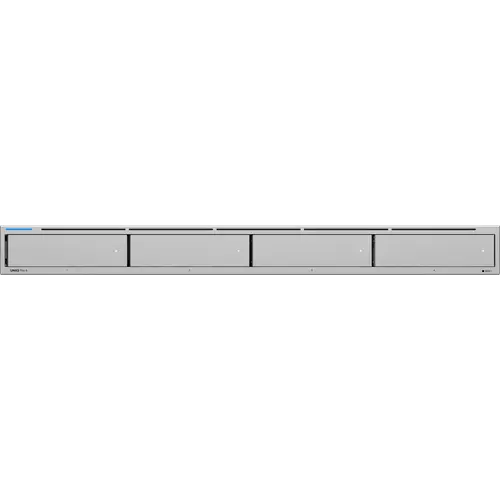
The UNAS Pro 4 is the smallest rack-mount UNAS: four bays and two M.2 slots in a 1U chassis just 43.7 mm tall, with two 10G SFP+ ports and a Gigabit port. A quad-core Cortex-A57 at 2.0 GHz runs UniFi Drive with RAID 5 and RAID 6 and hot-swap trays, but no containers.
- Rack installs with 10G
- Small business
- RAID 6
- Space-constrained racks
Pros
- Two 10G SFP+ ports
- 1U chassis at only 43.7 mm tall
- Four hot-swap bays plus two M.2 slots
- RAID 5 and RAID 6
- Managed inside the UniFi console
Cons
- No Docker, virtual machines or app store
- SFP+ needs modules and a matching switch
- Memory, power and noise not published
- No RJ45 10 GbE port
Who is the UNAS Pro 4 for?
Small businesses running UniFi who need rack-mounted storage with real network speed, and who only have one rack unit to spare.
What the UNAS Pro 4 offers
Four hot-swap bays plus two M.2 NVMe slots, two 10G SFP+ ports and a Gigabit port, a quad-core Cortex-A57 at 2.0 GHz, RAID 5 and RAID 6, snapshots, remote backup, and management inside UniFi.
What to know before you buy
SFP+ needs a matching module and a switch with SFP+ cages, not an RJ45 patch lead. UniFi Drive still has no containers or app store, and Ubiquiti does not publish memory, power draw or noise for this model.
Is the UNAS Pro 4 worth it?
For a UniFi rack it is the neatest way to add fast, redundant storage in minimal space. As a general-purpose NAS it remains far narrower in software than anything from Synology or UGREEN.
Frequently asked questions
What is SFP+ and do I need it?
SFP+ is a cage that takes a fibre or direct-attach copper module instead of an ordinary network plug. You need a switch with SFP+ ports and a matching module, so it suits a rack rather than a home office.
How does it differ from the UNAS Pro?
The Pro 4 fits four bays into 1U with two 10G SFP+ ports. The original UNAS Pro takes seven drives in 2U but has only one 10G SFP+ port, so it trades throughput for capacity.