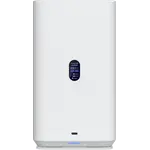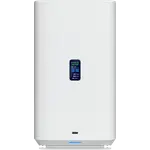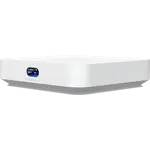


Ubiquiti UNAS Pro 8 Review: Redundant Power and NVMe Cache
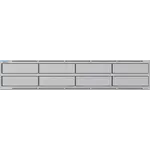
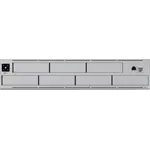
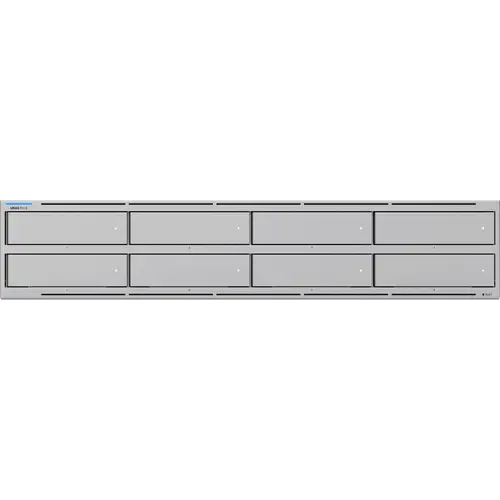
The UNAS Pro 8 is the high-availability UNAS: eight hot-swap bays plus two M.2 NVMe cache slots, 16 GB of memory, two 10G SFP+ ports alongside a 10GbE RJ45 port, and two hot-swappable power supplies so a failed PSU does not take the array offline. It is still UniFi Drive, so still no containers.
- High availability
- Business racks
- RAID 6
- NVMe caching
- Dual 10G networking
Pros
- Two hot-swappable redundant power supplies
- Eight bays plus two M.2 NVMe cache slots
- 16 GB of memory
- Two 10G SFP+ ports plus 10GbE RJ45
- RAID 5 and RAID 6
- No subscription
Cons
- No Docker, virtual machines or app store
- Power draw and noise not published
- Memory not user-expandable
- 2U rack-mount only
Who is the UNAS Pro 8 for?
Businesses where storage downtime costs money: the redundant power supplies and dual 10G links are the features you buy this for over the cheaper UNAS Pro.
What the UNAS Pro 8 offers
Eight hot-swap bays plus two M.2 NVMe cache slots, a quad-core Cortex-A57 at 2.0 GHz with 16 GB of memory, two 10G SFP+ ports and a 10GbE RJ45 port, two hot-swappable power supplies, RAID 5 and RAID 6, and UniFi management with snapshots and remote backup.
What to know before you buy
UniFi Drive remains a file-serving platform only: no Docker, no virtual machines, no Plex, no photo AI. Ubiquiti does not publish power draw or noise, and a 2U chassis with eight drives and dual PSUs will not be quiet.
Is the UNAS Pro 8 worth it?
Within UniFi it is the sensible choice wherever availability matters, and redundant power at this price is unusual. Judged as a general NAS it is still far narrower in software than a Synology of similar cost.
Frequently asked questions
Why do redundant power supplies matter?
A failed PSU is one of the more common hardware faults in an always-on machine. With two hot-swappable supplies the array keeps serving while you replace one, instead of going dark.
Can the M.2 slots hold a volume?
Ubiquiti describes them as NVMe cache, accelerating reads from the hard drives, rather than as an independent storage pool.