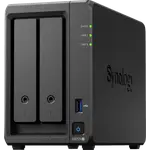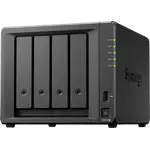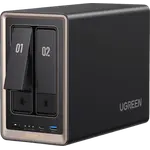





UGREEN NASync DXP4800 Pro Review: Core i3 With Dual-Speed Networking
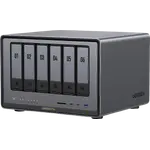
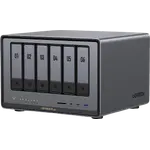
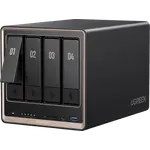
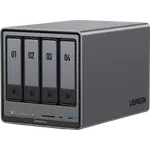
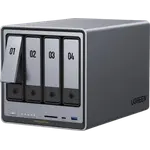
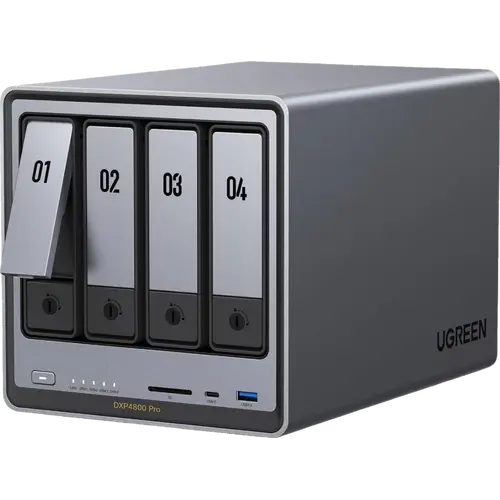
The DXP4800 Pro slots between the DXP4800 Plus and the GT: an Intel Core i3-1315U with integrated graphics for hardware transcoding, four bays to 144 TB, two M.2 NVMe slots, and both a 10 GbE and a 2.5 GbE port. The SD card slot makes it a practical import target for photographers.
- Photographers
- 4K transcoding
- Docker and virtual machines
- 10 GbE networking
- RAID 5
Pros
- Intel Core i3-1315U with hardware transcoding
- 10 GbE and 2.5 GbE ports together
- Two M.2 NVMe slots usable as storage pools
- SD card slot for RAW imports
- Runs Docker and virtual machines
- 144 TB raw across four bays
Cons
- RAID 6 not listed for this model
- Memory specification not published
- Power, noise and dimensions not published
- UGOS Pro is far newer than DSM
Who is the DXP4800 Pro for?
Creators who want an Intel chip that transcodes, fast networking on two speeds, and the ability to dump camera cards straight into the array without a computer in the middle.
What the DXP4800 Pro offers
Four bays to 144 TB, an Intel Core i3-1315U with integrated graphics, two M.2 NVMe slots usable as storage pools, one 10 GbE plus one 2.5 GbE port, an SD card slot, and UGOS Pro with Docker, virtual machines and two-factor authentication.
What to know before you buy
UGREEN lists RAID 0/1/5/10 for this model but not RAID 6, so double-parity is not available. Memory capacity, power draw, noise and dimensions are not published, and UGOS Pro remains a much younger platform than DSM.
Is the DXP4800 Pro worth it?
A sensible middle rung: the transcoding the GT does not document, the 10 GbE the Plus pairs differently, and the SD reader throughout. The missing RAID 6 is the one thing to check against your plans.
Frequently asked questions
Does it support RAID 6?
UGREEN lists RAID 0, 1, 5 and 10 for this model and does not mention RAID 6, so we have recorded it as unsupported. If double parity matters, check the DXP4800 Plus or a six-bay model instead.
Why both a 10 GbE and a 2.5 GbE port?
It lets you keep a fast link to one workstation while the rest of the house reaches the NAS over ordinary networking, without needing a 10 GbE switch for everything.