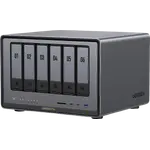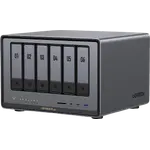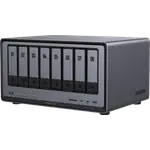



UGREEN NASync DXP8800 Plus Review: Eight Bays and 272 TB
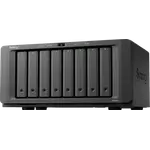
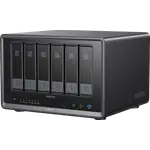
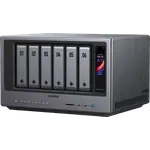
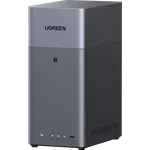
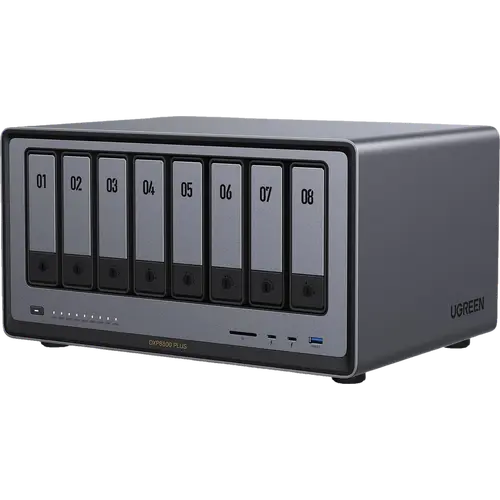
The DXP8800 Plus is UGREEN's flagship desktop: eight SATA bays plus two M.2 slots for 272 TB raw, an Intel Core i5-1235U, 8 GB DDR5 to 64 GB with ECC support, two 10 GbE ports, two Thunderbolt 4 ports, 8K HDMI and an SD 4.0 reader. It is the highest-capacity non-rack machine in this comparison.
- Maximum desktop capacity
- Dual 10 GbE
- Video production
- RAID 6
- Thunderbolt workflows
Pros
- 272 TB raw across eight bays plus two M.2
- Two 10 GbE ports
- Two Thunderbolt 4 ports at 40 Gbps
- Hardware transcoding via Intel graphics
- Memory to 64 GB DDR5 with ECC support
- 8K 60Hz HDMI and SD 4.0
- Three-year warranty
Cons
- 70.39 W under access
- Noise level not published
- Virtual machine support not explicitly documented
- Eight drives is a large additional outlay
Who is the DXP8800 Plus for?
People who want rack-class capacity without a rack: eight drives, fast networking to multiple clients, and a direct Thunderbolt path for editing, all in a desktop chassis.
What the DXP8800 Plus offers
Eight bays plus two M.2 NVMe slots to 272 TB raw, a Core i5-1235U with integrated graphics, 8 GB DDR5 to 64 GB with ECC support, two 10 GbE ports, two Thunderbolt 4 ports, four USB-A ports, 8K 60Hz HDMI, SD 4.0, RAID 5 and 6, and a three-year warranty.
What to know before you buy
At 70.39 W under access it is the thirstiest UGREEN here, and no noise figure is published for a chassis holding eight drives. Virtual machine support is not explicitly documented, and eight drives is a large upfront cost on top of the enclosure.
Is the DXP8800 Plus worth it?
It offers more capacity and more I/O than any Synology desktop below the DS3622xs+, at a considerably lower price. Whether that outweighs DSM's maturity is the same judgement that runs through the whole UGREEN range.
Frequently asked questions
Is 272 TB realistic?
That is eight 32 TB drives plus two 8 TB NVMe, before redundancy. In RAID 6 you would lose two drives worth, and 32 TB drives are expensive, so a realistic build lands far below the headline figure.
How does it compare with the DXP6800 Pro?
Two more bays, 272 TB against 208 TB, and four USB-A ports rather than three. Processor, networking, Thunderbolt and memory ceiling are otherwise the same, so it is a capacity decision.