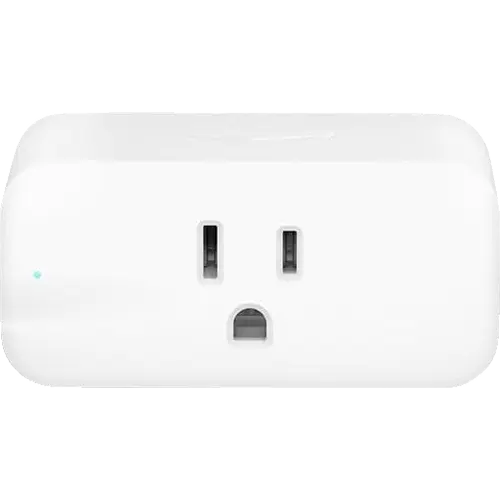


Amazon Smart Plug Review: The Easiest Way to Put Alexa on an Outlet
The Amazon Smart Plug is the least fussy way to make a lamp, fan or diffuser answer to Alexa: owners describe an Echo finding it within seconds, with no hub, no extra account and no skill to link. It is at its best running schedules and routines, and buyers report it sticks to them reliably day after day. The trade-offs are scope and size: it works with Alexa only, has no energy monitoring and is bulkier than some rival plugs. For an Alexa household, especially when it is on sale, it is an easy recommendation.
- Alexa households
- Smart home beginners
- Lamps, fans and holiday lighting
- Seniors and hard-to-reach outlets
One plug per appliance you want to control.
Buy on Amazon USACheck pricePros
- Near-instant setup in the Alexa app, with no hub or skill
- Reliable schedules, timers and Alexa routines
- Reconnects to Alexa automatically after a power or Wi-Fi outage
- 15 A rating covers ordinary household appliances
- Very easy for first-time and older users
- Frequently discounted, so adding several is cheap
Cons
- Alexa only, with no Google Home, Apple Home, SmartThings or Matter support
- No energy monitoring
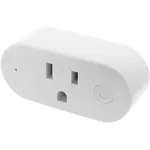
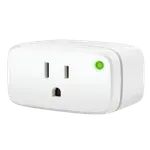
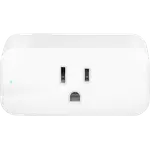
- Bulkier than some rival plugs
- 2.4 GHz Wi-Fi only
- Indoor use only
- One-year warranty and no USB port
Who is the Amazon Smart Plug for?
It is built for homes that already run on Echo speakers and want to add voice control, a timer or a schedule to something dumb. Owners use it for bedside and living room lamps, Christmas tree lights, fans, air purifiers and scent diffusers that need to switch back on every day. It is also a genuine accessibility aid: buyers with limited mobility, and older owners who say they dislike setting up new gadgets, describe it as the easiest device they have installed, turning a lamp in a hard-to-reach spot into something they can switch from bed. Anything with a physical switch left in the on position becomes controllable.
What buyers love
Setup is the recurring headline. Because Amazon makes both the plug and the app, it is discovered by an Echo almost as soon as it is plugged in, and several owners say it was running within a minute or two, some without opening a manual. The second theme is routines: people schedule an air purifier to run only during the day, bring diffusers back on after their automatic shut-off, and turn lights on and off while they are away so the house looks occupied. Owners who have lived with it for weeks report a reliable connection with no random drop-offs, which matches Amazon's spec that it reconnects to Alexa on its own after a power or Wi-Fi outage. It also works plugged into a power strip.
What to know before you buy
It is an Alexa accessory and nothing else. There is no Google Home, Apple Home, SmartThings or Matter support, and at least one iPhone owner describes the awkwardness of asking one assistant to reach another. There is no energy monitoring, so it cannot report what an appliance uses, and no USB port. A couple of buyers find it bulkier than other brands' plugs, which matters on crowded outlets. The radio is 2.4 GHz only and Amazon states 5 GHz networks are not supported. It is rated for indoor use only, and the warranty is one year.
Is the Amazon Smart Plug worth it?
For an Alexa home, yes. Buyers consistently rate it highly for doing exactly what it promises with no setup friction, and many of them bought it during one of its frequent deals, when it becomes a very cheap way to automate a lamp. At full price a few owners think rival plugs offer more for less, particularly ones with energy monitoring or support for more than one ecosystem. If you are committed to Alexa and want outlets that simply obey, it is the simplest choice; if you may change platforms, a Matter plug is the safer buy.
Frequently asked questions
Does the Amazon Smart Plug need a hub?
No. It connects directly to a 2.4 GHz Wi-Fi network and is set up inside the Alexa app, with no hub, bridge or separate skill required.
Does the Amazon Smart Plug work with Google Home or Apple HomeKit?
No. It works with Amazon Alexa only. There is no Google Home, Apple Home, SmartThings or Matter support.
Can the Amazon Smart Plug measure energy use?
No. It has no energy monitoring, so it can switch a device and run it on a schedule but cannot report how much power it draws.
What can I plug into the Amazon Smart Plug?
It is rated at 15 A on a 120 V supply with a Type B socket, which covers lamps, fans, purifiers, diffusers and similar household devices. The appliance needs its own switch left in the on position so the plug can control its power.
Does it keep working after a power outage?
Yes. Amazon specifies that it reconnects to Alexa automatically after a power or Wi-Fi outage, so schedules and routines resume without re-pairing.
Can the Amazon Smart Plug be used outdoors?
No. Amazon specifies it for indoor use only and it carries no weather resistance rating.