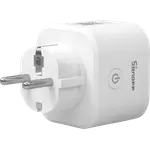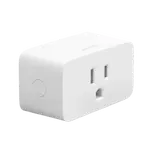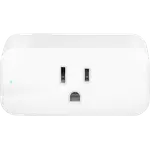


Philips Hue Smart Plug Review: The Rock-Solid Zigbee Plug for a Hue Home
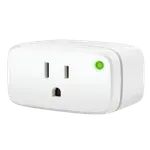
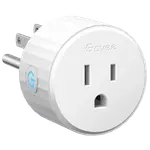
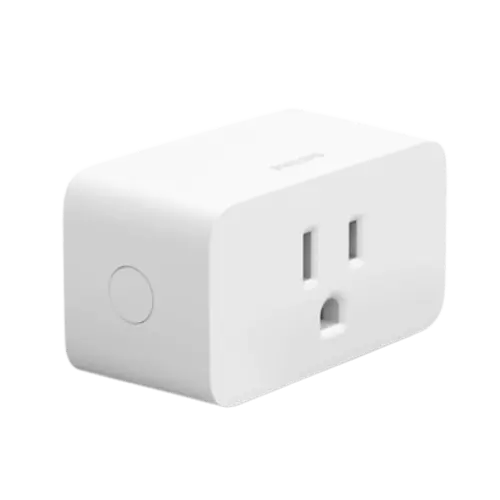
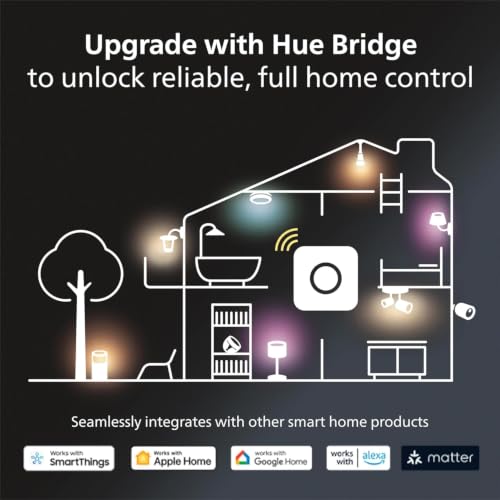
The Philips Hue Smart Plug is the plug to get if you already run Philips Hue: it uses Zigbee through the Hue Bridge instead of Wi-Fi, so it is exceptionally reliable, reconnects automatically after power or internet outages, and responds almost instantly to Hue, Apple HomeKit, Alexa and Google Home. It shows up as just another device in the Hue app, sets up in under a minute, handles up to 1800W for lamps, pumps and seasonal lights, and even acts as a Zigbee repeater to strengthen your Hue mesh. The trade-offs: it requires the Hue Bridge for full functionality, it is pricier than typical Wi-Fi plugs, it is a bit bulky (you cannot stack two in one duplex outlet), it has no energy monitoring, and there is no SmartThings, IFTTT or default Matter support. For Hue households that value reliability, it is an easy recommendation.
- Philips Hue households
- Apple HomeKit users
- Reliability over price
- Lamp, pump and seasonal-light timers
Pros
- Exceptionally reliable Zigbee connection; reconnects after power/internet outages
- Seamless integration with Hue, Apple HomeKit, Alexa and Google Home
- Fast response and under-a-minute setup in the Hue app
- Handles up to 1800W for lamps, pumps, humidifiers and seasonal lights
- Acts as a Zigbee repeater to strengthen the Hue mesh
- Physical on/off button with a non-distracting status LED; stays cool in use
Cons
- Requires the Hue Bridge for full functionality (Bluetooth only without it)
- Pricier than typical Wi-Fi smart plugs
- Bulky enough that you cannot stack two in one duplex outlet
- No energy monitoring and few extra options (mainly power-on behavior)
- Counts toward the Hue Bridge device limit (around 50 on the classic Bridge)
- No SmartThings or IFTTT, and Matter is not enabled by default
Who is the Philips Hue Smart Plug for?
This is a Zigbee smart plug built for people already in the Philips Hue ecosystem, turning any lamp or appliance into a Hue-controllable device. Rather than Wi-Fi, it connects over Zigbee through the Hue Bridge (with Bluetooth for local control), handling up to 1800W at 100-120V (Type B). It works with Apple HomeKit, Amazon Alexa, Google Home and Home Assistant, appears in the Hue app like any other Hue device, and supports schedules, automations and a physical on/off button with a status LED that turns off after a few seconds. It also acts as a Zigbee router, extending the range of your Hue network. There is no energy monitoring, no USB, and no SmartThings, IFTTT or default Matter support. It best suits Hue owners who want dependable, fast control of non-Hue lamps, fans, pool pumps or seasonal lights, and especially Apple HomeKit users who want a plug that just works.
What buyers love
Reliability is the headline. Owners repeatedly contrast it with cheaper Wi-Fi plugs that drop offline or stop working after months, and say the Hue plug simply does not: it stays connected, reconnects on its own after power or internet outages, and responds in a few seconds to Siri, Alexa or Google. Because it uses Zigbee through the Bridge, it does not consume Wi-Fi resources, which buyers credit for the stability. Setup is praised as taking under a minute in the Hue app (just the serial number, no scanning or flaky auto-detection), and it integrates so cleanly that it behaves exactly like the rest of a Hue system, including HomeKit. People love using it as a timer for Christmas and Halloween lights, seed-starting and grow lights, humidifiers, amplifiers and even a pool pump, all easily programmed in the Hue app. The rectangular body does not block the adjacent outlet, it never gets noticeably warm, the side button with a green/red status LED is handy, and many trust Hue's long-term support and app security.
What to know before you buy
The cost of that reliability is, well, cost: it is more expensive than typical Wi-Fi plugs, and it needs the Hue Bridge for full functionality (without the Bridge you only get local Bluetooth control). It is a bit bulky, and while it does not block a neighboring outlet, you cannot stack two on the same duplex receptacle. Feature-wise it is deliberately simple: you can set power-on behavior and use it in automations, but there is no energy monitoring and no extra LED or hardware options. Note the classic Hue Bridge has a device limit (around 50), and these plugs count toward it, so heavy Hue users can bump into that ceiling (the newer Bridge Pro raises it). It works with HomeKit, Alexa, Google and Home Assistant, but there is no Samsung SmartThings or IFTTT, and Matter is not enabled by default (turning it on at the Bridge can affect features like adaptive lighting).
Is the Philips Hue Smart Plug worth it?
If you are in the Hue ecosystem, yes: it is the most dependable smart plug many owners have used, with instant, seamless control across Hue, HomeKit, Alexa and Google, and the Zigbee-through-the-Bridge design is exactly why it stays so reliable. For automating lamps, pumps, humidifiers and seasonal lights from the same app as your Hue lights, it is hard to beat. Skip it if you are not running a Hue Bridge, want energy monitoring, or need the cheapest possible plug. But if reliability and clean integration matter more than price, and especially if you already own Hue, it is an easy, confident pick.
Frequently asked questions
Does the Philips Hue Smart Plug need the Hue Bridge?
For full functionality, yes. It uses Zigbee through the Hue Bridge for schedules, automations and integrations. Without the Bridge you only get local Bluetooth control, so it is really designed for homes that already have (or will add) a Hue Bridge.
Does it work with Apple HomeKit, Alexa and Google Home?
Yes. Connected to the Hue Bridge, it works seamlessly with Apple HomeKit, Amazon Alexa, Google Home and Home Assistant, appearing like any other Hue device. It does not support Samsung SmartThings or IFTTT.
Why choose it over a cheaper Wi-Fi plug?
Reliability. Because it uses Zigbee through the Bridge rather than Wi-Fi, owners find it far more stable than budget Wi-Fi plugs, with instant response and automatic reconnection after outages. It also acts as a Zigbee repeater to strengthen your Hue network.
Does it monitor energy usage?
No. It does not have energy or power-consumption monitoring. It focuses on dependable on/off control, schedules and automations, with a configurable power-on behavior.
What can it power, and is there a manual button?
It handles up to 1800W at 100-120V, suitable for lamps, fans, humidifiers, seasonal lights and even a pool pump. It has a physical on/off button on the side with a green (on) / red (off) status LED that turns off after a few seconds.