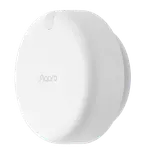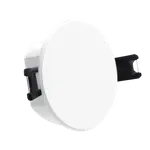
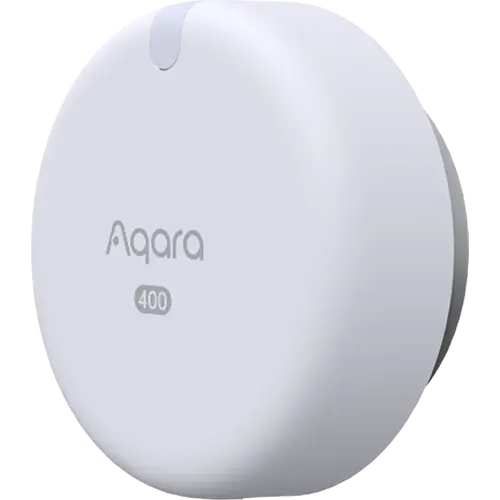
Aqara Spatial Multi-Sensor FP400 Review: Camera-Free Presence Sensing That Tracks Ten People
The Aqara Spatial Multi-Sensor FP400 is a camera-free presence sensor built on 60GHz mmWave radar that detects people even when they are completely still, tracks up to ten of them at once and divides a room into up to eight zones. It adds ambient light sensing, dwell analytics and optional fall detection when side-mounted, and it reaches Apple Home, Alexa, Google Home, Samsung SmartThings and Home Assistant through Matter over Thread. The trade-offs are that zones and local automations need an Aqara hub (or a third-party Thread border router) and that the wired USB-C design requires a permanent outlet. For homes that want true occupancy instead of motion triggers, it is a capable and privacy-friendly upgrade.
- Whole-home occupancy automation
- Households tracking several people
- Privacy-conscious buyers who avoid cameras
- Elder-care fall monitoring
- Matter and Thread adopters
One sensor per room you want covered.
Buy on Amazon USACheck pricePros
- 60GHz mmWave radar detects presence even when a person is still
- Tracks up to ten people in real time across multiple zones
- Up to eight custom zones on a fine 0.5 x 0.5 metre grid
- Built-in ambient light sensor for brightness-aware automations
- Fall detection (side-mounted) plus dwell and headcount analytics
- Matter over Thread and Zigbee, so it reaches Apple Home, Alexa, Google Home, SmartThings and Home Assistant
- Camera-free sensing that captures no visual content
Cons
- Zones and local automations require a compatible Aqara hub (or a Thread border router)
- Wired USB-C only, so it needs a permanent power outlet
- No Wi-Fi, Bluetooth or Z-Wave connectivity
- No sleep monitoring on this model
- Hub compatibility for the advanced features is still expanding
Who is the Aqara Spatial Multi-Sensor FP400 for?
The FP400 suits smart homes that want to know how many people are in a space and where they are, not just that something moved. Because its 60GHz mmWave radar detects a person who is sitting or lying still, it is a good fit for rooms where motion sensors keep switching the lights off, and its multi-person tracking and up to eight zones make it a natural choice for open-plan living areas. The built-in light sensor supports brightness-aware automations for lighting and curtains, and side mounting adds fall detection, which points it at elder-care setups. With Matter over Thread and Zigbee, plus support for Apple Home, Alexa, Google Home, SmartThings and Home Assistant, it fits mixed ecosystems, and because it captures no visual content it is aimed at buyers who want occupancy data without a camera.
What the Aqara Spatial Multi-Sensor FP400 offers
At its core is a 60GHz mmWave radar and 4T4R MIMO antenna array that Aqara says captures several times more point-cloud data than the previous generation, improving tracking and target separation. It tracks up to ten people in real time and maps a room on a 0.5 x 0.5 metre grid, exposing up to eight custom zones so a sofa or dining area can drive its own automations. Detection covers a 120 degree field of view, with side mounting verified up to 10 metres deep and 8 metres wide, corner mounting covering roughly 7 x 7 metres, and ceiling mounting suggested at 3 to 4 metres. An ambient light sensor enables brightness-based routines, while real-time headcount and dwell analytics (average dwell time and walking distance) add occupancy insight, and side mounting adds fall detection. The sensor is IPX5 rated and powered over USB-C at 5V 1A, and it supports both Zigbee and Matter over Thread for local and cross-platform setups.
What to know before you buy
Two requirements shape what the FP400 can do. First, the full experience, including custom zones, sensitivity tuning and local automations, runs in the Aqara Home app with a compatible Aqara hub; over a third-party Thread border router it works without an Aqara hub but is limited to a single overall occupancy sensor, and connecting directly to a third-party Matter platform is discouraged for the same reason. Second, it is wired only: power comes over USB-C at 5V 1A with no battery, so it needs a permanent outlet or adapter nearby. Connectivity is Zigbee and Thread only, with no Wi-Fi, Bluetooth or Z-Wave, and sleep monitoring is not part of this model's feature set, so buyers who want contactless sleep tracking should look elsewhere. Finally, the roll-out of zones and advanced sensing to older Aqara hubs is still expanding, so it is worth confirming hub compatibility before buying.
Is the Aqara Spatial Multi-Sensor FP400 worth it?
The FP400 is a step up from both basic PIR motion sensors and earlier single-person presence sensors. It earns its price on the combination of still-presence detection, up to ten-person tracking, eight zones, a light sensor and optional fall detection, all without a camera and with broad ecosystem support through Matter. The caveats are structural rather than cosmetic: you need a compatible Aqara hub or Thread border router for the full feature set, and the sensor must stay plugged in. If your automations depend on accurate occupancy in busy or multi-occupant rooms, and you already run Aqara, Matter or Thread, the FP400 is a strong fit; if you only need a light to switch on in a hallway, a much cheaper motion sensor will do the same job.
Frequently asked questions
Does the Aqara Spatial Multi-Sensor FP400 need a hub?
For the full experience, yes. Custom zones, sensitivity tuning and local automations run in the Aqara Home app with a compatible Aqara hub. Over a third-party Thread border router it can be set up without an Aqara hub, but it then exposes only a single overall occupancy sensor with no custom zones.
Is the FP400 a camera?
No. It uses 60GHz mmWave radar and captures no visual content, which is what makes it a privacy-friendly option for detecting occupancy and movement.
How many people can the FP400 track at once?
Aqara states it can track up to ten people in real time across multiple zones, and it supports real-time headcount.
Does it work with Apple Home, Alexa and Google Home?
Yes. It supports Matter over Thread, which brings it into Apple Home, Google Home, Samsung SmartThings and Home Assistant, and it lists Alexa and Google Home compatibility. Matter is what provides the cross-platform path.
Does the FP400 need batteries?
No. It is powered over USB-C at 5V 1A with no battery option, so it must stay connected to a power source.
Can the FP400 monitor sleep?
No. Sleep monitoring is not part of this model's feature set. Its care-focused capabilities are fall detection when side-mounted, plus real-time headcount and dwell analytics.