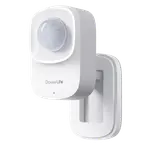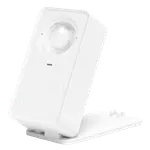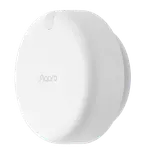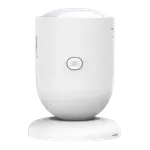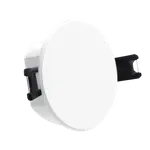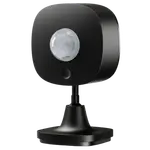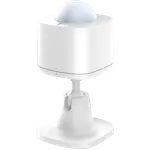




GoveeLife Smart Presence Sensor Review: Radar Plus PIR Covering 48 Square Metres
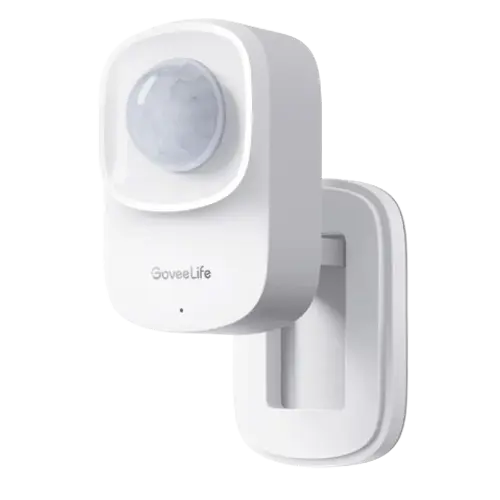
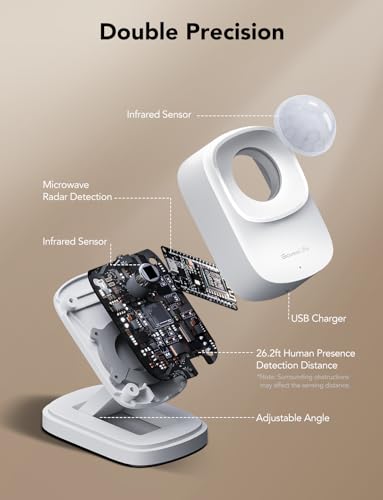
The GoveeLife H5127 combines two detection technologies rather than picking one: microwave radar for people who are present but still, and PIR for movement. That pairing is what makes presence automations trustworthy, since a radar-only sensor can be twitchy and a PIR-only sensor forgets you exist when you sit down. Coverage is generous at 48 m² (516 sq ft) across 120 degrees and 8 metres of range. It is mains powered, connects over 2.4 GHz Wi-Fi, and works with Alexa, Google Home, Home Assistant and IFTTT. There is no Apple HomeKit, no Matter and no light sensor.
- Whole-room occupancy detection
- Lighting that stays on while you sit still
- Alexa and Google Home households
- Home Assistant automations
One sensor per room you want covered.
Buy on Amazon USAPros
- Microwave radar and PIR together, catching both stillness and movement
- Large 48 m² (516 sq ft) coverage area
- 120 degree angle with 8 m (26 ft) range
- Works with Alexa, Google Home, Home Assistant and IFTTT
- History records for reviewing occupancy patterns
- Mains powered, so no batteries to replace
Cons
- No ambient light sensor, so lighting automations need a lux source elsewhere
- No Apple HomeKit, SmartThings or Matter support
- Multi-person detection is not documented
- No fall detection or sleep monitoring
- Wired only, on 2.4 GHz Wi-Fi
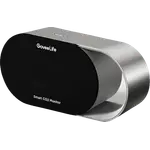
- Indoor only, and physically bulky at 109 x 69 x 80 mm
Who is the GoveeLife presence sensor for?
It is for the room where motion sensors keep failing: an office where you type without moving much, a living room where the lights die mid-film, a bedroom where a PIR misses a sleeping person entirely. Radar detects a stationary human, PIR confirms movement, and having both reduces the false positives and false negatives that make people give up on presence automation. With 48 m² of coverage it handles a large room from one position, and being mains powered there are no batteries to replace on a sensor that is always sensing.
What it offers
Presence detection with alerts, a 120 degree detection angle, 8 metres (26 feet) of range and a stated coverage area of 48 m². History records are kept, so occupancy patterns can be reviewed rather than just acted on in the moment. Automations run through the supported platforms, which include Alexa, Google Home, Home Assistant and IFTTT, a broader list than many radar sensors manage. Bluetooth is used for pairing, with Wi-Fi carrying normal operation.
What to know before you buy
There is no ambient light sensor, which is a real gap for the most common use case: without a lux reading, a presence-triggered light will switch on in full daylight unless another sensor supplies that information. Apple HomeKit, SmartThings and Matter are unsupported. Multi-person detection is not documented, so treat it as presence rather than people counting, and there is no fall detection or sleep monitoring. It is wired with no battery option, and Wi-Fi is 2.4 GHz only. It also has no weather resistance rating, so it is indoor only, and at 109 x 69 x 80 mm it is chunkier than most sensors.
Is the GoveeLife presence sensor worth it?
For a mid-range price it delivers the dual-technology detection and the coverage area that make presence automation work, plus a wider platform list than most competitors. The missing light sensor is the main compromise, and it is one you can work around if you already have a lux source in the room. For Apple households, or anyone wanting Matter, it is ruled out on compatibility rather than capability.
Frequently asked questions
How is this different from a motion sensor?
It combines microwave radar with PIR, so it detects a person who is present but not moving, which a PIR-only motion sensor cannot do. That is why presence-driven lights stop switching off while you sit still.
How much area does it cover?
A stated 48 m² (516 sq ft), across a 120 degree angle with 8 m (26 ft) of range.
Does it work with Apple HomeKit?
No. Alexa, Google Home, Home Assistant and IFTTT are supported. Apple HomeKit, SmartThings and Matter are not.
Does it detect how bright the room is?
No. There is no light sensor, so a lighting automation needs that reading from another device.
Does it need batteries?
No. It is mains powered, which suits a sensor that is detecting continuously.