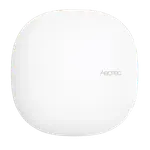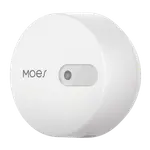
Meross Presence Sensor MS605 Review: Battery mmWave Presence on Thread, If You Get Past the Setup
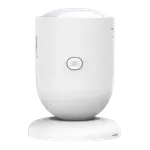
The Meross MS605 is one of the few presence sensors that runs mmWave radar on a battery instead of a permanent power lead, and once it is paired it does the job people buy a presence sensor for: it keeps a room marked occupied while someone reads, types or sits still, and it exposes three distance zones as independent sensors so an automation can react to how close you are. It reaches Apple Home, Alexa, Google Home, SmartThings and Home Assistant over Matter, and being Thread rather than Wi-Fi it responds locally and quickly. The catch is getting there: a large share of the buyers who rate it badly never made it through the firmware update and the Thread commissioning, and the ones who did still have to go back to the Meross app for anything beyond presence, illuminance and battery. Cheap, genuinely capable, and rougher to install than its competitors.
- Thread and Matter households
- Placements with no power outlet
- Home Assistant users
- Bathrooms, garages and covered outdoor spots
- Lighting that has to survive sitting still
One sensor per room you want covered.
Buy on Amazon USAPros
- mmWave radar plus PIR holds a room occupied through stillness, down to breathing and typing
- Matter over Thread means local, fast reporting once it is paired
- Battery powered on one CR123A cell rated for three years, so it mounts anywhere
- Three distance zones arrive as separate sensors in Apple Home, Alexa, Google Home and Home Assistant
- IP67 and rated to -20°C, so bathrooms, garages and covered outdoor spots are fair game
- Built-in light sensor enables lux-aware lighting automations
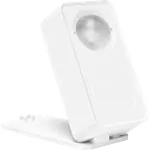
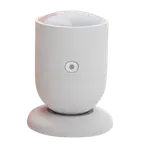
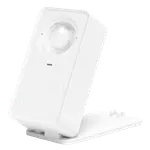
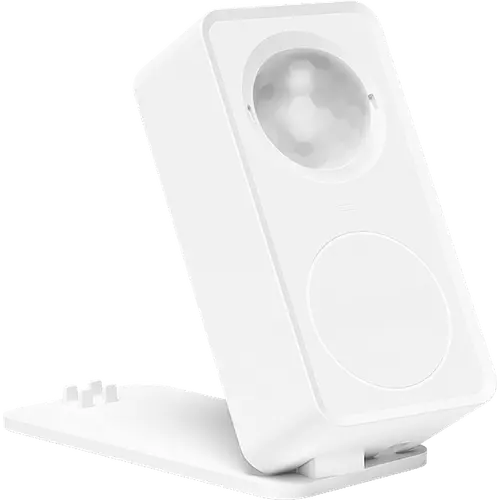
- Folding and rotating mount, hook-and-loop pads and a pet shield in the box
Cons
- Commissioning is the weak point, with firmware updates that stall and pairing that often takes many retries
- Pairing and all the fine tuning run through the Meross app over Bluetooth rather than the smart home platform
- Three fixed distance zones, with no control over how far each reaches or how long absence takes to register
- The light reading refreshes on the order of minutes, which limits lux-driven automations
- Reports whether a zone is occupied rather than counting people
- Uses an uncommon CR123A lithium cell rather than AA or AAA
- Automations inside the Meross app wait on a Meross hub that is still in development
- No fall detection and no sleep tracking
Who is the Meross Presence Sensor MS605 for?
This sensor is aimed at anyone whose lights keep switching off while they are still in the room. It pairs a 24GHz mmWave radar with a PIR infrared sensor, so it reads breathing-level movement as occupancy while the infrared side ignores heatless motion such as a curtain or a robot vacuum, and buyers describe it holding a home office or a bathroom occupied through exactly the stillness that defeats a plain motion sensor. The other half of the appeal is where it can go: it runs on a single CR123A lithium cell that Meross rates for three years, so there is no cable to hide, and its IP67 rating and -20°C to 60°C range mean buyers put it in bathrooms, garages, sheds and under eaves as well as living rooms. It is a Matter over Thread device, so the intended owner already has a Thread border router in the house, whether that is a HomePod, an Echo, a Nest speaker, a SmartThings hub or a USB stick on a Home Assistant box.
What buyers love
The stillness detection is the thing owners come back to. Several describe sitting nearly motionless at a desk and watching the sensor hold, with finger movement and breathing enough to keep it triggered, and one buyer who compared it directly against the Aqara FP300 preferred the Meross when both were running on Thread. The three distance zones are the second favourite: because each one arrives on the platform as its own sensor, owners drive different automations from near, mid and far, from a bedside lamp at close range to a hallway light at the far end. Buyers also like that it responds locally and near instantly once it is on Thread, that the battery design let them test several positions before committing, and that the box includes a folding and rotating mount, hook-and-loop pads and a shield that stops pets from triggering it. The built-in light sensor gets called out as the extra that makes lighting automations sensible, so a lamp only comes on when the room is actually dark.
How hard is the MS605 to set up?
This is where the sensor loses people, and it is the honest reason its average rating sits well below what the hardware deserves. Setup starts in the Meross app over Bluetooth, then a firmware update, then commissioning onto the Thread network by QR code. Each of those steps has failed for someone: buyers report firmware updates stalling near the end and needing a dozen retries, the button refusing to enter pairing mode, and Thread joins failing on Echo border routers and on Home Assistant setups, with one buyer ending up with a unit that would no longer respond at all. Others got through it in five minutes and never thought about it again, including several Home Assistant owners who scanned the code and were done. The pattern in the reviews is that it either works immediately or fights you for an hour, and there is little in between. A handful of owners also report the sensor dropping off or reporting erratically after pairing, so it is worth testing thoroughly inside the return window.
What to know before you buy
Only presence, illuminance and battery travel over Matter. Sensitivity, the presence threshold, the distance each zone covers and the automatic interference calibration all live in the Meross app, so this is not a sensor you can fully configure from Apple Home or Home Assistant, and buyers who wanted that flexibility, particularly the ones cross-shopping the Aqara FP300 with its far finer distance control, found the three fixed zones limiting. The light reading refreshes slowly, on the order of minutes, which one owner flagged as a real problem for automations that combine presence with a lux threshold. It reports whether a zone is occupied rather than counting people, and it does no fall detection or sleep tracking. The CR123A is an uncommon cell rather than an AA or AAA, and it is more expensive to replace. Automations built inside the Meross app itself, as opposed to on your smart home platform, are still waiting on a Meross hub that the company says is in development. Alexa currently shows only the presence state and leaves the light reading to the other platforms.
Is the Meross Presence Sensor MS605 worth it?
For a budget-tier price this is a lot of sensor: radar and infrared fusion, an ambient light reading, three zones, IP67 weatherproofing and a three-year battery, all reachable from every major ecosystem over Matter without a proprietary hub. Battery-powered mmWave sensors on Thread are still a short list, and this is one of the cheapest on it. The verdict depends on your tolerance for a bumpy first hour: if you already run a Thread border router, are comfortable retrying a firmware update and accept that the fine tuning stays in the vendor app, it is a strong buy and the day-to-day reports are good. If you want a sensor that commissions cleanly the first time and exposes everything to your platform, the more expensive alternatives are still the safer pick.
Frequently asked questions
Does the Meross Presence Sensor MS605 need a hub?
It needs a Thread border router that also acts as a Matter controller, such as a HomePod, an Apple TV, a recent Echo, a Nest speaker, a SmartThings hub or a Thread stick on a Home Assistant server. A Meross hub is only required for automations built inside the Meross app itself, and that hub is still in development.
Does the MS605 work with Apple Home, Alexa, Google Home, SmartThings and Home Assistant?
Yes, all five, over Matter. Meross says SmartThings shows it as a single presence sensor, while the other platforms see the three distance zones as separate sensors.
Is the Meross MS605 battery powered?
Yes. It runs on one CR123A lithium cell, included in the box, which Meross rates for three years. There is no wired or USB power option.
How far does the MS605 detect?
Meross specifies motion detection up to 6m and precise static presence within 4m. That range is split into three configurable distance zones in the Meross app.
Can the MS605 be used outdoors?
It is rated IP67 and specified for -20°C to 60°C, so owners use it in bathrooms, garages, sheds and under eaves. It is still a sensor rather than a camera, so a sheltered mounting spot is the sensible choice.
Do I have to install the Meross app?
Yes. The sensor pairs over Bluetooth through the Meross app first, and sensitivity, the presence threshold and the zone distances are configured there rather than on your smart home platform.