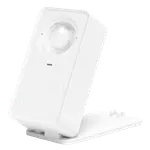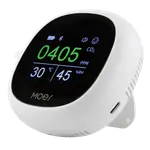


Moes Human Presence Sensor Review: 24 GHz Radar With a Light Sensor and 30 Days of History
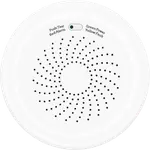
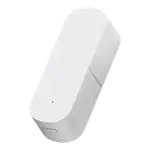
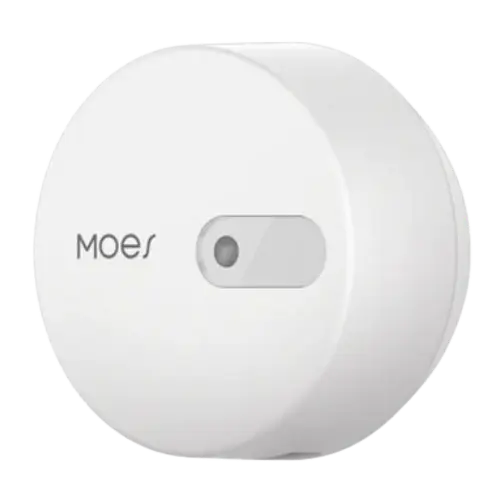
The Moes ES1ZZ is a Zigbee presence sensor built on 24 GHz radar, which detects a stationary person rather than only movement. Two things lift it above the basic radar sensors: a built-in light sensor reading 0 to 10000 lux, which is what lets an automation switch lights on only when the room is genuinely dark, and a 30 day archive of presence and illumination data presented as curves, so you can see how a room is actually used. Detection angle is adjustable from 60 to 180 degrees with 6 metres of range. It needs a Zigbee hub, and there is no Apple HomeKit or Matter support.
- Lighting automations that need darkness
- Zigbee and Home Assistant setups
- Small to medium rooms
- Understanding room usage over time
Pros
- 24 GHz radar detects stationary presence, not just movement
- Built-in light sensor reading 0 to 10000 lux
- Adjustable detection angle from 60 to 180 degrees
- 30 days of presence and illumination history as curves
- Works with Google Home, Alexa and Home Assistant
- USB-C powered, with no batteries
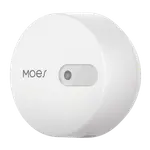
- Compact at under 50 mm square
- Two year warranty
Cons
- Requires a Zigbee hub, with Moes and Tuya compatibility specified
- No Apple HomeKit, SmartThings, IFTTT or Matter support
- 6 m (19 ft) range, short for large open-plan rooms
- No multi-person detection, fall alerts or sleep monitoring
- Coverage area is not documented
- Wired over USB-C, indoor only
Who is the Moes presence sensor for?
It suits someone building presence-based lighting in a Zigbee home. The combination that matters is radar plus lux in one device: radar keeps the light on while you sit still, and the light sensor stops it turning on at midday, and having both in one sensor avoids a second device and a more convoluted automation. The adjustable 60 to 180 degree field is useful in practice, since narrowing it is how you stop a corridor sensor from seeing into the next room. It is small at under 50 mm square and USB-C powered.
What it offers
24 GHz radar presence detection with alerts, 6 metres (19 feet) of range, and a detection angle you can set anywhere from 60 to 180 degrees. The light sensor covers 0 to 10000 lux, a wide enough range to distinguish a dim evening from full daylight. History is the unusual extra: a month-long archive of presence and illumination shown as curves, which turns the sensor into a way of understanding a room rather than just triggering it. Google Home, Alexa and Home Assistant are supported through the hub, and it runs on USB-C so there are no batteries to change.
What to know before you buy
A Zigbee hub is required, and the listing specifies a Moes Zigbee hub with Tuya Smart Life support, so check compatibility with your existing setup before assuming any Zigbee coordinator will do. Apple HomeKit, SmartThings, IFTTT and Matter are all unsupported. It detects presence but not multiple people individually, and there is no fall detection or sleep monitoring. Range is 6 metres, shorter than sensors aimed at large open-plan spaces, and the coverage area is not documented. It is wired over USB-C with no battery option, and has no weather rating, so it stays indoors.
Is the Moes presence sensor worth it?
It is inexpensive for a radar sensor that includes lux measurement and history, and those two additions are exactly what make presence automations behave sensibly. The two year warranty is longer than most. The constraints are the hub requirement and the platform list: fine for a Zigbee home on Google Home, Alexa or Home Assistant, wrong for an Apple or Matter-first household.
Frequently asked questions
Does the Moes presence sensor need a hub?
Yes. It is a Zigbee device and the listing specifies a Moes Zigbee hub with Tuya Smart Life support, so check compatibility with your existing coordinator.
Does it measure light levels?
Yes, from 0 to 10000 lux, which lets automations switch lights on only when the room is actually dark.
How far and how wide does it detect?
Up to 6 metres (19 feet), with a detection angle adjustable between 60 and 180 degrees.
Can I see historical data?
Yes. It keeps a 30 day archive of presence and illumination, displayed as curves, so you can review how a room has been used.
Does it work with Apple HomeKit?
No. Google Home, Alexa and Home Assistant are supported. Apple HomeKit, SmartThings, IFTTT and Matter are not.