Shelly Presence Gen4 Review: mmWave Occupancy with Matter, Zigbee and Wi-Fi
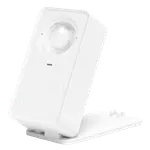
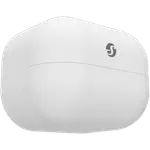
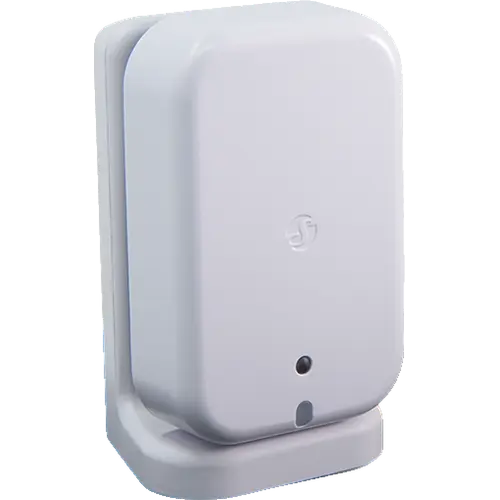
The Shelly Presence Gen4 is a mains-powered mmWave occupancy sensor aimed at rooms where a PIR sensor would drop the lights on someone sitting still. It covers up to 42 square metres, identifies up to six people across ten customizable zones, and ships with Matter over Wi-Fi plus Bluetooth, so Apple Home, Alexa, Google Home, SmartThings and Home Assistant can all commission it without a vendor hub. The same hardware can be switched to Zigbee 3.0 with a five-press on the button, at which point a Zigbee coordinator is required. It needs a dedicated 5 V USB-C adapter, it is indoor-only, and it does not offer fall detection or sleep monitoring. For a Matter or Home Assistant household that can spare an outlet, it is the Shelly-shaped alternative to a battery mmWave puck.
- Matter households
- Home Assistant users
- Open-plan rooms that need zone lighting
- Desks and bedrooms where people sit still
- Local-control setups
One sensor per room you want covered.
Buy on Amazon GermanyCheck pricePros
- 60-64 GHz mmWave radar that keeps detecting people who are sitting still
- Tracks up to six people across ten customizable zones over up to 42 square metres
- Matter over Wi-Fi, so Apple Home, Alexa, Google Home, SmartThings and Home Assistant can commission it
- Built-in light sensor for dark, twilight and bright lighting automations
- Local MQTT, scripting, webhooks and an embedded web interface
- USB-C powered, so it can stay an always-on sensor without battery changes
Cons
- Needs a dedicated 5 V USB-C adapter, with no battery option
- Indoor only, with no published IP rating
- No 5 GHz Wi-Fi, Thread or Z-Wave
- Zigbee is a firmware switch, not a simultaneous radio, and needs a Zigbee hub
- No fall detection or sleep monitoring
- Warranty is not published on the official spec sheet
Who is the Presence Gen4 for?
This sensor is for a household that already thinks in occupancy, not motion. A PIR sensor reports empty the moment a person stops moving, which is why office and bedroom lights switch off on people who are still there. The Presence Gen4 uses a 60-64 GHz mmWave radar that keeps reading presence, including still detection out to 3 m, and it can track up to six people at once. Because it is powered over USB-C rather than batteries, it wants a dedicated 5 V adapter near a wall, a shelf or a wardrobe, and it is specified for indoor use only. The connectivity mix is what makes it a Shelly product: Wi-Fi 6 and Matter over Wi-Fi out of the box, Bluetooth for onboarding, and a firmware switch into Zigbee 3.0 when the rest of the house is a Zigbee mesh. Local MQTT, scripting, webhooks and an embedded web interface keep automations running if the cloud is down.
What the Presence Gen4 offers
The headline is multi-person, multi-zone occupancy. Wall-mount coverage is 140 degrees horizontal and 120 degrees vertical over an 8 by 8 m field, with a 42 square metre claimed area, and still people can be placed into as many as ten zones so only the occupied part of a large room gets the lights. A built-in light sensor reports dark, twilight and bright, which is what lets a lighting automation wait for dusk instead of firing at noon. Sensitivity, transmit power and near-ground filtering can be tuned so pets and robot vacuums are ignored. On the platform side Matter over Wi-Fi is certified (CSA25E3FMAT48529-24), which is how Apple Home, Alexa, Google Home, SmartThings and Home Assistant all get a path, and Shelly also documents the Alexa Motion Sensor capability, Google Occupancy Sensing and the SmartThings Presence Sensor capability on top of that. Twenty schedules, scripting and MQTT sit on the device for local logic.
What to know before you buy
It is not a battery sensor. USB-C at 5 V, 1 A is required, and Shelly warns against shared multi-port chargers whose voltage sags. There is no 5 GHz Wi-Fi, no Thread, no Z-Wave and no published IP rating, so this is an indoor, 2.4 GHz device. Zigbee is a firmware mode, not a second radio running beside Matter: a five-press switches the unit, and using Zigbee needs a coordinator. Fall detection and sleep monitoring are not offered, so it is not a care sensor. Warranty is not published on the knowledge base.
Is the Presence Gen4 worth it?
Against battery Zigbee pucks it trades placement freedom for range, person counting and Matter without a hub. Against Aqara and SwitchBot presence sensors it is the option that speaks Shelly's local stack (MQTT, scripting, webhooks) while still joining a Matter fabric over Wi-Fi. The value case is strongest in a room that already has an outlet, where six-person zone lighting or HVAC actually matters, and in a home that wants the same occupancy signal in Apple Home and Home Assistant. A bathroom, closet or rental with no spare USB power is the wrong room; a battery mmWave sensor belongs there instead.
Frequently asked questions
Does the Shelly Presence Gen4 work with Apple Home and Home Assistant?
Yes. It is Matter-over-Wi-Fi certified, so Apple Home, Home Assistant, Alexa, Google Home and SmartThings can all commission it. Home Assistant can also talk to it locally through MQTT, webhooks or the embedded web interface.
Does the Shelly Presence Gen4 need a hub?
Not for Matter over Wi-Fi, which is the default firmware. Switching it to Zigbee 3.0 with a five-press on the button does require a Zigbee coordinator. Either way it still needs USB-C power.
How far can the Shelly Presence Gen4 detect?
Wall-mount coverage is 140 degrees horizontal and 120 degrees vertical over an 8 by 8 m field, with a claimed area of 42 square metres. Still detection, the mode that holds occupancy on a seated person, is specified out to 3 m.
Can the Shelly Presence Gen4 tell several people apart?
Yes. It identifies up to six people at once and can map them onto as many as ten customizable zones, which is what lets a large room light only the occupied part.
Is the Shelly Presence Gen4 battery powered?
No. It runs from USB-C at 5 VDC, 1 A, drawing about 2.5 W typical and 3.5 W maximum. Shelly recommends a dedicated adapter rather than a shared multi-port charger.