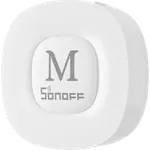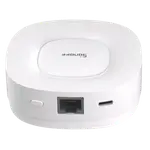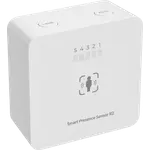




Sonoff SenseGuard Presence Core Review: Cheap 24GHz mmWave Presence for Zigbee Homes
The Sonoff SenseGuard Presence Core (SNZB-06P24) is a budget 24GHz mmWave sensor for people who already run a Zigbee network, and its job is to keep the lights on while you sit still. It pairs in seconds with Home Assistant through Zigbee2MQTT or ZHA, adds a genuinely useful lux reading, and lets you switch off any of its seven detection zones to mask a doorway or a fan. The trade-offs are the modest 4 meter radial reach, which makes it a small-room device, and radar that some owners still see triggered by moving appliances after calibration. At this price it is one of the easiest ways to move a room from motion detection to presence detection.
- Home Assistant and Zigbee2MQTT users
- Desks, hallways and other small rooms
- Smart lighting automation
- First-time mmWave buyers
Pros
- Holds occupancy while you sit still, instead of giving up like a PIR sensor
- Pairs in seconds and lands in Home Assistant through Zigbee2MQTT or ZHA
- Seven detection zones can each be switched off to mask a doorway or an appliance
- Accurate ambient light reading in lux, with calibration and a history log
- Self-learning Detection Calibration filters fixed interference sources
- Mains powered over USB-C, no batteries to replace, and it repeats the Zigbee mesh
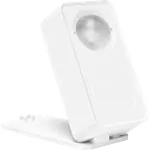
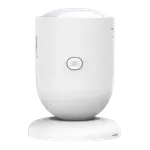
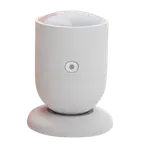
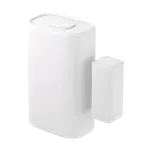
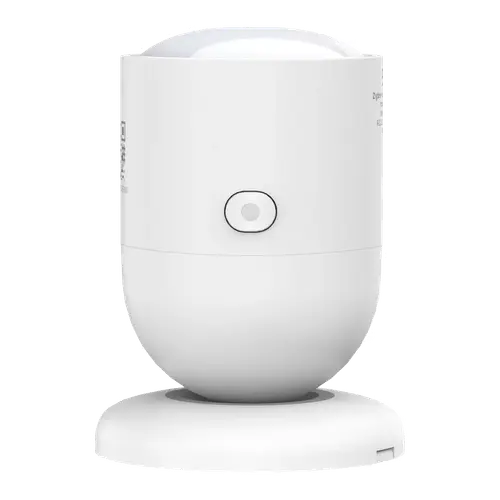
- Compact body with a magnetic base for desk, wall or ceiling mounting
Cons
- Radial reach is only about 4 meters, so it is a small-room sensor
- Fans and other moving appliances can still trigger it after calibration
- Very placement sensitive: too far away and it behaves like a motion sensor
- Zones can be masked, but presence is reported for the room as a whole
- ZHA exposes fewer settings than Zigbee2MQTT, so zone tuning needs Z2M or the eWeLink app
- No battery option, and the side-mounted USB-C port leaves the cable on show
- It cannot reliably detect a person who is asleep, and there is no fall detection
Who is the Sonoff SenseGuard Presence Core for?
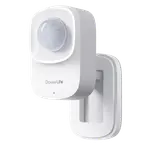
This is a Zigbee 3.0 end device, so it is aimed at homes that already have a coordinator: a SONOFF gateway, or a Zigbee2MQTT or ZHA dongle on a Home Assistant box. What it adds over a PIR motion sensor is the question it answers. A motion sensor asks whether something moved; the 24GHz radar in this one asks whether anyone is in the room, reading micro-movements such as the chest expansion of breathing, so a room stays occupied while you type, read or watch television. It is mains powered over USB-C rather than battery driven, which suits a permanent spot in an office, a hallway or a bathroom, and the magnetic base lets it sit on a shelf, cling to a wall bracket or point down from a ceiling. Owners upgrading from the older 5.8GHz Sonoff sensor are a large part of the audience, and several of them say the newer radar is the more dependable of the two.
What buyers love
The recurring praise is that it does what the marketing promises: lights stay on while someone sits still at a desk or on the sofa, which is the exact failure people bought it to fix. Setup gets the second most mentions, with buyers reporting that Home Assistant saw the device within seconds of it being powered, that the firmware update landed immediately, and that Zigbee2MQTT exposes the interesting settings (occupancy timeout, radar sensitivity, the seven zones, the spatial learning calibration). The built-in light sensor is the sleeper feature: one owner compared its reading against a proper lux meter and found it close, and several use it to make lighting react to darkness and presence together rather than to movement alone. The compact, discreet body, the zone masking for awkward room layouts, and the low price for a mmWave sensor round out the positives, and more than one buyer says they plan to order several more.
What to know before you buy
Placement decides how well this sensor performs, and the reviews split along exactly that line. One owner found it acted like a motion sensor from 7 to 8 feet away and held presence perfectly once moved to about 2 feet, which lines up with SONOFF's own note that a completely motionless person is best detected within 3 meters facing the device. The radial reach is about 4 meters in total, so a large open plan room is the wrong application. The other recurring complaint is the opposite failure: ghost triggers, most often a tower fan or another appliance that the self-learning Detection Calibration did not manage to filter out, and one owner warns that a second 24GHz sensor within range can interfere with this one. Two practical details also come up often: it has no battery, so it has to stay plugged in, and the USB-C port sits halfway up the side, so the cable is visible and the bundled 2 meter lead is short for a high corner. Finally, the seven zones can be enabled or disabled individually, but presence is still reported for the room as a whole rather than per zone, and SONOFF states the sensor cannot reliably detect a sleeping person.
Is the Sonoff SenseGuard Presence Core worth it?
For a Zigbee household, yes, as long as the room is small and you are willing to spend ten minutes on placement and calibration. It is one of the cheapest ways to get true occupancy detection plus a calibrated lux reading in a single mains-powered device, it repeats the Zigbee mesh while it is at it, and Zigbee2MQTT support means the settings are all reachable without the vendor app. Buyers who need to cover a large living room, count the people in it, or watch over someone asleep should look at a longer-range sensor instead. Set against its own predecessor and the price of most mmWave hardware, this is a low-risk upgrade, and the sort of device people end up buying in threes.
Frequently asked questions
Does the Sonoff SenseGuard Presence Core need a hub?
Yes. It is a Zigbee 3.0 end device with no Wi-Fi, so it needs a Zigbee coordinator: a SONOFF gateway such as the Zigbee Bridge Ultra or iHost, or a Zigbee2MQTT or ZHA dongle. Bluetooth is only used by the eWeLink app to add the device and configure it locally.
How far and how wide does it detect?
SONOFF specifies a radial detection distance of about 4 meters across a 120 degree angle, split into seven independent zones of 0.5 meters that can each be turned off in the app. A completely motionless person is detected most reliably within 3 meters, facing the device.
Does it work with Home Assistant?
Yes. Zigbee2MQTT supports the exact model and exposes occupancy, illuminance, the occupancy timeout, radar sensitivity, the seven zones and the spatial learning calibration. ZHA also works, currently with a quirk script SONOFF provides, though it surfaces fewer of the settings.
Can it be used with Apple Home or Matter?
The sensor speaks Zigbee, so Apple Home and Matter arrive through one of SONOFF's own Matter bridges, such as the ZBBridge-U, iHost or eWeLink CUBE, which republish the device into a Matter fabric. Alexa, Google Home and SmartThings are reachable as well, the first two through the eWeLink cloud behind a SONOFF gateway and SmartThings through the Edge driver SONOFF publishes.
Does it run on batteries?
No. It is powered continuously from a USB-C port rated 5V 0.5A, so it has to stay plugged in. The upside is that it is always on, which is what allows it to act as a Zigbee router and extend the mesh for other devices.
Can it detect several people or track sleep?
It reports whether the space is occupied, not how many people are in it, and SONOFF states it cannot accurately detect someone who is asleep because the breathing movement is too subtle. For elderly monitoring it also has no fall detection.