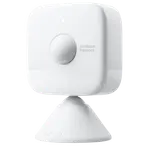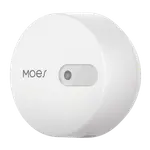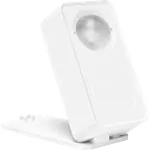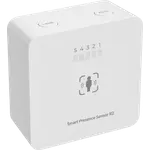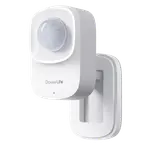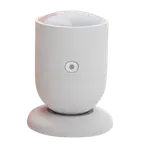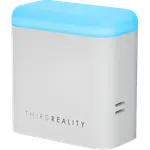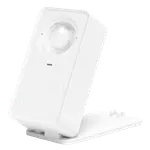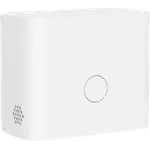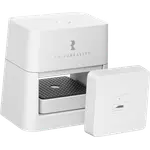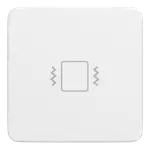



Third Reality Smart Presence Sensor R2 Review: Battery mmWave Occupancy for Zigbee Homes
The Third Reality Smart Presence Sensor R2 is a Zigbee 3.0 occupancy sensor built around a 24 GHz mmWave radar, so it keeps a room marked as occupied while someone reads, types or sits still, which is the exact failure mode of a classic PIR sensor. Because it runs on three AA batteries rated for up to 3 years, it can go in a bathroom, hallway, closet or cabinet with no outlet and no wiring, and its five sensitivity levels plus environment learning are there to keep airflow and curtains from triggering it. The trade-offs are a short 5 meter maximum range, a single binary occupancy report with no person counting or light sensing, and a hard dependency on a Zigbee hub or coordinator. At its budget price it is an easy add for a household already running Home Assistant, SmartThings or an Echo with a built-in Zigbee hub.
- Existing Zigbee households
- Rooms with no nearby outlet
- Home Assistant and SmartThings users
- Bathrooms, hallways and closets
- Budget buyers
One sensor per room you want covered.
Buy on Amazon USACheck pricePros
- 24 GHz mmWave radar keeps detecting people who are sitting still
- Three AA batteries rated for up to 3 years, so no outlet or wiring is needed
- Five sensitivity levels plus environment learning to cut false triggers
- Works with Alexa, Samsung SmartThings and Home Assistant through a Zigbee hub
- Detects through wood and glass, so it can be hidden inside a cabinet
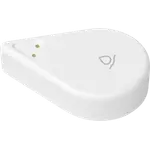
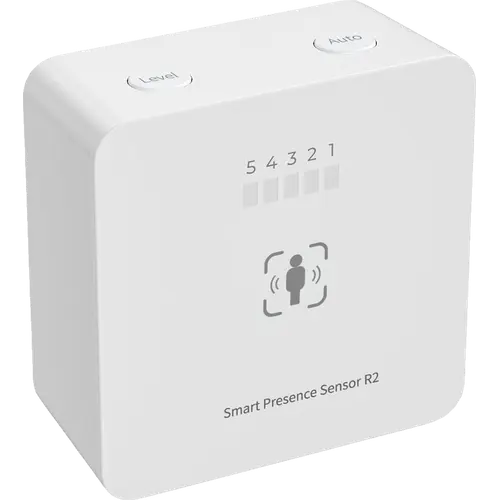
- Compact 65 x 65 x 30 mm body that fits on a shelf or ledge
Cons
- Requires a Zigbee hub or coordinator, and has no Wi-Fi, Bluetooth, Thread or Z-Wave fallback
- Detection range tops out at 5 meters, short for an mmWave sensor
- No Google Home, Apple Home or Matter support
- No ambient light sensor for brightness-based automations
- Reports one occupancy state only, with no person counting, fall detection or sleep tracking
- Battery powered, so it does not extend the Zigbee mesh as a router
- Indoor only, with no published IP rating
Who is the Smart Presence Sensor R2 for?
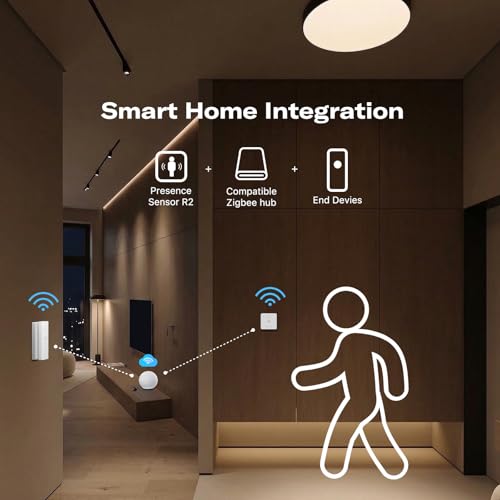
This is a sensor for someone who already runs a Zigbee network and wants occupancy, not motion. A PIR sensor drops a room to empty the moment a person stops moving, which is why bathroom and desk lights switch off on people who are still there; a 24 GHz mmWave radar keeps reading micro-motion, so the room stays occupied. The R2 is aimed squarely at the places where that matters and where power does not reach: a bathroom, a hallway, a walk-in closet, a storage room, a cabinet. Powered by three AA batteries with no outlet or wiring involved, and small enough at 65 x 65 x 30 mm and 136 g to sit on a shelf or a ledge, it goes wherever the automation needs it rather than wherever the wiring allows. The one requirement is a Zigbee hub or coordinator: Home Assistant through ZHA or Zigbee2MQTT, Samsung SmartThings, Aeotec, Homey, Hubitat, or an Echo device with a built-in Zigbee hub.
What the Smart Presence Sensor R2 offers
The radar is the headline. Operating at 24 GHz, it detects presence through common non-metallic materials such as wood and glass, which means the sensor can be tucked inside a cabinet or behind a panel instead of being on show, and it is not thrown off by changes in light, temperature or humidity the way optical and thermal sensors can be. Detection range is adjustable from 1 to 5 meters across five sensitivity levels, so a small bathroom and a pass-through hallway can be tuned differently: a high level catches someone shifting posture on a sofa, a low level ignores everything but real movement. On top of that sits AI-assisted environment learning, which profiles the room to suppress false triggers from air conditioning airflow or a sheer curtain. Battery life is the other standout: three standard AA cells, rated up to 3 years in typical use, on a device that is normally a wired product in this category. Presence and absence both work as automation triggers for lights, thermostats, curtains, cameras or a phone notification, and the platform reach is good for a Zigbee accessory, covering Alexa, Samsung SmartThings and Home Assistant.
What to know before you buy
The R2 is a Zigbee 3.0 end device, so it does nothing on its own: without a hub or coordinator there is no pairing and no automation, and there is no Wi-Fi, Bluetooth, Thread or Z-Wave fallback. Range is the spec to check against the room before ordering, because 5 meters (roughly 16 feet) is modest for an mmWave sensor and is the ceiling, not the typical figure. The reporting is deliberately simple: one binary occupancy state, with no person counting, no zone or position tracking, no fall detection and no sleep monitoring, so this is not the sensor for elderly care or for multi-person room logic. There is no ambient light sensor either, which means brightness-gated automations need a second device. Being battery powered, it stays a sleepy end device and never repeats traffic for the rest of the Zigbee mesh. Finally there is no Google Home, Apple Home or Matter path, and no published IP rating, so it is an indoor product. Warranty is one year.
Is the Smart Presence Sensor R2 worth it?
For a Zigbee household the value case is straightforward: this is one of the cheaper ways to put true presence detection somewhere a wired sensor cannot go, and the battery figure is what makes it practical rather than a novelty. Judge it on placement. In a small or medium room where the sensor can sit within a few meters of where people actually are, the mmWave radar does the job a PIR sensor cannot. In a large open-plan space, or in a home standardized on Google Home, Apple Home or Matter, a longer-range wired sensor is the better buy. Set against its own siblings, the R2 sits between the 5.8 GHz Motion Sensor R1 and the mains-powered 60 GHz R3, trading the R3's finer detection and longer reach for the freedom of running on batteries.
Frequently asked questions
Does the Third Reality Smart Presence Sensor R2 need a hub?
Yes. It is a Zigbee 3.0 end device, so it needs a Zigbee hub or coordinator before it can be added to a smart home. Home Assistant (ZHA or Zigbee2MQTT), Samsung SmartThings, Aeotec, Homey, Hubitat and Echo devices with a built-in Zigbee hub all work.
How far can the Smart Presence Sensor R2 detect?
Up to 5 meters, about 16 feet. The range is adjustable through five sensitivity levels, so it can be tuned down for a hallway where only real movement should count, or up for a room where someone will be sitting still.
Does the Smart Presence Sensor R2 work with Home Assistant?
Yes, through both ZHA and Zigbee2MQTT. Zigbee2MQTT documents it under model 3RPS01083Z and exposes battery level, occupancy, sensor calibration and sensor sensitivity.
Does the Smart Presence Sensor R2 work with Apple Home or Google Home?
No. It is a plain Zigbee 3.0 accessory with no Matter profile, so neither of those two platforms can add it. The ecosystems it does reach through a Zigbee hub are Alexa, Samsung SmartThings and Home Assistant.
What batteries does the Smart Presence Sensor R2 use?
Three standard AA batteries, included in the box, rated for up to 3 years in typical usage. There is no USB or mains option, which is the point: it can be placed where no outlet exists.
How is a presence sensor different from a motion sensor?
A motion sensor uses PIR to spot movement and reports the room as empty once someone stops moving. The R2 uses 24 GHz mmWave radar, which keeps reading micro-motion such as breathing or shifting posture, so lights stay on for a person who is reading, working or soaking in the bath.