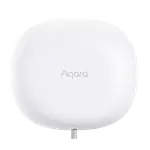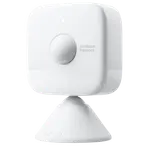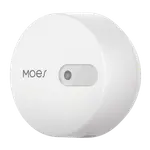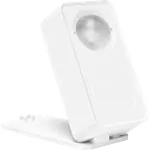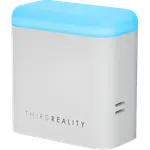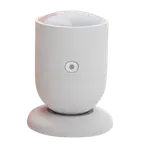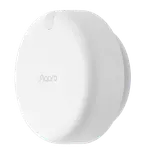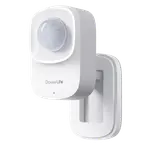
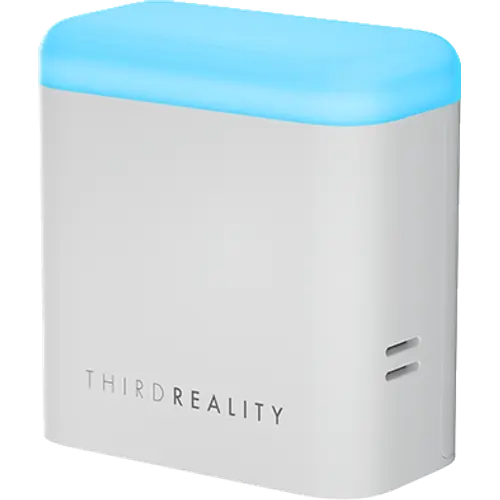



Third Reality Smart Presence Sensor R3 Review: 60 GHz mmWave Occupancy With a Zigbee Repeater Built In
The Third Reality Smart Presence Sensor R3 is a Zigbee 3.0 occupancy sensor built on a 60 GHz mmWave radar, so it keeps a room marked as occupied while someone reads, types or sits still, which is exactly where a classic PIR sensor gives up. Because it runs on USB-C rather than batteries it stays awake permanently, and that turns it into a Zigbee router as well: it repeats traffic for the rest of the mesh instead of just consuming it. On top of presence it adds an ambient light reading, a TVOC air quality reading and an RGB light that can show room state at a glance. The trade-offs are a 6 meter ceiling on range, a single binary occupancy report with no person counting, and a hard dependency on a Zigbee hub, so it is an easy addition for a household already running Home Assistant, SmartThings or an Echo with a built-in Zigbee hub, and a non-starter for anyone without one.
- Existing Zigbee households
- Home Assistant and SmartThings users
- Homes with a weak Zigbee mesh
- Desks, home offices and bathrooms
- Anyone tired of changing sensor batteries
One sensor per room you want covered.
Buy on Amazon USACheck pricePros
- 60 GHz mmWave radar keeps detecting people who are sitting still
- Mains powered over USB-C, so there are no batteries to replace
- Acts as a Zigbee router and strengthens the mesh for other devices
- Six adjustable detection levels from 1 to 6 meters, plus a configurable hold time
- Built-in ambient light sensor for brightness-gated automations
- TVOC air quality reading with a configurable alert threshold
- RGB light doubles as ambient lighting and a local status indicator
- Works with Alexa, Samsung SmartThings and Home Assistant through a Zigbee hub
Cons
- Requires a Zigbee hub or coordinator, with no Wi-Fi, Bluetooth, Thread or Z-Wave fallback
- Apple Home and Google Home need Third Reality's Smart Bridge MZ1, sold separately
- Not a Matter accessory on its own
- Detection range tops out at 6 meters, and no detection angle or coverage area is published
- Reports one occupancy state only, with no person counting, fall detection or sleep tracking
- Needs an outlet, with no battery option
- Flat desktop base, so it is not designed for ceiling or corner mounting
- Indoor only, with no published IP rating
Who is the Smart Presence Sensor R3 for?
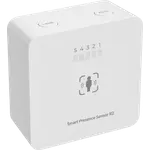
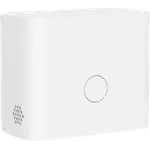
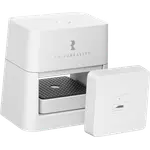
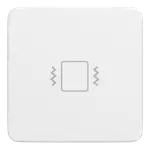
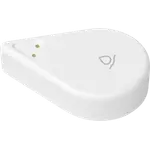
This is a sensor for a home that already runs a Zigbee network and wants occupancy rather than motion. A PIR sensor reports a room as empty the moment a person stops moving, which is why desk lights and bathroom lights switch off on people who are still there; a 60 GHz mmWave radar keeps reading the micro-movements of breathing, so the room stays occupied. The R3 is aimed at the rooms where that distinction matters and where an outlet is within reach, because it is powered over USB-C at 5V/1A and has no battery option at all. It is a small desktop unit, 67 x 36 x 70 mm and well under half a pound, designed to sit on a shelf, a desk or a media unit rather than to be screwed into a ceiling corner. The one hard requirement is a Zigbee hub or coordinator: Home Assistant through ZHA or Zigbee2MQTT, SmartThings (2015/2018), Aeotec, or an Echo device with a built-in Zigbee hub.
What the Smart Presence Sensor R3 offers
Four things share one enclosure. The radar is the headline: 60 GHz mmWave presence detection with six adjustable levels covering 1 to 6 meters, plus a configurable hold time, so a small bathroom and an open hallway can be tuned differently instead of sharing one compromise setting. Second is the ambient light sensor, which lets brightness gate an automation without adding a separate device, and which Zigbee2MQTT exposes along with a calibration offset. Third is a TVOC air quality reading with a configurable alert threshold, so poor air can drive an automation the same way presence does. Fourth is the RGB light, which is both a small ambient lamp and a local status indicator: colour and brightness can show whether a room reads as occupied without anyone opening an app. Underneath all of it sits the quiet advantage of being mains powered. A permanently awake Zigbee device acts as a router, relaying messages for other devices through multi-hop routing, so putting an R3 between a distant sensor and the hub strengthens the mesh instead of adding another leaf to it. Platform reach is good for a Zigbee accessory: Alexa through Echo devices with a built-in Zigbee hub, SmartThings and Aeotec hubs directly, and Home Assistant through both ZHA and Zigbee2MQTT, which documents the model and exposes occupancy, illuminance, TVOC, the light and the sensitivity settings.
What to know before you buy
The R3 is a Zigbee 3.0 end device, so it does nothing on its own: without a hub or coordinator there is no pairing and no automation, and there is no Wi-Fi, Bluetooth, Thread or Z-Wave fallback to reach for. It is not a Matter accessory either. Apple Home and Google Home reach it only through Third Reality's own Smart Bridge MZ1, the manufacturer's Zigbee to Matter bridge, which is a separate purchase and the only supported path to those two platforms. Range is the spec to measure against the room before ordering, because 6 meters (about 19 feet) is the ceiling rather than a typical figure, and the manufacturer publishes no detection angle or coverage area, so a large open-plan space is a gamble. The reporting is deliberately simple: one binary occupancy state, with no person counting, no zone or position tracking, no fall detection and no sleep monitoring, which rules it out for elderly care and for multi-person room logic. Being USB-C only, it needs an outlet and a power adapter is not implied by the port, and there is no published IP rating, so it is an indoor product for a flat surface. Warranty is one year.
Is the Smart Presence Sensor R3 worth it?
For a Zigbee household the case is unusually easy to make, because the sensor is doing three jobs at once. It is a true presence sensor, it is an ambient light and air quality probe, and it is a mains-powered repeater that makes the rest of the mesh more reliable. Judge it on placement and on ecosystem. In a small or medium room with an outlet nearby, where the radar can sit within a few meters of where people actually are, it does the job a PIR sensor cannot and pays for itself twice over by fixing a marginal Zigbee link at the same time. In a large open room, in a spot with no power, or in a home standardized on Apple Home or Google Home without the Smart Bridge MZ1, a different sensor is the better buy. Set against its own sibling, the R3 trades the battery freedom of the 24 GHz R2 for a finer radar, a longer reach, three extra sensing tricks and mesh repeating, at the cost of needing a cable.
Frequently asked questions
Does the Third Reality Smart Presence Sensor R3 need a hub?
Yes. It is a Zigbee 3.0 end device, so it needs a Zigbee hub or coordinator before it can join a smart home. Home Assistant (ZHA or Zigbee2MQTT), SmartThings (2015/2018), Aeotec and Echo devices with a built-in Zigbee hub all work.
How far can the Smart Presence Sensor R3 detect?
Up to 6 meters, about 19 feet. Detection is set in six levels covering 1 to 6 meters, so a hallway can be tuned down to ignore a neighbouring room while a study is opened up to catch someone sitting still.
Does the Smart Presence Sensor R3 work with Home Assistant?
Yes, through both ZHA and Zigbee2MQTT. Zigbee2MQTT documents it under model 3RPL01084Z and exposes occupancy, illuminance, TVOC, the RGB light, presence sensitivity and presence hold time.
Can the Smart Presence Sensor R3 be used with Apple Home or Google Home?
Only through Third Reality's Smart Bridge MZ1, the manufacturer's Zigbee to Matter bridge, which is a separate device. The sensor itself is a plain Zigbee 3.0 accessory and is not a Matter endpoint, so neither platform can add it directly.
Does the Smart Presence Sensor R3 need batteries?
No. It is powered over USB-C at 5V/1A and runs continuously, which is also what lets it work as a Zigbee router. It needs to be within reach of an outlet, and no battery mode is offered.
How is a presence sensor different from a motion sensor?
A motion sensor uses PIR to spot movement and reports a room as empty once everyone stops moving. The R3 uses 60 GHz mmWave radar, which keeps reading micro-movements such as breathing, so lights stay on for someone reading, working at a desk or soaking in the bath.